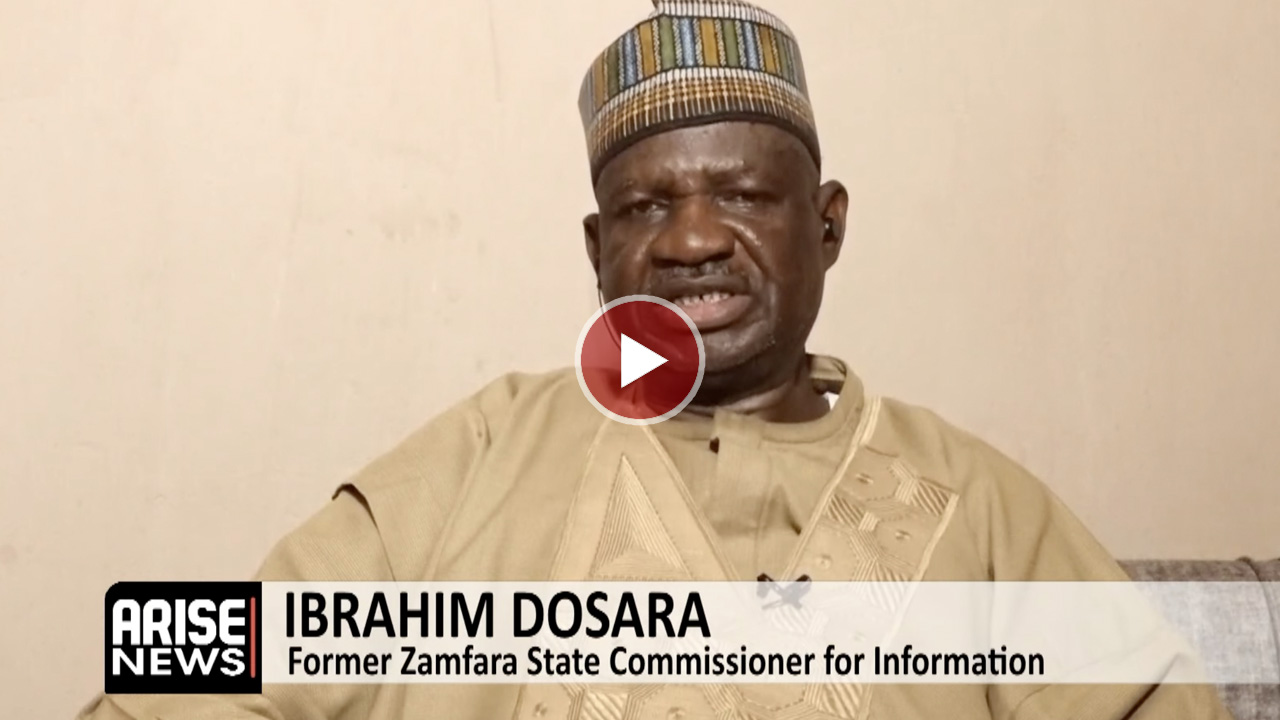
A former information commissioner in Zamfara State, Ibrahim Dosara, has described the defection of Governor Dauda Lawal to the All Progressives Congress (APC) as a significant political development that could strengthen unity among political leaders in the state and improve efforts to tackle insecurity.
Speaking during an interview on ARISE News on Thursday, Dosara said the governor’s move to the ruling party reflects a strategic step toward addressing political divisions that he believes have hindered the state’s ability to effectively respond to security challenges and development needs.
He expressed appreciation to President Bola Ahmed Tinubu for accepting the governor into the party, noting that the decision could mark a turning point in the political landscape of Zamfara.
“We want to express our gratitude and appreciation to the foresight and leadership of President Bola Ahmed Tinubu for accepting the defection of Governor Dauda Lawal into the All Progressives Congress,” Dosara said.
According to him, the development could help reduce political polarisation within the state and encourage cooperation among key political actors, which he believes is necessary to confront the growing security challenges affecting communities in the region.
“This will mark the turning point for the political polarisation of Zamfara State which prevents tackling insecurity and bringing the needed development in the state,” he added.

Dosara also suggested that the governor’s decision reflects a broader recognition among political leaders that unity is necessary for progress, particularly at a time when residents of the state continue to face security threats.
He noted that although political rivalry previously existed between the governor and Bello Matawalle, such disagreements are common in democratic politics and should not prevent reconciliation when the broader interest of the people is at stake.
“In democracy, people or politicians tend to agree and disagree, but that does not mean it should be permanent,” he said.
He explained that the reconciliation between the political figures could help foster stability and enable leaders to focus more effectively on governance, development, and addressing insecurity across the state.
“What is important is the plight of the people of Zamfara State. Politics should be geared towards bringing development rather than individual interests,” Dosara stated.
Responding to questions about whether the governor’s defection could be driven by political survival, Dosara dismissed the suggestion, arguing that the governor could have joined other political parties if personal political calculations were the main motivation.
Instead, he maintained that the decision to join the APC reflects a belief that collaboration among major political actors within the state could help accelerate development and strengthen governance.
“Dauda Lawal has seen that the active political actors in Zamfara State are in the APC and decided to join them so that they can work together for development and security,” he said.
Dosara further described development as a continuous process, noting that the governor’s move to the APC could create opportunities for stronger cooperation with federal authorities and other political leaders in addressing the state’s challenges.
“Development is a continuous process. Even if you have development, you still need more development,” he said.
He also dismissed concerns that the party could become overcrowded with influential figures following the governor’s defection, stating that political leaders in the state would work together to maintain unity and pursue collective goals.
According to him, prominent political actors in Zamfara would collaborate to develop strategies aimed at strengthening the party and delivering democratic dividends to residents.
“People like Abdulaziz Yari, Matawalle, Dauda Lawal and Yerima are political leaders who will sit together to ensure unity and progress,” he said.
Dosara expressed confidence that the development would not significantly weaken voter loyalty, arguing that many voters in the state tend to follow the direction of their political leaders once they are properly informed about the reasons behind major political decisions.
“Zamfara people are loyal to their political leaders, and with proper enlightenment they will understand the reasons behind this move,” he said.
He concluded by expressing optimism that the alliance among political leaders would strengthen the ruling party’s prospects in future elections while also creating opportunities for improved governance and security in the state.
Triumph Ojo
About the Author