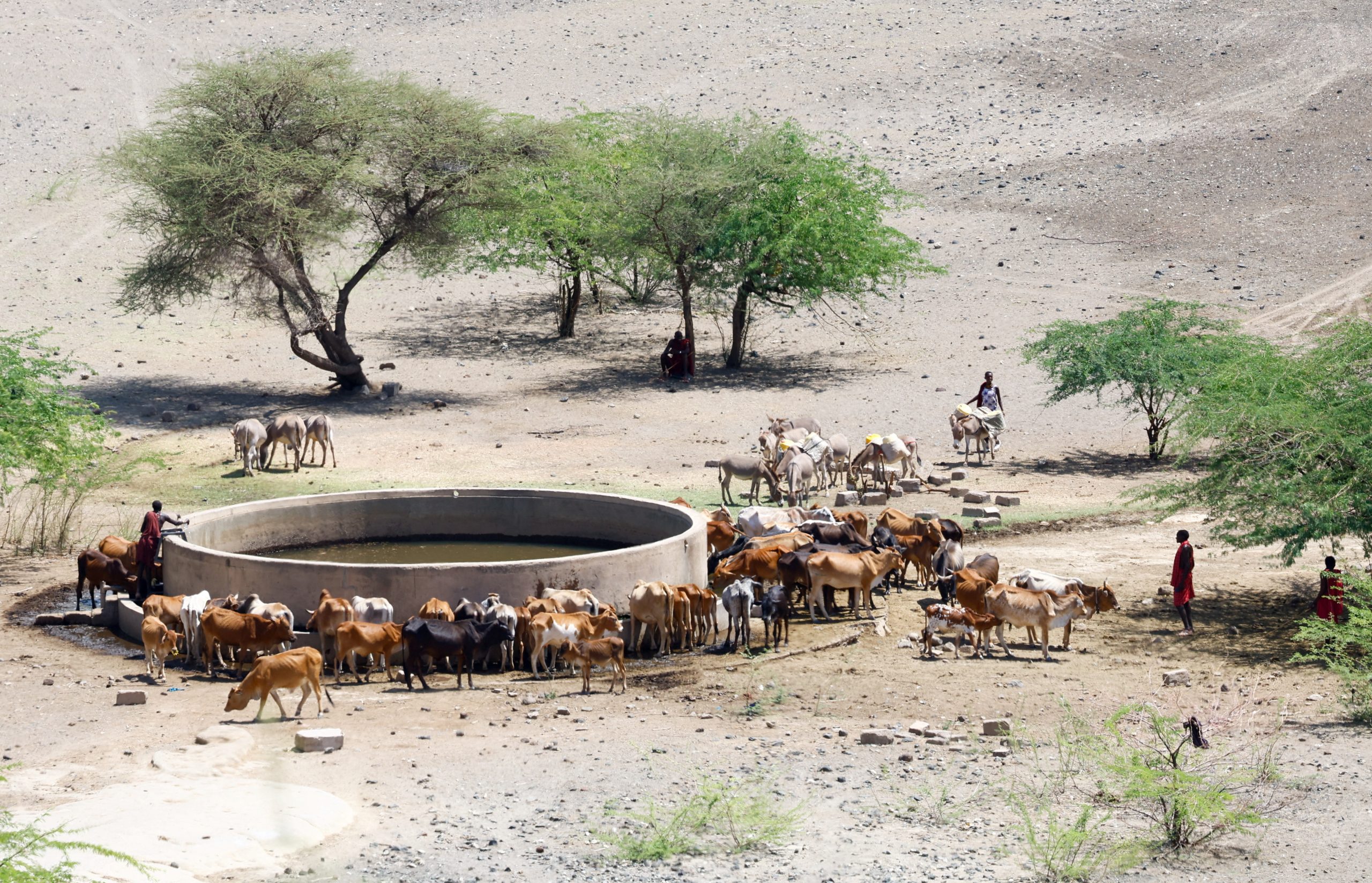
Communities in Kenya’s Tana River County are facing renewed hunger after another failed rainy season wiped out pasture and livestock, just months after the region began recovering from its worst drought in more than a decade.
Residents say last year’s rain season failed, leaving grazing land parched and markets poorly supplied. In the Tana Delta – a key food basket and fallback grazing area for pastoralists – rainfall was minimal, driving up food prices and accelerating livestock deaths.
“The cows have no milk because they have nothing to eat,” said Kuresh Rage Farah, a 25‑year‑old mother of three. “When we sell milk, we can buy food. Now there is nothing,” she said.
Aid agencies say families are resorting to emergency coping strategies, including selling breeding animals and other productive assets to survive. Some households are selling their last remaining goats to buy food, the World Food Programme (WFP) said.
The drought follows the onset of La Niña conditions in late 2024, which typically suppress rainfall in eastern Kenya and contributed to the failure of the 2025 short rains.
WFP has stepped up food assistance in affected communities, saying direct food distributions are needed as markets struggle to function. The agency is targeting around 17,650 people assessed to be in crisis‑level food insecurity.
Kenya’s meteorological department has warned that while upcoming rains may bring some relief, arid and coastal areas such as Tana River could still see below‑average and uneven rainfall, prolonging hardship into the year ahead.
About the Author