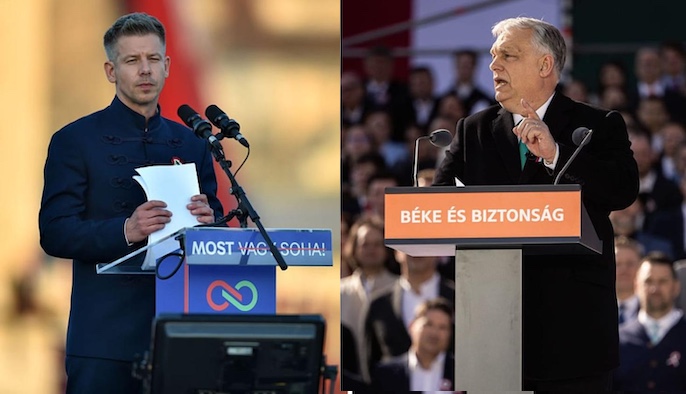
Hungary’s long-serving nationalist leader Viktor Orban has lost power after 16 years, following a decisive election victory by the centre-right Tisza party, marking a major political shift in the country.
Orban, 62, who had been a dominant figure in Hungarian politics and a symbol of “illiberal” governance for conservatives in Europe and the United States, was defeated by Tisza leader Peter Magyar, 45, whose party secured a commanding majority in the 199-seat legislature.
With nearly all ballots counted, Tisza was projected to win 138 seats — enough to secure a two-thirds majority required to reverse constitutional changes introduced under Orban and pursue anti-corruption reforms long demanded by critics within the European Union.
Record voter turnout reflected the significance of the election, widely seen as a turning point for Hungary’s political future.
“We have done it. Tisza and Hungary have won this election,” Magyar told thousands of supporters gathered along the Danube embankment in Budapest. “Together, we have replaced Orban’s system and together we liberated Hungary, we have reclaimed our country.”
Magyar had framed the election as a defining choice between “East and West,” warning that Orban’s confrontational approach towards Brussels risked isolating Hungary further from the European mainstream.
Orban, however, had argued that a Tisza victory would drag Hungary into conflict with Russia — a claim his opponent rejected.
“The election result is painful for us, but clear,” Orban said at his party headquarters, as some supporters were seen in tears.
The result is expected to reshape Hungary’s position within Europe, with leaders in Brussels hopeful that Budapest will now adopt a more cooperative stance. This could unlock up to €90 billion in support for Ukraine that had previously been blocked by Orban’s government.
Volodymyr Zelenskyy welcomed the outcome, pledging to work with Hungary’s new leadership to strengthen regional security and cooperation.
“It is important when a constructive approach is victorious,” he said.
Ursula von der Leyen, President of the European Commission, also welcomed the development, saying: “Hungary has chosen Europe. Europe has always chosen Hungary.”
Analysts say Magyar is now positioned to implement sweeping reforms, including tackling corruption and removing loyalists of Orban’s Fidesz party from key institutions.
However, some diplomats cautioned that issues such as migration policy could remain contentious, even under new leadership.
Orban’s defeat also carries broader geopolitical implications, weakening a key ally of Vladimir Putin within the EU and dealing a blow to right-wing political movements across the West, including figures aligned with Donald Trump.
Despite the loss, Orban defended his record, saying his leadership had focused on protecting Hungary’s national identity, Christian values and security.
“It’s incredibly exciting,” said Dorina Nyul, a 24-year-old supporter at the Tisza victory event. “It feels like this is our first and last chance in a really long time to actually change the system. And it’s, I can’t even describe the feeling.”
Faridah Abdulkadiri