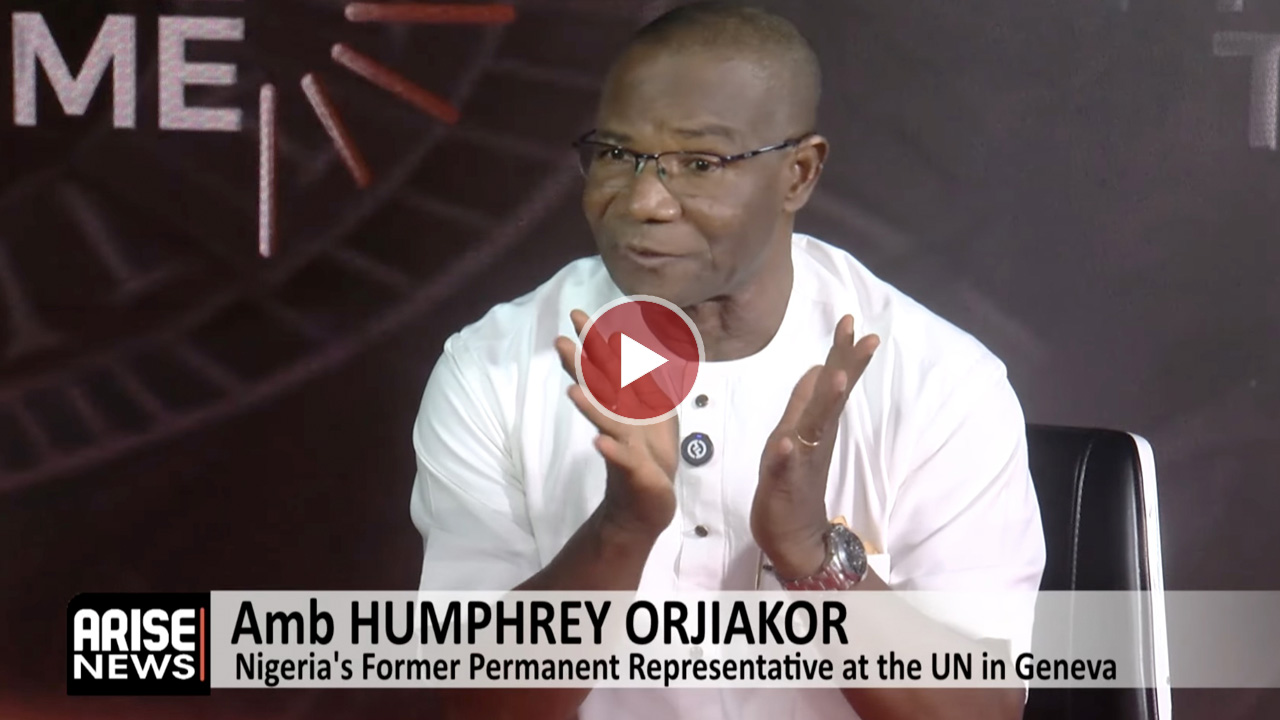
Nigeria’s former permanent representative at the UN in Geneva, Ambassador Humphrey Orjiakor, has said that the US-Nigeria diplomacy is shaped by President Donald Trump’s transactional approach and strategic access in Nigeria.
Amb. Humphrey said this in an interview with ARISE NEWS on Wednesday.
“President Donald Trump, as noted by many analysts, is a transactional president. The calculation he and his officials are doing tends to be where the transaction is most profitable; they concentrate effort there.
“However, there is something many of us outside the diplomatic practice miss. Take a country like Nigeria. If an acting envoy is given free access to the commanding authorities, including the President and Vice President, he is accomplishing on the cheap what a plenipotentiary would be lobbying for. Sometimes I see that playing out. In Nigeria, a first secretary can walk straight to the Villa and get the information they want and send it back to Washington.
“The downside is that if there is no plenipotentiary, their word doesn’t carry the same weight. When the Americans dropped Tomahawks in Sokoto, some reports said it was based on information from a ‘screwdriver seller.’ That is ridiculous. The ridiculousness may arise because there was no plenipotentiary of the US government here whose word would carry weight over lobbyists”, he explained.
Ambassador Humphrey said Nigeria’s engagement with the US is weakened by the absence of a confirmed ambassador, stressing the need for a plenipotentiary to ensure effective diplomacy.

“There is no gainsaying, foreign policy is one of the key instruments any government has to resolve domestic and external problems. A plenipotentiary is a trustee of the President. Something substantial gets lost when diplomacy is handled by acting envoys”, he stated.
Responding to questions on whether Nigeria can credibly criticise delays in ambassadorial postings when it has faced similar challenges, Amb. Humphrey said:
“The government has finally rethought that. They’ve appointed and screened people through the Senate, but there is a process: agrément. The host government has to agree to accept the person. You can’t just travel until you get that document. Waiting this long was definitely a strategic miscalculation, especially for strategic missions like Washington.”
On whether he was impressed with the calibre of ambassadors-designate, Amb. Humphrey said:
“Something is going on in the diplomatic community right now. Retired career ambassadors are quarreling over the ‘bastardization’ of the title. Everyone answers ‘Ambassador’ now, even if they are just an ambassador of a brand. If you go out of your way to appoint people with controversies about their character, you are raising a problem for the mission and the community. Even traders can now be seen as an authority because Nigeria had no legitimate authority to speak for it in Washington. Lobbies cannot substitute for the President’s representative.”
Responding to question on whether the US is conceding strategic ground to China and Russia, Ambassador Orjiakor warned that leaving diplomatic vacuums in key regions is dangerous.
“Even for a superpower, leaving a vacuum in strategic places like the Sahel down to Nigeria is dangerous. The American mission in Abuja is one of the biggest in the world. To keep it vacant ignores the strategic significance Washington once placed on it. When you leave that open, you see the kind of complaints Congress sent to President Trump lately about the influence of China and Russia. That is a vacuum the US created”, he explained.
Commenting on the three-year delay in filling key diplomatic posts under President Tinubu, Ambassador Orjiakor described the prolonged vacancies as unprecedented in his 35 years in the foreign service.
“In my 35 years in the foreign service, I don’t think there was any time Nigeria had vacant missions like this”, he stated.
Adding: “We hear excuses about funding and budgetary difficulties, but in diplomatic circles, that is a hard sell, especially when it’s all missions with no exceptions. I’m hoping that since names have been sent, they are just waiting for the agrément to arrive”, he said.
Amb. Humphrey further reiterated the importance of waiting for official approval before announcing postings, as premature announcements can lead to significant diplomatic complications.
“It is prudent to wait for the agrément before announcing a posting. I’ve seen cases where a posting to London was announced in advance, the British government said ‘no’, and it caused a lot of trouble. I’ve seen people hope for China and get sent to Vienna, which causes hell with their local supporters who wanted to do business in China. It is a fascinating world”, he remarked.
Favour Odima
About the Author