It is not uncommon to find a social media post in Uganda regarding the price of land or property being shared many times.
The argument is that land prices are extremely high especially around Kampala and in many major cities or towns across the country. With an ever-increasing population and poor infrastructure and services a few kilometres outside these major urban centres, it shouldn’t be entirely surprising that land is expensive.
I have always given an example of Mpigi town, which is nearer to Kampala than Entebbe but a difficult place to commute due to poor infrastructure. Yet with the Entebbe expressway or even the old road, Entebbe is an easier place to access.
So, land prices around Entebbe will always be high as not many people would make Mpigi their area of residence while working in Kampala. That though will change when the Kampala-Mpigi Expressway is complete.
However, construction of infrastructure such as expressways in Uganda takes a very long time, leading to people crowding around the urban areas where it is easier to commute to their workplaces and services such as hospitals and schools are better.
This increases pressures on land for housing purposes in urban areas. And as the population grows, land, an inelastic resource, becomes more expensive. Many young people end up struggling to build houses.
With the current housing shortage said to be over 2.4 million units in Uganda, poor infrastructure and services and an ever-increasing population, the price of land will only continue to rise unless the government does something.
And that wouldn’t be nationalizing land like some people urge whenever there are delays in executing infrastructure projects or when the price of land is seen as a hindrance to young people owning houses.
Government must realize that the most valuable asset the majority of Ugandans will ever own is a house. Once people own property, they wouldn’t want to create so much chaos that could lead to destruction.
Empowering young people to own houses should, therefore, be in the government’s best interests. Since land in Uganda for housing is largely owned by private entities or communities who determine its cost without any guiding principles, government could create a land bank from which individuals could buy land or a house. How would this work?
In urban areas like Kampala, government could buy large tracts of land in Mukono, Mpigi, Mityana and Luweero and demarcate it for planned housing estates similar with what private land dealers do but a bit better.
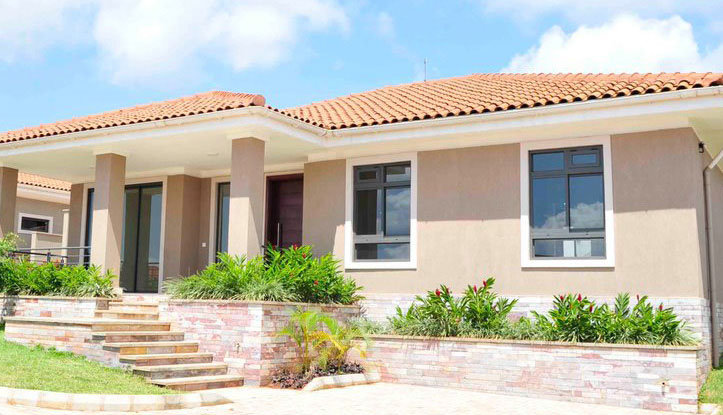
Land would be divided into small pieces with architectural plans drawn by leading experts. Schools, recreation and health facilities would be planned. The government would then sell the land at a rate lower than the private sector.
Nobody would be allowed to deviate from the plan. If you bought in an area with bungalow houses, you build the exact bungalow. If you bought in an area for storied villas, you build a storied villa as per the architectural plan.
Each person would be allowed to buy only one plot and you can’t sell it to another person at any rate. If a buyer prefers to sell, he sells it back to the government at the price he bought it.
This would protect the land from speculators who buy, hoard and then sell at an exorbitant price. Because the cost of building a house with a given architectural plan is known, banks would only rent a certain amount of money.
Banks willing to lend the money would not give it to the individual as is usually the case; rather, a prequalified construction company that can deliver the house within the known cost of building it with a capped interest rate or profit.
This is how Islamic banking works and, therefore, not a novel idea that is difficult to implement. Should a person fail to pay, the government buys it from the bank at the set amount and then sells it to somebody else. People could pay in installments over a given period.
Monthly deductions could be made to salaried workers such as civil servants interested. The government can then construct roads and expressways to those areas as many people would be living in these housing estates.
Public transport, schools and health facilities would be prioritized. More young people would end up owning houses and, therefore, a huge stake in their country and the ministry of urban planning would have something big to deliver. The price of land for housing would plummet too, enabling more people to own houses.
djjuuko@gmail.com
The writer is a communication and visibility consultant.
About the Author