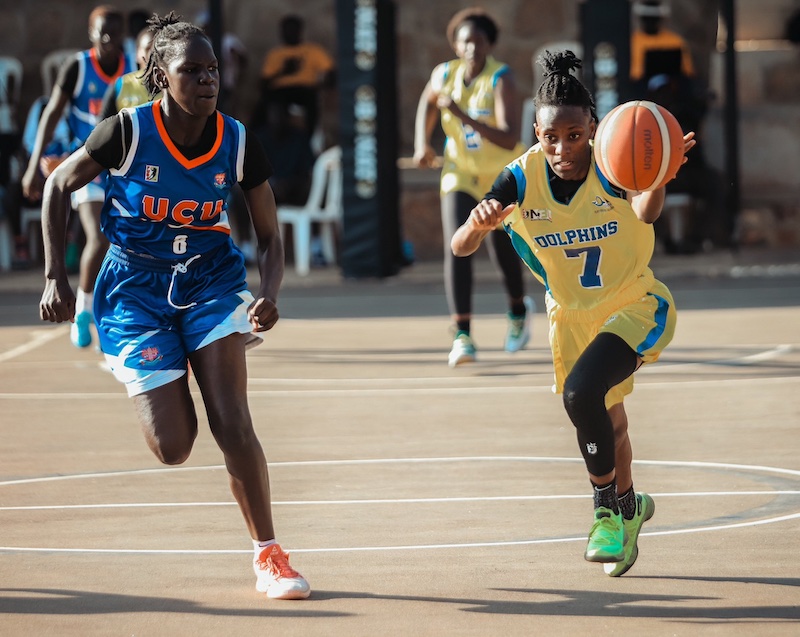
Few would have predicted the scale of the player exodus currently unfolding at JKL Lady Dolphins.
This is, after all, a team that won the 2025 National Basketball League (NBL) playoff finals 4–1 against JT Lady Jaguars—claiming a fifth title in six seasons. Even more impressive was the manner of victory.
After losing Game One of the best-of-seven series, JKL rallied with authority, masking what were later revealed to be significant off-court challenges. Those challenges have now come into the open.
The departure of key players—including 2025 MVP Hope Akello (now in Morocco), point guard Ruth Letaro, small forward Zainah Lokwameri, and centre Becky Longom—has dramatically altered the club’s outlook ahead of the 2026 NBL season, which tips off on February 6.
On paper, JKL no longer look as formidable. In reality, the club is undergoing a necessary reset. Club boss and technical director Fredericks Owora, popularly known as Freedom, admitted that the 2025 season stretched the club to its limits.
“The season was tough from a logistics point of view,” Owora said. “We need investment to manage the club better.”
Owora has run JKL since its founding in 2015, building it into the most dominant force in women’s basketball largely through personal sacrifice. But the one-man model has reached its limit. Without significant backing, sustaining an elite roster has become untenable.
UNAVOIDABLE
While Owora declined to confirm reports that players went unpaid for four months last season, he acknowledged that financial difficulties were real—and that change was unavoidable.
The loss of star players has raised questions about whether JKL’s dominance is finally coming to an end. For years, the Dolphins have formed the backbone of the national team, The Gazelles, and remained the benchmark in the league.
Owora insists that a competitive core will remain, but the club will increasingly rely on youth. Younger players, he notes, come with fewer financial demands and offer long-term sustainability.
In truth, JKL’s recent success was built around an experienced, high- value squad. Maintaining such a group without major sponsorship was always going to prove financially draining. The reset may weaken JKL in the short term—but it could rejuvenate the league.
As the 2026 season approaches, an opportunity has opened for challengers. KCCA Leopards, champions in 2014; JT Lady Jaguars, still searching for a maiden title; and UCU Lady Canons, eight-time champions last crowned in 2022, may sense that the balance of power is finally shifting.
For the first time in years, women’s basketball enters a season without a clear favourite—and that, perhaps, is JKL’s unintended legacy of transition.
About the Author