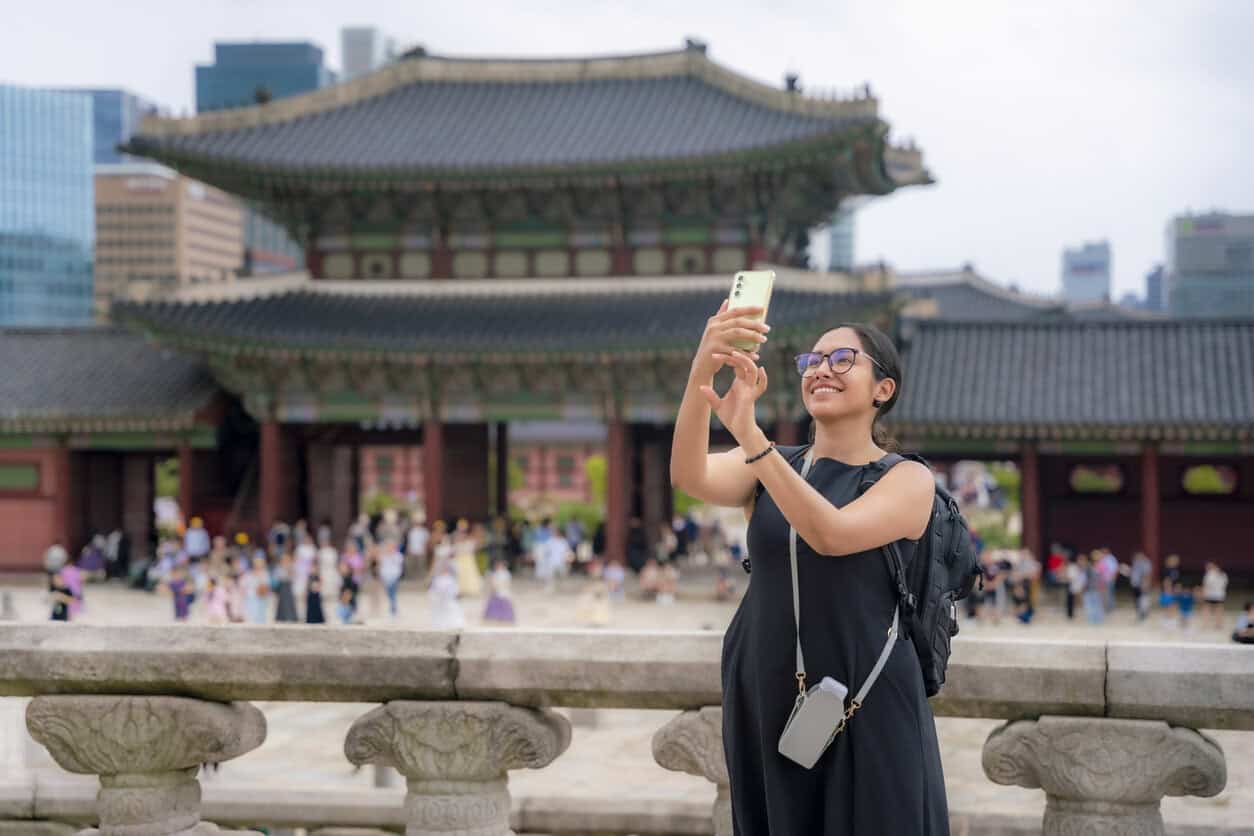
A young Latina woman in a black dress takes a selfie with Gyeongbokgung Palace in the background, enjoying her sightseeing trip in Seoul, South Korea.
On my recent trip to South Korea, I found myself learning the basics of Hangul, the country’s beautifully logical alphabet.
I also learned simple words and phrases that helped me navigate trains, cafés, and everyday conversations as a tourist.
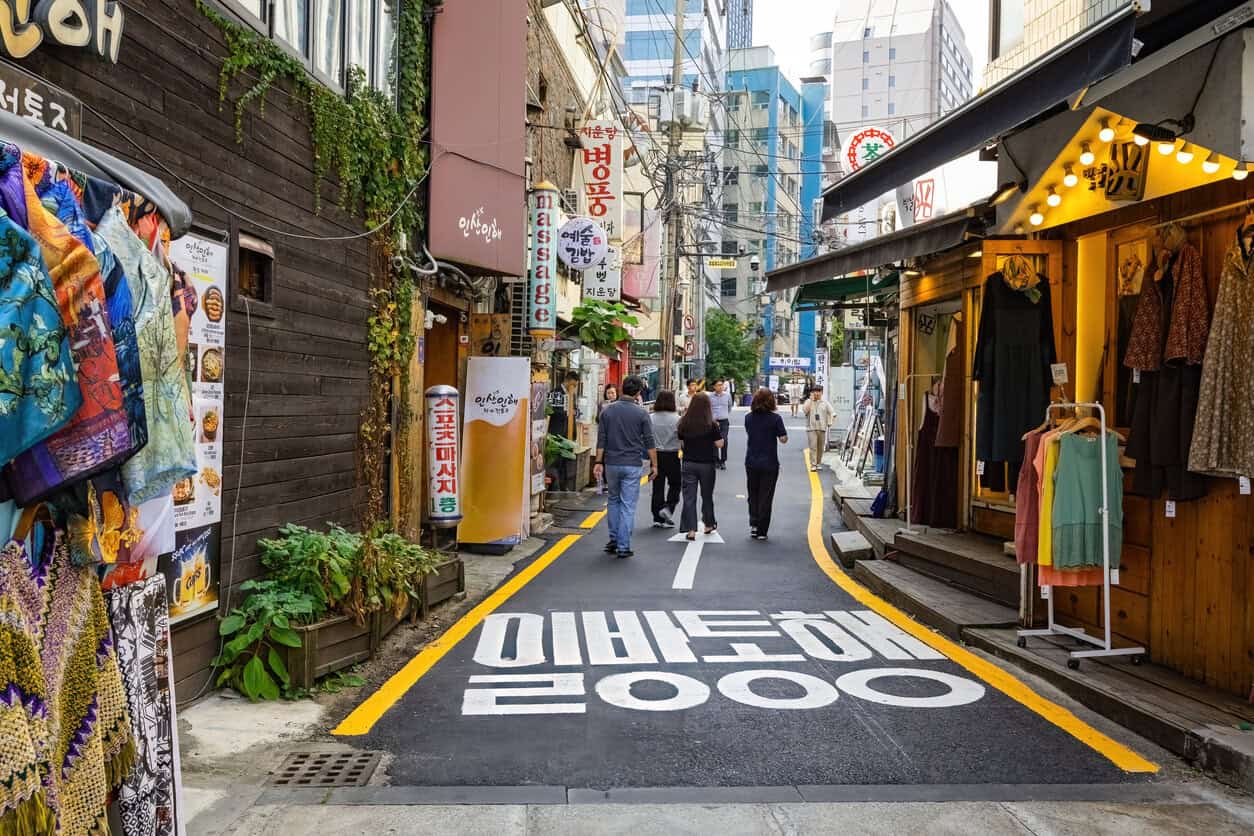
What started as a practical survival skill quickly became something deeper. As I was immersing myself in Korean culture, even briefly, it became easy to understand why the country’s lifestyle, values, and opportunities have become increasingly attractive. Many people are now seeking to broaden their horizons there.
That curiosity reflects a growing trend at home.
More and more South Africans are choosing South Korea as a destination to study, work, and build international careers.
Once viewed mainly through the lens of K-pop, K-dramas, and beauty trends, Korea is now firmly on the radar as a serious academic, professional, and cultural hub.
Why South Africans are looking east

One of the strongest drivers is education. South Korea’s universities are globally respected, particularly in technology, film, media, engineering, and the creative arts.
The country places a high value on discipline, innovation, and excellence, making it an appealing option for ambitious students. Degrees earned in Korea are internationally recognised, opening doors not only in Asia but across Europe, the United States and Africa.
Another major draw is teaching English. Many South Africans opt to teach English in Korean public schools and private academies, known as hagwons.
English proficiency remains a national priority in South Korea, with students beginning from a young age and continuing well into adulthood.
As a result, this creates a steady demand for qualified English teachers. South Africans are well-positioned to meet that demand thanks to clear accents, strong communication skills, and globally recognised qualifications.
Teaching English often serves as a gateway into Korean life. In addition, it allows South Africans to earn a stable income, gain international work experience, and immerse themselves in a new culture. All of this helps them build a CV that stands out globally.
Social media has amplified this movement.
TikTok, YouTube, and Instagram are filled with South Africans documenting their journeys, from classroom experiences and salary breakdowns to visa advice and cultural adjustments. Furthermore, these personal stories have removed much of the fear and mystery.
This makes the idea of working or studying in Asia feel achievable rather than daunting.
ALSO READ:What to stream this weekend: KPop Demon Hunters brings music, magic, and pure fun
A Student living the Korean dream
For Hannah Potgieter, a young South African now studying in Korea, the decision was driven by creativity and passion rather than trend. Potgieter Hannah Joy is a first-year student in the Department of Filmmaking at the School of Film, TV and Multimedia. She says her love for K-cinema shaped her path.
“I decided to study abroad due to my love for Korean cinema,” she explains. “I wanted to learn in a place where storytelling is constantly evolving and where film is taken seriously as both art and industry.”
Potgieter was accepted as a scholarship student after submitting an impressive portfolio that included a Korean short film script, a rare achievement for an international applicant.
“Being here feels like I’m not just studying film, but living it every day,” she adds. “The environment challenges you creatively and pushes you to think globally.”
Studying in South Korea: What you need to know

South Africans wishing to study in Korea typically apply for a D-2 student visa after being accepted into an accredited institution. Most degree programmes require TOPIK (Test of Proficiency in Korean) Level 2 or 3, depending on the field. However, some universities offer courses taught in english.
Required documents usually include academic transcripts, a valid passport, proof of financial resources, a statement of purpose and, in some cases, a Korean language certificate. Certain programmes may also request IELTS or TOEFL results.
Students on a D-2 visa are permitted to work part-time, generally up to 30 hours per week, provided they receive official permission and meet language and academic requirements. This allows students to support themselves while gaining valuable local experience.
Teaching English in Korea: key requirements

Teaching remains one of the most popular and accessible career paths for South Africans in Korea. To qualify, applicants generally need:
- A bachelor’s degree in any field
- A recognised TEFL or TESOL certificate
- A clean criminal record
- A valid passport and health clearance
- A job offer from a Korean school or academy
Once employed, teachers typically apply for an E-2 teaching visa, which allows legal full-time employment. Benefits often include accommodation or housing allowances, medical insurance, and paid leave, making it an attractive option for first-time expatriates.
ALSO READ: Hangul is more than writing: It is woven into Korean culture
Working in Korea after graduation

After completing their studies, many international students transition to a D-10 job-seeker visa, which provides time to secure employment in Korea. Once a job offer is secured, graduates can apply for a work visa. The most common is the E-7, which is designed for specialised professions.
Some sectors, including caregiving and education, offer structured pathways. In these fields, training and certification can lead to longer-term visas and even permanent residency.
Learning the language: A key to success

Even when courses or jobs are offered in English, learning Korean significantly improves daily life, employment prospects, and cultural integration. The TOPIK exam is widely used to measure proficiency and is often required for visas and long-term employment.
South Africans can learn Korean through university language institutes, private language schools offering immersive programmes, or TOPIK-focused preparation courses.
Many begin learning even before arriving, starting with Hangul, a system that can be mastered in days. Over time, they build conversational skills.
A future beyond borders

South Korea offers more than a change of location. For many South Africans, it represents growth, reinvention, and global opportunity.
From English classrooms and film schools to viral social media journeys and personal breakthroughs, Korea is increasingly becoming a place where South Africans don’t just visit. More than this, they build futures.
And sometimes, as learning Hangul taught me, the journey begins with a few new words and the courage to follow where they lead.
About the Author