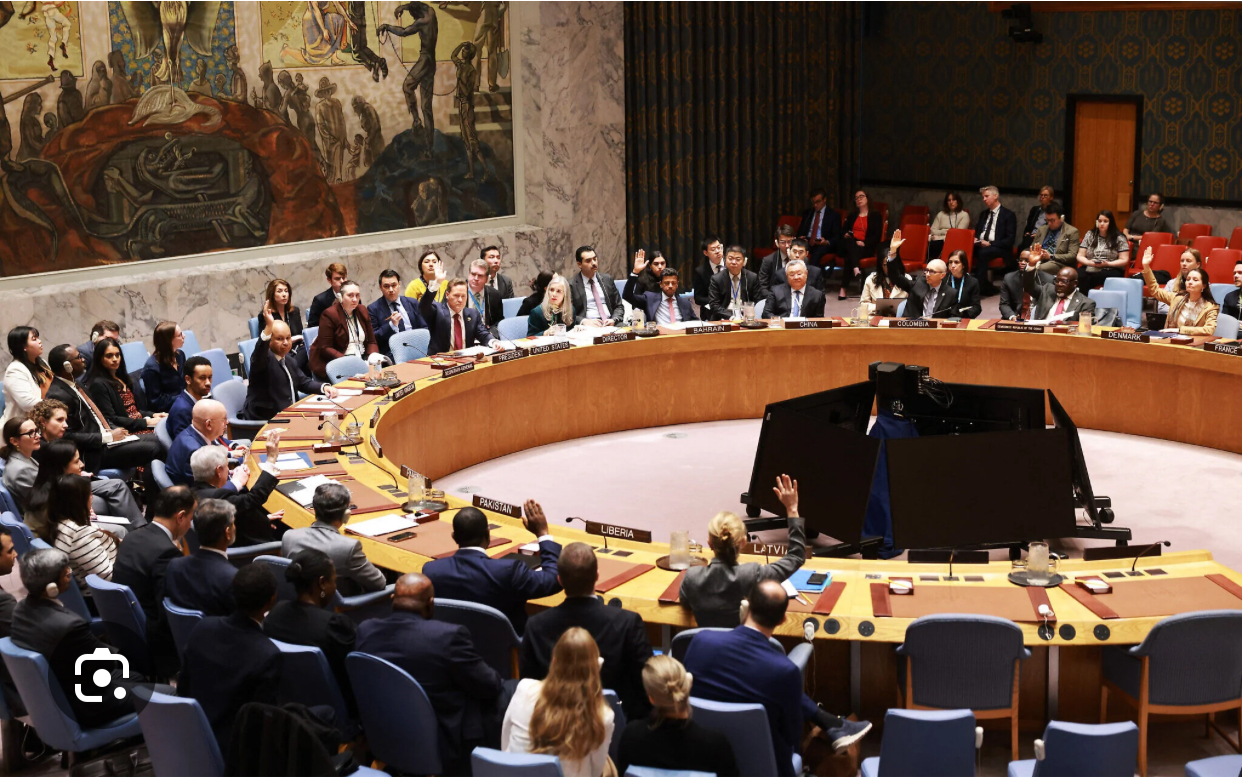
Global divisions came to the fore at the United Nations Security Council as Russia and China, on Tuesday, vetoed a resolution aimed at securing the Strait of Hormuz.
The draft resolution, spearheaded by Bahrain and backed by the United States, was brought to a vote after intense negotiations that had already stripped out its most forceful provisions.
Gulf states had initially pushed for explicit authorization to use military force to protect commercial shipping in the strategic waterway, but the final version instead focused on international cooperation and reaffirming the principle of freedom of navigation.
Despite those compromises, Russia and China voted against the measure, exercising their veto powers as permanent members of the Security Council. The resolution still secured 11 votes in favor, with two countries abstaining, highlighting widespread but not unanimous support.
Bahrain’s Foreign Minister, Abdullatif bin Rashid Al Zayani, expressed regret over the outcome, saying Gulf nations viewed the resolution as a critical step toward stabilizing a vital global trade route. He warned that continued threats to shipping in the Strait of Hormuz could have serious implications for global energy supplies and economic stability.
The Strait of Hormuz is one of the world’s most important maritime chokepoints, with roughly a fifth of global oil consumption passing through it daily. Any disruption in the narrow passage between the Persian Gulf and the Gulf of Oman has the potential to send shockwaves through international energy markets.
Recent months have seen rising tensions in the region, including incidents involving oil tanker seizures, increased naval deployments, and drone-related security threats.
These developments have heightened concerns among Gulf countries and major energy consumers about the vulnerability of the route.