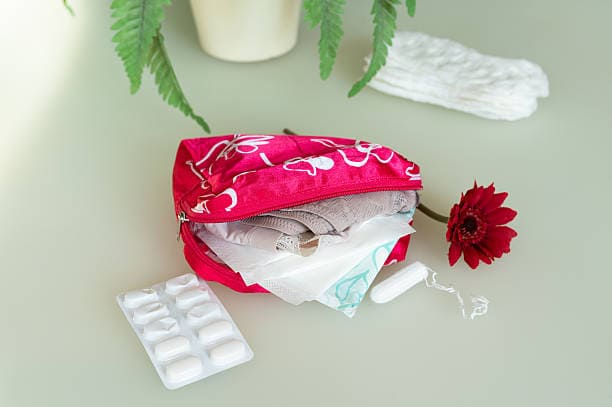
Feminine hygiene essentials stored in a small cosmetic pouch with sanitary pads, tampon and pain relief tablets. Menstrual care and women’s health concept in a calm, natural setting.
Research by the University of the Free State (UFS) has discovered traces of toxic chemicals in sanitary pads, along with other menstrual products that disrupt hormones in the female body.
Sanitary pads and panty liners are multilayer absorbent hygiene products used by menstruating individuals for several days each month. The UFS research team, consisting of doctors and professors from the department of chemistry, analysed 16 brands of sanitary pads and seven pantyliner brands.
The aim of the study was to evaluate the presence and profiles of the chemicals in sanitary pads and pantyliners sold in South Africa, where it was uncovered that even ‘chemical-free’ products contain harmful chemicals.
It found:
- 50% of phthalates were detected in all pantyliners and in pads
- Bisphenols were found in all sanitary pads and 75% of pantyliners
- Parabens were discovered in over 81% of pads and in 75% pantyliners tested
These chemicals are also known as “female endocrine disruptors” and are widely used in many consumer products, including personal care products.
After every sanitary pad and pantyliner was tested, at least two endocrine-disrupting chemicals (ECDs) were discovered in menstrual hygiene products.
“The findings showed widespread contamination across all products tested.”
ALSO READ: Toys, nappies and wipes clog Joburg’s sewer system
Old solutions for modern problems -The use of plasticisers
Phthalates, parabens, and bisphenols are groups of chemicals that share the basic structural characteristics mainly used in plastics.
These plasticisers are chemical additives used to improve the flexibility, durability, and transparency of plastics such as polyvinyl chloride (PVC), while also providing products with a longer lifespan.
Ultimately, sanitary products should not be made using any harmful chemicals, especially in an age where advanced technological solutions could be applied to improve the overall state of menstrual hygiene products and way of life for menstruating South Africans.
Considering the eco-friendly and health-conscious lifestyle that some have adopted in society , brands have created ‘organic solutions’ without the benefits.
False advertising is a violation of consumer rights in South Africa, and it is disheartening to read the amount of chemicals females are exposed to daily, despite products being advertised as “chemical-free”.
Other studies conducted in the United States, during 2024, have also shown “tampons as a source of exposure to metal(oid)s” during vaginal insertion, where unsafe levels of exposure to toxic metals were discovered in tampons.
Reproductive Health Risks
According to the UFS researchers, the frequent use of chemically-infused products over longer periods of time can lead to the growth of breast cancer cells.
Increased exposure to phthalates has also been linked to fertility issues amongst females and males, premature puberty, endometriosis, and ovulation disorders.
Prolonged exposure to these chemicals can cause serious damage, including chronic poisoning, which is of concern and harm to the reproductive system and liver.
Potential health risks also include cases of contact dermatitis, thyroid hormone-disrupting behaviour, and increased sex steroid hormone levels.
‘Medical Misogyny?‘
Researchers noted that these substances may have been intentionally added to the products and may have been spread through contact with plastics, adhesives and the process of manufacturing, where products become contaminated.
This implies that the manufacturing processes of these items may not be as hygienic and chemically clean as one might think.
Following the release of the studies’ findings, social media has flooded with users questioning the potential attack on the female reproductive system.
A commenter on X pointed out:” They are really trying to kill us. Mind you, I’m on my period right now. Which explains why every time my cycle is over, I always have a bad rash and pimples. Yoh, they want to finish us.”
Another comment on X noted that: “Medical misogyny is a bottomless pit and this is one of its myriad forms.”
A third said, “This doesn’t affect only our women; it also affects men. They are killing the nation.”
There is a call for the South African Human Rights Council (SAHR), the South African Bureau of Standards (SABS), and the Department of Women, Youth and Persons with Disabilities (DWYPD) to address the issue. None of which have yet publicly commented on the matter.
The UFS research team was also asked to publicly disclose the names of the affected brands so that users are aware of which products to avoid.
READ MORE: South African women remain locked out of economic power