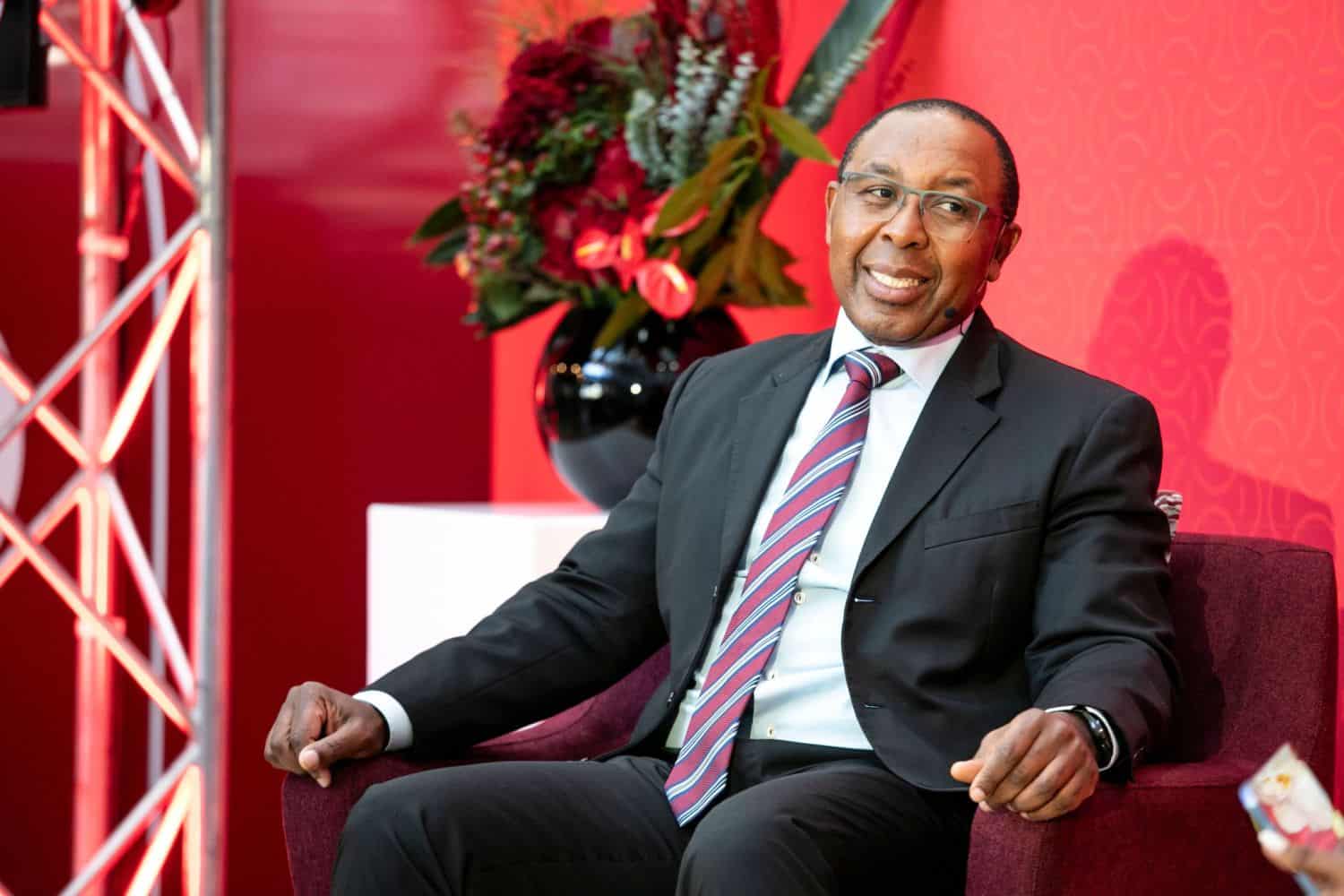
There is a new sheriff in town, and his name is Kenny Fihla. Since his appointment as Absa CEO, the bank’s shares have outperformed the market, signalling strong investor trust and confidence in the company’s future prospects.
Absa’s investor confidence has long been lower than that of its competitors due to leadership instability. The lender faced significant leadership instability since Maria Ramos left in 2019, experiencing a total of six CEOs and interim leaders.
This leadership instability caused strategic drift, eroded investor confidence, stifled innovation, and impacted performance compared to peers like Capitec, Standard Bank and FirstRand. It is Fihla’s appointment that is hoped to restore stability, focus, returns, and overcome operational challenges, which he appears to be doing.
ALSO READ: Is Absa on a witch-hunt? ‘Leakers’ placed on leave
Fihla’s presence at Absa
Fihla started his tenure at the bank on 17 June 2025, after being at Standard Bank for at least 18 years. His presence has been felt at Absa, as the bank’s share price has gone up by almost 30% since then, pushing its total market value back above R200 billion. Today, Absa’s market value is sitting at R211 billion.
According to Business Day, Absa’s share price was about 17000 cents when Fihla took over, and it is now over 23000 cents. This sharp increase shows how strongly the market has responded since his arrival, with the bank delivering the best share price growth among the major banks over the period.
FirstRand, the country’s largest bank by market valuation, is up 16% in the same period, while Standard Bank is up 17% and Capitec 13%. Nedbank has edged up just 3% in what has been an underwhelming year for the green bank’s share price, down 9% for the year to date.
Fihla to resuscitate Absa
The first sign that Fihla can resuscitate Absa was in August when the bank announced that it made R11.9 billion in headline earnings in the first half of 2025. While one of its competitors, Standard Bank, made R24 billion in the same period.
Headline earnings are a way of measuring a company’s core profit. Basically, how much money it makes from its main business activities, without the noise of unusual or one-off events.
ALSO READ: Who will lead next? Search for Standard Bank and Sars bosses begins
During the period, Absa’s revenue increased by 5% to R56.5 billion, and the bank’s return on equity increased to 14.8% from 14.0%.
Ex-Standard Bank employees join Absa
One of Fihla’s first stops as CEO was Uganda. The group plans to merge its two businesses in Tanzania to build scale. To deepen the bank’s pan-African presence, Fihla snatched two of Standard Bank’s employees.
In September, Zaid Moola was appointed as Absa’s CEO of the corporate and investment banking (CIB) division. At Standard Bank, he led the global markets unit, which recently recorded a record profit of R5.4 billion in the six months to end-June, a surge of 64% from the previous period.
Absa also appointed Musa Motloung as group strategic risk officer. At Standard Bank, he has held the role of chief risk officer in the CIB business. Motloung will report to the chief risk officer, Rajal Vaidya.
Some have speculated that 58-year-old Fihla left Standard Bank, where he was a deputy CEO, because the bank’s retirement age would have prevented him from becoming CEO. Standard Bank’s CEO Sim Tshabalala is 58 and will be 60 when he retires in 2027.
Standard Bank’s board decided to increase its retirement age for executives from 60 to 63 in June. However, this will only apply after Tshabalala’s tenure. Absa’s retirement age is also 63.
NOW READ: Capitec Bank loses its crown as Africa’s most valuable bank. Here’s the new ranking
About the Author