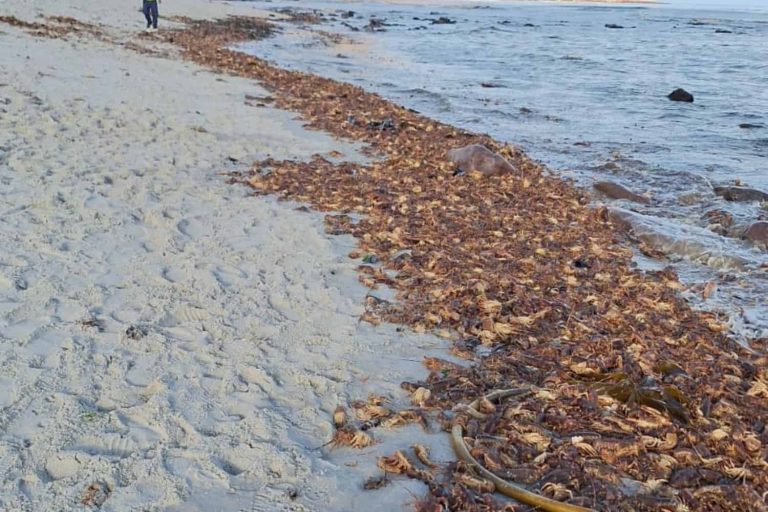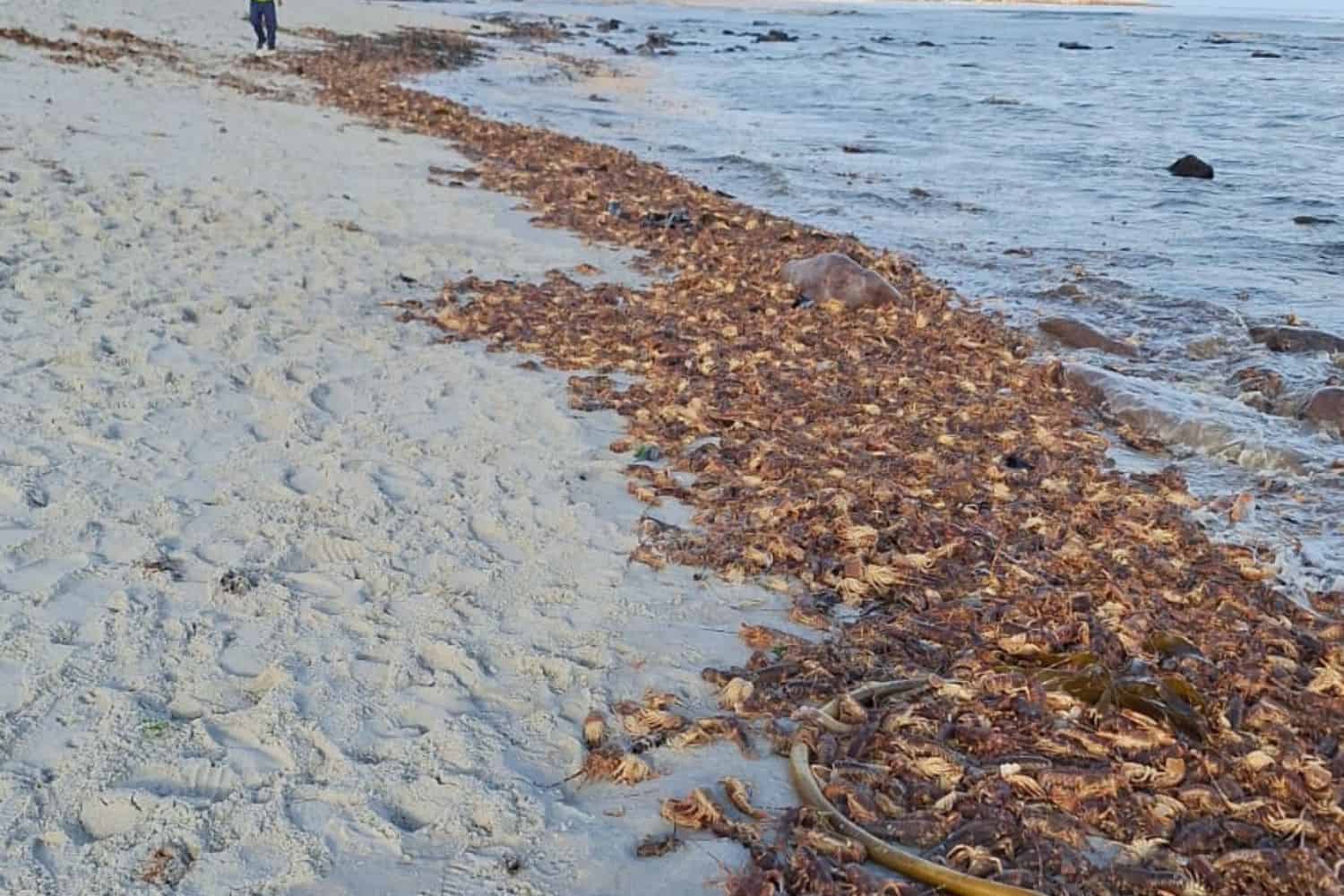
Every late summer and autumn, a natural but destructive phenomenon grips South Africa’s West Coast.
Harmful algal blooms, massive accumulations of single-cell algae called phytoplankton, built up in coastal waters stretching from St. Helena Bay through Elands Bay, Dwarskersbos, Doring Bay and Lamberts Bay.
Locally, these blooms were known as “red tide,” and their consequences for marine life were devastating.
As the blooms decayed in inshore waters, they stripped oxygen from the sea.
The Department of Forestry, Fisheries and the Environment (DFFE) explained that this oxygen depletion triggered mass die-offs of marine organisms, with the West Coast rock lobster, known locally as kreef, among the most visibly affected species.
“When these blooms start to decay in inshore areas, they cause a depletion of oxygen levels in the seawater,” said DFFE spokesperson Zolile Nqayi. “This, in turn, often results in mass mortalities of marine organisms.”
What followed were events locals called “walkouts”, though the term was misleading. Lobsters did not march onto the beach by choice.
The department explained that oxygen levels dropped, they migrated toward the shoreline where wave action slightly increased oxygenation.
When the tide retreated, they were stranded. “Females and juveniles, who naturally lived closer to shore than males, were typically the first to wash up and made up a disproportionate share of the casualties.”
ALSO READ: Don’t eat the seafood: Residents warned not to collect washed-up deadly crayfish
The scale of the damage to the lobster population
The environmental toll of these events was not abstract. Nqayi pointed to recent figures that illustrated just how severe a single walkout could be.
“Large walkouts of 550 tonnes in 2022 and 50 tonnes in 2023 caused a substantial reduction of lobster densities in Elands Bay, as recently revealed by research conducted by the Department’s Crustacean Research team,” he said.
That reduction rippled through the entire local fishing economy. Lower lobster densities meant smaller catches in the seasons that followed, and the communities whose livelihoods depended on the West Coast rock lobster resource bore the brunt of that pressure.
“Rock lobster walkouts are therefore not only a disruption for marine life but also negatively impact livelihoods within the fishing industry,” Nqayi added. “Particularly impacted are West Coast fishing communities whose livelihoods depend on the West Coast rock lobster resource.”
The DFFE responded to walkouts through a formal West Coast Rock Lobster Walkout Contingency Plan, which involved relocating live lobsters to oxygenated waters, safely disposing of dead ones, and deploying scientists to monitor the bloom, record species washed out, and analyse size and sex composition.
Why eating the lobster is a serious health risk
The sight of lobsters on the beach prompted some coastal residents to collect them for consumption.
Health authorities and the DFFE warned that this was extremely dangerous on multiple levels.
The first problem was straightforward: it was impossible to know how long a washed-up lobster had been dead. The second was less visible and far more alarming.
“Even lobsters that are still alive could be contaminated with algal toxin,” Nqayi warned. “The latter can cause adverse reactions in humans when consumed.”
Harmful algal blooms were associated with five distinct and serious illnesses, neurotoxic shellfish poisoning, paralytic shellfish poisoning, diarrheic shellfish poisoning, amnesic shellfish poisoning, and ciguatera.
Nqayi noted that three of these shared overlapping symptoms, making them difficult to tell apart.
“The three illnesses, NSP, PSP and DSP, are difficult to distinguish, because they have similar symptoms including diarrhea, numbness, dizziness, and disorientation,” he said.
Nqayi added that symptoms of amnesic shellfish poisoning include abdominal cramps, vomiting, and disorientation, while ciguatera produced nausea, diarrhoea, vomiting, and a distinctive temperature reversal effect.
In the most severe cases of paralytic and amnesic shellfish poisoning, death was possible.
“Humans normally contract these illnesses by eating infected bilvalve shellfish (mussels), which as filter feeders concentrate the plankton in their digestive tract.”
On whether there was a cure, the DFFE deferred to the medical community. “This is a medical question for which the Department is not qualified to provide a response,” Nqayi said.
The legal consequences of collecting red tide lobster
Beyond the health risks, picking up lobsters during a red tide was a criminal offence. Under the Marine Living Resources Act (MLRA), possession of West Coast rock lobster required a valid permit. whether commercial, small-scale, or recreational, and the lobster had to have been caught using a hoop net, ring net or trap.
A lobster washed up during a red tide met none of those conditions.
“If one is caught collecting WCRL during a red tide, you are contravening the MLRA and its regulations,” Nqayi said. “The lobster will be confiscated and a fine may be issued if the value of the fine amounts to below R5 000.”
The consequences escalated sharply above that threshold. “If the fine amount to be issued exceeds R5 000, then the offender will be arrested and a criminal case will be opened against him or her,” Nqayi added.
In short, what might have appeared to be a free meal could have resulted in a criminal record.
How authorities responded and what happened to the lobsters
The DFFE’s contingency response involved both immediate rescue operations and longer-term clean-up.
Live lobsters collected from affected beaches were transported to areas of the ocean unaffected by the bloom and released.
Those that had not survived were handled differently.
“Those lobsters that have not survived will be buried in deep trenches that are dug on the beach,” Nqayi explained.
Community members were not excluded from the response effort, they were formally incorporated into it.
“Community members are appointed through the Working for Fisheries/Expanded Public Works Programme to assist with collecting the lobsters and packing them into crates for transport to a safe area,” Nqayi said.
This gave local residents an official, lawful, and compensated way to engage with the crisis rather than resorting to illegal collection.
Fishery Control Officers also engaged informally with communities near affected beaches, particularly around Elands Bay, to communicate the dangers of collecting and consuming red tide lobster.
“The communities have been engaged informally by the Fishery Control Officers with regards to the dangers of collecting and consuming ‘red tide’ lobsters,” Nqayi noted.
The message from the DFFE is consistent: the beach is not a marketplace during a red tide.
READ NEXT: Red tide leaves fishing communities struggling to survive
About the Author