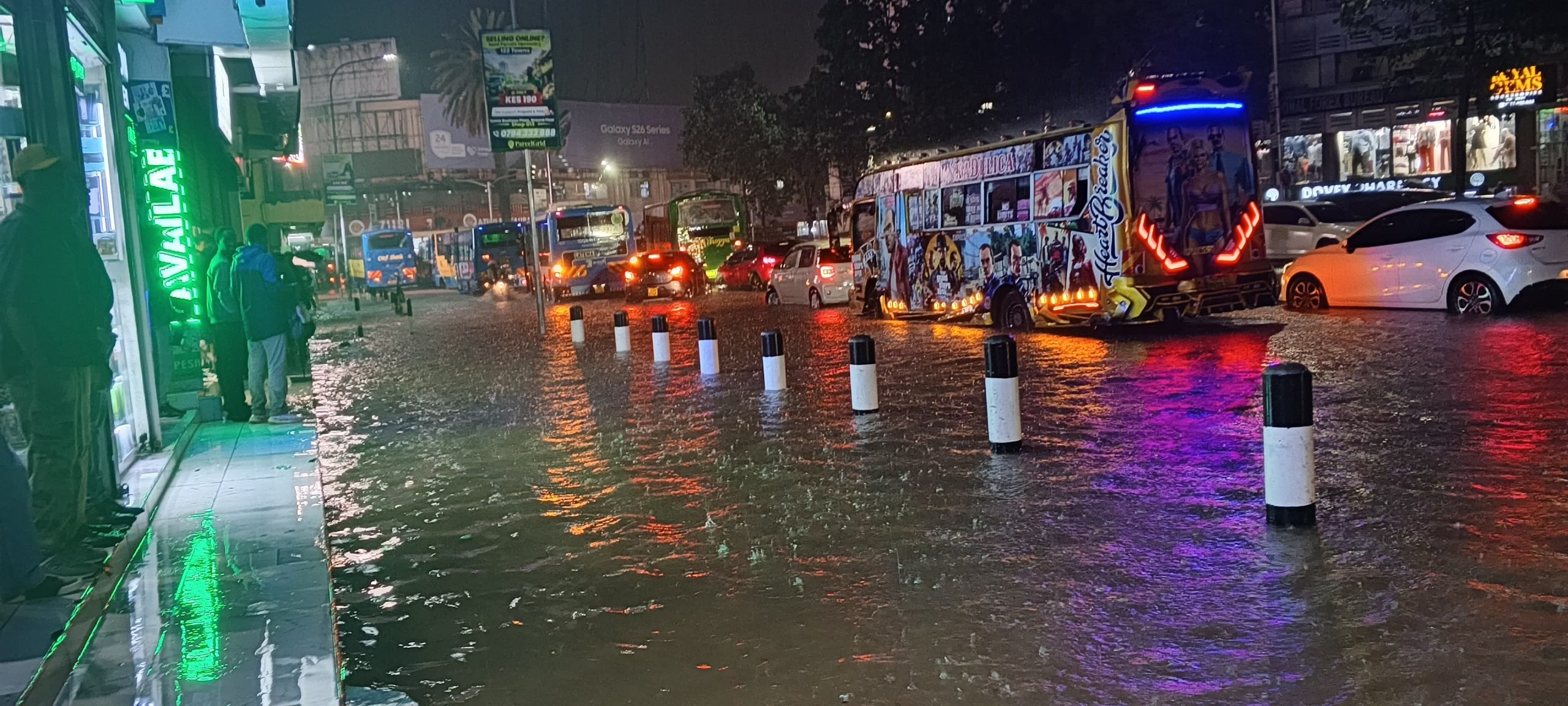
When the rains came on Thursday night, pounding Nairobi until dawn, the city woke up to a familiar nightmare. Streets turned into rivers, sewers overflowed, and residents scrambled to salvage their daily routines amid the deluge.
By mid-morning, the scene across the Capital’s estates told a story of resilience, frustration, and systemic neglect. Waterlogged streets, clogged drains, and disrupted livelihoods revealed a city still unprepared for seasonal downpours.
In Mariguini, South B, the impact was immediate and stark. Water lapped along the long stretch of the road, businesses remained closed, and neighbours waded through the murky currents. Roy Kabugi, who has lived here his whole life, pointed to a blocked channel where mattresses and other debris from last year’s demolitions had formed an impromptu dam. “All the filth that came from the ghetto went into the sewers, swirling around and then getting stuck there, so all the problems ended up in the drainage. Now the rains are here, and the effects are obvious,” he said with frustration.
South C offered no respite. Near Mombasa Road, a burst sewer lifted the cabro paving blocks, creating a foul-smelling stream across the pavement. A mother, her child strapped to her back, scaled a low wall to get on a boda boda rather than step into the contaminated water, a quiet act of survival amid public neglect.
By contrast, the affluent city estates, such as Kilimani, showed the advantage of organised upkeep. Residents who employ handymen to clear drains had fewer problems, underscoring the stark divide: where resources exist, water finds a way out; where they do not, it finds a way in.
But back in South B, patience ran thin. County teams had visited several times this week but mostly documented damage, leaving residents to wonder why small showers continue to wreak havoc. “Only ten minutes of rain is enough to cause flooding,” Roy said, noting that reactive cleanup efforts often leave debris piled near drains, ready to be swept back in with the next storm.
Mechanic Anthony Mwangi described the economic toll in blunt terms: “We haven’t even worked for three days; the water has been there. I even tried to go live on social media to ask for help, but it seems they’ve failed us.” Others, like welder Maxwell Makhokha, have improvised by digging channels through walls to divert water away from dangerous electrical equipment. “This is all our collective problem,” he said, explaining why neighbours are taking matters into their own hands.
On Jogoo Road, commuters also complained of prolonged traffic jams as blocked drainage turned sections of the road into temporary rivers, underscoring the cost of a reactive rather than proactive approach to flood management. Although authorities made a visible effort to clear the drains, the work appeared shoddy, like in South B, where heaps of plastic and debris were dumped just a few metres away, likely to be washed back into the drainage system during the next rains.
The Kenya Meteorological Department had earlier warned that heavy rains would persist until March 9, peaking between March 4 and 7, with rainfall exceeding 20mm in 24 hours. Flash floods, poor visibility, and widespread disruption are expected across counties from Turkana to Mombasa, including Nairobi.
Walking through these neighbourhoods, the pattern was clear. Flooding is not a single event but a cycle; burst sewers, dumping, clogged drains, reactive cleanups that leave waste next to the drains, and then the next storm. But for residents in these affected areas, the question is no longer whether the heavy rains will come, but when the government will finally break the cycle and protect the people who live in its low-lying, overlooked corners
About the Author