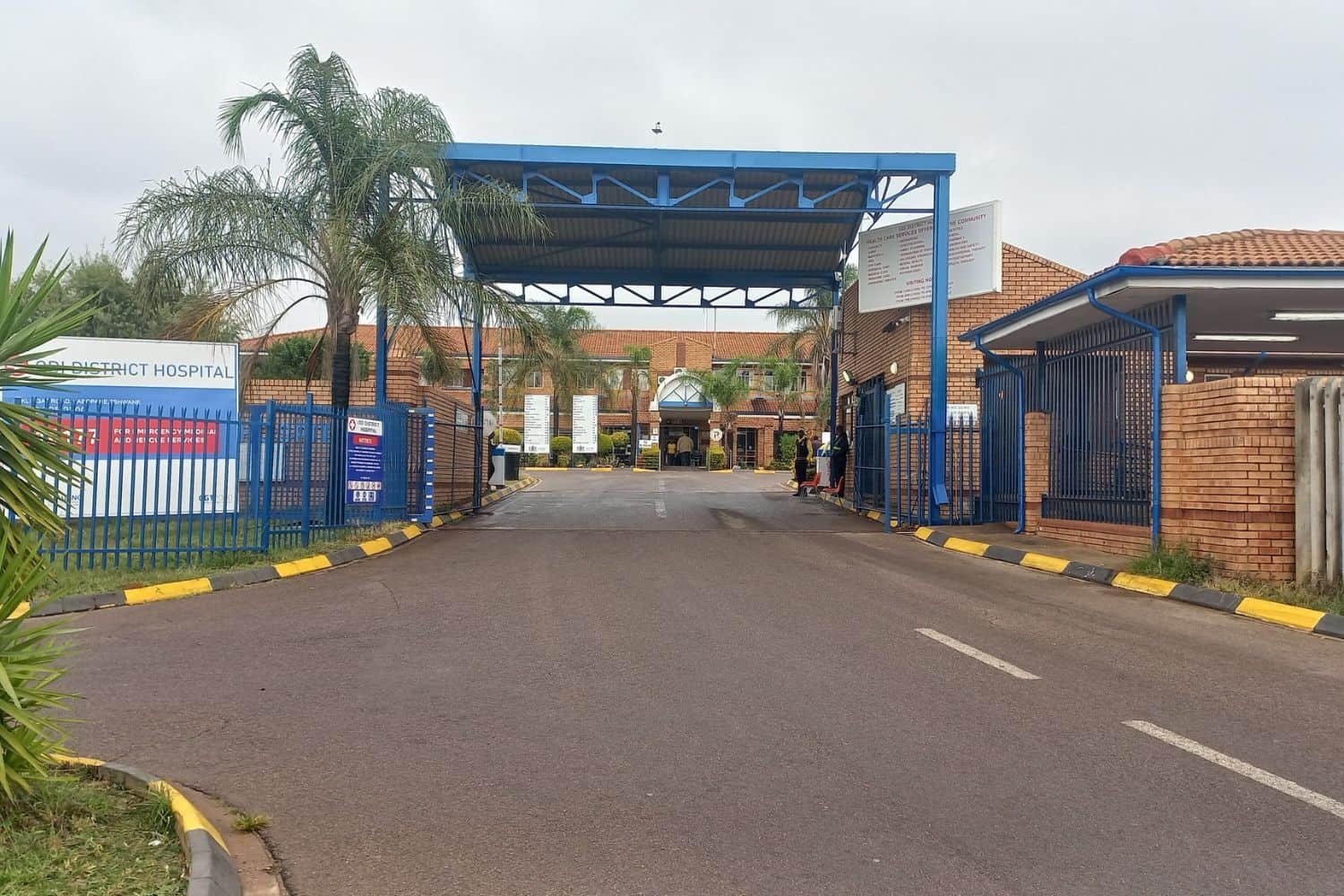
The Gauteng Department of Health said reports of compromised patient care at Odi District Hospital are misleading.
“The department wishes to reassure the public that all services at Odi Hospital continue without interruption and patient care remains fully safeguarded,” it said on Tuesday.
Alleged supplier cut-off
DA Gauteng spokesperson for health and member of the provincial legislature, Madeleine Hicklin, alleged on Monday that Odi District Hospital’s R33 million debt forced suppliers to withdraw essential services.
She said the situation has become untenable for those keeping the hospital running.
“Suppliers have begun cutting back on essential support after accumulating R33 million in unpaid bills from the hospital,” she said.
Cut off from cash flow and facing payment uncertainty, service providers must scale back operations or withdraw entirely, said Hicklin.
“Approximately 80% of this debt is overdue beyond the legally prescribed 30-day payment period, leaving many suppliers unable to pay staff or restock supplies,” she added.
According to Hicklin, the Gauteng Provincial Legislature’s Portfolio Committee on Health and Wellness uncovered the scale of the crisis during a recent oversight visit, where Finance Manager Charles Lesufi disclosed the full extent of the hospital’s unpaid bills.
However, the health department denies this is the case.
ALSO READ: Motsoaledi suspends Buthelezi and two senior officials over fraud and theft charges
Department says R30m approved for payment
The department confirmed that the hospital has indeed built up payment amounts “totalling R32 274 684”. But, they argue that R29.6 million is in process and legally on track.
“While the hospital has accruals totalling R32 274 684, a portion of R18 590 873 is already on approved payment proposals and R11 062 665 is within the legally prescribed 30-day payment period, meaning these obligations are being met in line with the financial regulations,” it said.
A closer look at the department’s figures reveals that officials accounted for only 92% of the hospital’s R32.2 million debt, leaving over R2.6 million in limbo. This effectively contradicts the DA’s initial claim that 80% of the debt was overdue.
ALSO READ: Gauteng’s housing crisis: Department fires back at DA over failed land programme
Suppliers remain
Despite withdrawal claims, the department said this is not the case at all.
“No supplier has communicated any intention to reduce or halt services and, as such, the hospital continues to operate without interruption.
“All essential services including linen availability, catering, medicines and medical equipment maintenance continue as per normal.
“Emergency, surgical and mental health services also operate efficiently, with all patients accommodated appropriately,” said the department.
Threatened staff vacancies?
Hicklin alleged that the hospital’s financial crisis froze the recruitment of 27 essential staff members. She said that with expansion plans also stalled, this under-resourced facility now faces little hope of short-term relief.
The department denied this and said recruitment is underway.
“In terms of staff shortages, we wish to confirm that 18 of the 27 clinical and nursing posts are at an advanced stage of being filled, with interviews underway.
“The remaining posts will be advertised in the next financial year should additional funds be available.”
ALSO READ: Was ex-Gauteng health CFO paid to dip? Lesufi to investigate ‘settlement’
Upgrades
The department reported that the hospital has recently also undergone significant infrastructure upgrades.
This includes “renovations to the male surgical ward, post-natal ward, outpatient department, emergency unit and staff and visitor facilities”.
“Floors throughout the hospital have been upgraded with durable vinyl and all service level agreements for medical equipment are fully in place, ensuring that the hospital operates efficiently and safely,” it said.
Hicklin acknowledged the need for physical upgrades but stressed that they cannot substitute for institutional reform.
“Health refurbishment projects must be prioritised to strengthen emergency units, theatres, maternity wards and mental health facilities across the province,” she said. “However, these upgrades will have little impact if the underlying failures in the health system are not addressed.”
About the Author