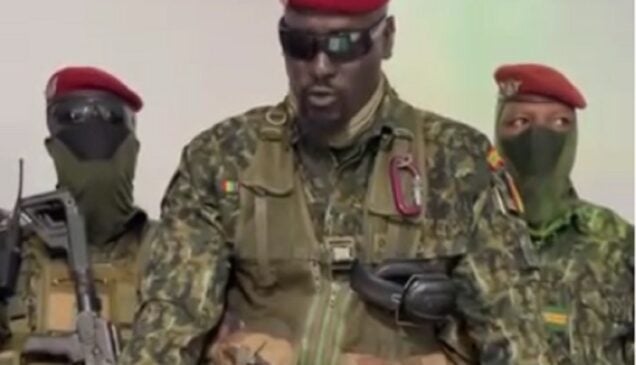
Guinea’s military ruler, Gen. Mamady Doumbouya, has been declared the winner of the country’s presidential election, according to provisional results released by the national election commission, in a vote widely criticised by opposition figures and civil society groups.
The junta leader, who seized power in a military coup four years ago, secured an overwhelming majority in the December 28 poll, a result widely seen as an attempt to legitimise his continued hold on power.
Provisional figures announced on Tuesday showed Doumbouya winning 86.72 percent of the vote—far above the threshold required to avoid a runoff—granting him a seven-year presidential mandate.
A coalition of civil society organisations campaigning for a return to civilian rule dismissed the election as a “charade,” citing the exclusion of Doumbouya’s main political rivals. Opposition candidates also alleged widespread irregularities.
As Guineans awaited the full results, internet monitoring group NetBlocks reported on Monday that access to major social media platforms, including TikTok, YouTube and Facebook, had been restricted. Authorities have not commented on the disruptions, but critics view them as an attempt to curb dissent and limit scrutiny of the vote.
Opposition candidate Faya Millimono accused the authorities of “systematic fraudulent practices,” alleging the expulsion of election observers, ballot stuffing and voter intimidation. The government and ruling authorities have yet to respond to the accusations.
If the results are formally challenged, Guinea’s Supreme Court has eight days to validate or annul the outcome.
Gen. Doumbouya first came to power in September 2021 after toppling then-President Alpha Condé, who was 83 at the time. Following the coup, the general pledged not to contest future elections and to hand over power to a civilian administration.
“Neither I nor any member of this transition will be a candidate for anything,” Doumbouya said at the time. “As soldiers, we value our word very much.”
However, he later reversed that position after a new constitution, adopted in September, cleared the way for him to run for office.
Although eight other candidates participated in Sunday’s election, the absence of major opposition parties—particularly the RPG Arc-en-Ciel and the Union of Democratic Forces of Guinea (UFDG)—meant the race lacked genuine political competition.
While Doumbouya retains support among segments of Guinea’s youth, he has faced mounting criticism for restricting opposition activities, banning protests and curbing press freedoms in the lead-up to the vote.
Ironically, the military leader justified his overthrow of Condé by accusing the former president of corruption, human rights abuses and economic mismanagement.
Guinea holds the world’s largest bauxite reserves and vast iron-ore deposits. Last month, the government launched the long-anticipated Simandou iron-ore project, raising hopes of an economic turnaround.
Despite its mineral wealth, more than half of Guinea’s population lives in poverty, according to World Bank data.
About the Author