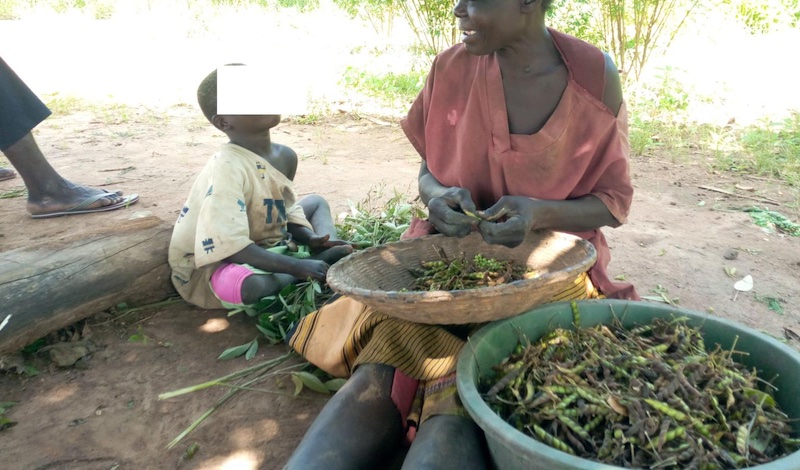
Residents of Northern Uganda have accused the government of downplaying the crisis of Nodding Syndrome (NS), a debilitating disease that continues to devastate families and strain communities.
Unlike other epidemics like HIV/Aids, NS receives minimal attention, inadequate funding, and failing healthcare support. Cases persist in Pader, Kitgum, and Omoro districts, leaving families burdened by illness and poverty.
In September 2025, district health officer Dr Benson Oyoo reported 1,359 NS patients in Pader alone, with 562 suffering severe forms of the disease.
“The disease gives a total burden directly to the household and the community,” Oyoo stated, noting that some aggressive patients add immense strain to their caregivers.
Joe Otoo, nodding syndrome coordinator in Labongo-Akwang, Kitgum district, who first documented the condition in 1999, criticised the disparity in public health responses.
“While diseases like COVID-19 were quickly addressed, nodding syndrome remains neglected to this day.”
He highlighted that tracking cases is difficult as patients rely solely on epilepsy medication for relief. Dickson Ojok, a district councillor for Angagura sub-county, observed no patient recovery, noting numbers “reducing only through death.”
He criticized the lack of specialized care centers and urged government intervention, calling for the condition to be treated as an emergency.
Epidemic no one counts
Accurate data on NS remains elusive. Surveys conducted in 2022 by the Acholi Parliamentary Group (APG) and the John Baptist Odama Foundation recorded 5,319 cases across the region.
Samson Ocaya, Pader’s NS focal person, said data collection is hampered by a lack of equipment and funding.
“We are still relying on old data, which isn’t reliable.” Parliamentarians continue to raise concerns. Pader Woman MP Lowila CD Oketayot noted the catastrophic consequences, stating, “There are homes where all the children have been wiped out, and parents live with pain every single day.”
Government records show lower figures (2,143 cases), a claim contested by local leaders who insist the real numbers are higher. Minister of Health Dr Jane Ruth Aceng has claimed there are no new cases, a statement Aruu County MP Christopher Komakech, a psychiatric nurse, refutes.
“All the medical workers in Pader have never received training on how to handle children with nodding syndrome,” he said, questioning the basis of the minister’s claim. Dr James William Mugeni, a former CDC researcher, questioned Uganda’s public health priorities and suggested findings might be suppressed.
“Are the children of Northern Uganda suffering because of war? Why has nodding disease not spread to other parts of the country?”
Two diseases, two realities
The contrast between the response to HIV/AIDS and NS is stark. While the HIV response is well-funded and data-driven, leading to a drop in adult prevalence to 4.9 per cent nationally by 2024, NS remains neglected.
Walter Okumu, a village chairperson in Ogom, recounted instances where patients, particularly girls, struggle with hunger or are tied to trees to prevent seizures. Few follow medication schedules, none attend school, and some communities isolate victims.
Local leaders have criticized the lack of transparency in the use of NS funds. “Unlike HIV patients, many families have given up, some even wish their children would die to end the suffering,” said Tabu Ojok, Ajan sub-county chairperson.
Research and setbacks
Studies link NS to Onchocerca volvulus, the parasite responsible for river blindness. The condition is described by the WHO as a neurological disorder first documented in Tanzania in the 1960s and later in Northern Uganda in 2007.
Minister Aceng noted efforts to eliminate onchocerciasis but cited challenges with refugees bringing the parasite across borders. Researchers point to autoimmune reactions, while the disease remains geographically restricted, suggesting unique factors.
Prof David Lagoro Kitara argues that NS is a complex neuro-inflammatory disorder requiring targeted interventions. Symptoms include seizures, cognitive decline, stunted growth, and psychiatric disturbances. Despite parliamentary fund allocations in 2018 and 2020/21 (Shs 1.4 billion and Shs 1.2 billion respectively), funds were reportedly mismanaged, leading to a forensic audit.
The FY 2024/25 report shows declining supervision and reduced financing; treatment centers in Odek and Tumangur have closed. Patients rely on expired drugs, and essential Doxycycline has been unavailable since 2021.
Pathways to thriving
The SOFSUNS project by Caritas offered vocational skills to a small number of children, but most dropped out due to seizures. Leaders are calling for the restoration of treatment centers. Desperation has led families to unproven methods, including witch doctors.
Authorities warn that without proper medical services, more families will be exploited. Ocaya stresses the need for updated data, research, and comprehensive support.
“Research is also needed to determine if there are multiple types of nodding syndrome.” “Only if it spreads nationwide will more action be taken,” councillor Dickson Ojok concluded, expressing fears that the affected generation risks being forgotten.
About the Author