Screenshot
The government has reaffirmed its commitment to coordinated and strategic communication as a pillar in driving economic growth, export competitiveness, tourism development, and strengthening Uganda’s international reputation.
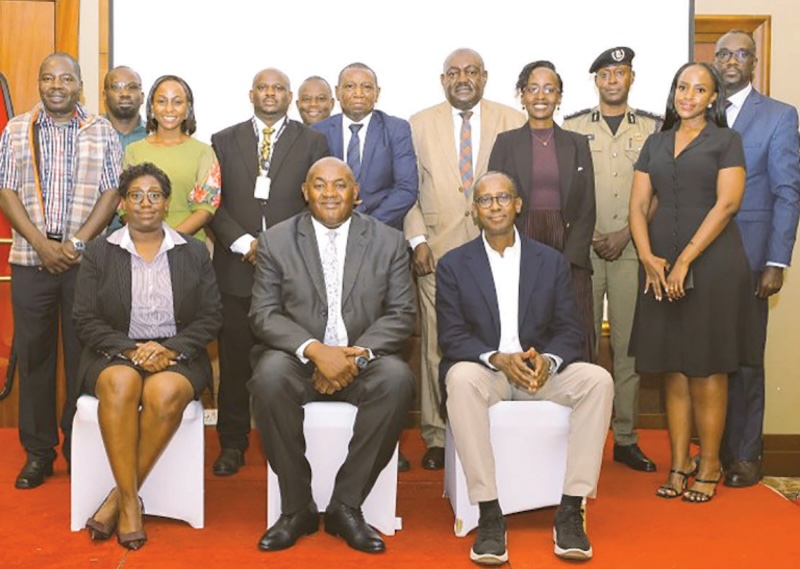
Speaking at a high-level meeting of the National Strategic Communications Committee (NSCC) held at Sheraton Kampala hotel last week, the Minister of ICT and National Guidance, Dr Chris Baryomunsi, emphasised the need for communicators to align their messaging with national priorities.
“We must communicate, but we must communicate strategically, conscious of the needs of Uganda, the efforts that we have to attract tourism, investment, trade, and business. In a country, we communicate; we don’t hide information, but we do it in a manner that does not injure the interests of the country,” Baryomunsi said.
The NSCC, established under presidential directives, brings together ministries, departments, and agencies (MDAs), the private sector, and media. Among those present were Kituuma Rusoke, spokesperson of the Uganda Police first son-in-law Odrek Rwabwogo, who is also chairperson of the Presidential Advisory Committee on Exports and Industrial Development (PACEID), among others.
Dr Baryomunsi stressed that government upholds freedom of expression, but warned: “Today’s communication directly impacts investor confidence, social cohesion, and Uganda’s global standing. Inaccurate or inconsistent messaging can undermine broader national development.”
He said the NSCC was created to strengthen government communication in national interest. Rwabwogo said, “Strategic communication is not just about sharing information; it is about protecting livelihoods and national income. Reputation determines market access. Poorly managed messaging can hurt farmers, exporters, tourism operators, and investors, sometimes resulting in lost contracts, cancelled tours, and reduced business confidence.”
He cautioned that uncoordinated communication from different ministries can unintentionally harm other sectors.
“Public health communication, while necessary, can negatively affect tourism and trade if not properly contextualised,” he said.
“That is why the NSCC exists to ensure government institutions communicate from a shared knowledge base and with a clear understanding of national priorities.”
Dr Baryomunsi further illustrated the risks of sensationalism in reporting.
“Researchers and scientists do important work, but how the media present their findings determines public understanding,” he said.
“If you scratch a wall and take the dust to a microscope, you may find germs, but that doesn’t mean the Sheraton is full of harmful bacteria. Reporting must reflect meaning and context, not isolated facts.”
He emphasised the need for training in specialised areas such as science and technology reporting.
“We are supporting structured engagement with the media so that communication remains accurate, responsible, and aligned with national interests,” he said.
Rwabwogo highlighted international best practices.
“Some countries have national press clubs. These are not just places to speak to the media and go away; they are forums for engagement and mutual knowledge. Experts, journalists, and policymakers come together to discuss complex issues like algorithms or digital media dynamics. That is where we are heading.”
Baryomunsi said government is finalising a comprehensive national communication policy, reviewed by Cabinet, to reflect the evolving media landscape across print, broadcast, and digital platforms.
He added that a consolidated communication law is being developed to harmonise existing legislation into a single framework that responds to new technologies. The minister knows firsthand, how far south uncoordinated communication from government entities can go.
A few weeks ago, an altercation on X (formerly Twitter) between him and the Chief of Defence Forces, Gen Muhoozi Kainerugaba, became ugly quite quickly, sucking in legislators and online trolls in equal measure, until the president’s son called for a truce. Baryomunsi also said collaboration with the Uganda Communications Commission is also key.
“Regulation alone is insufficient. Media literacy, education, and responsible digital use, especially among young people, are equally important,” he said.
Both Baryomunsi and Rwabwogo reaffirmed the government’s commitment to working with the media as partners in national development.
ebenezernsubuga405@gmail.com
About the Author