Over the past years, Uganda has struggled with delayed and costly stalled public investment projects despite the heavy borrowing to finance them.
It is upon this background that the government, through the ministry of Finance, in collaboration with the World Bank, launched a Shs 709.1 billion Public Investment Management Plus (PIMPLUS) operation, a results-based reform program aimed at fundamentally changing how public investments are planned, executed and managed by rewarding performance rather than spending.
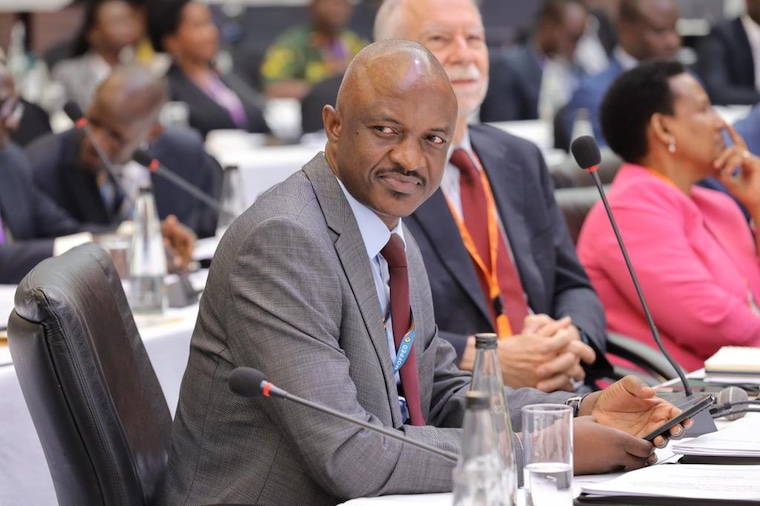
While launching the program at Serena hotel recently, Ramathan Ggoobi, the permanent secretary and secretary to the Treasury (PSST), said the operation marks a shift in government financing, aimed at addressing longstanding inefficiencies that have delayed projects and driven up costs across key sectors such as infrastructure, energy, water and social services.
“This is not money that is earned by simply spending it,” Ggoobi said.
“Resources under PIMPLUS are earned by improving processes and institutions. You must first deliver results, then you access the funding,” he explained.
He noted that for years, Uganda has borrowed heavily to finance various projects such as roads, dams, railways, water and agriculture but many have suffered delays and cost overruns due to weak preparation and poor execution.
“One of the key reasons projects delay is that we borrow money and start implementation when we are not ready,” Ggoobi noted.
“Some projects are not properly prepared; others start without feasibility studies, and the result has been delays, cost overruns and budgets far higher than initially anticipated.”
Under PIMPLUS, government entities will be required to strengthen project preparation across the entire value chain from conception and feasibility studies to execution, monitoring, asset management and maintenance.
“If we want to do a water project, we must first study whether the water source exists, whether it is sustainable for years, how it will be implemented and how the asset will be maintained after completion,” he said. “That is what PIMPLUS is fixing.”
Ggoobi said the money is not going to be invested directly in preparing projects but, rather act as an incentive.
“Once you improve how you prepare and implement projects, you earn the money and then you use it to deliver tangible results.”
Speaking on behalf of the World Bank, Verena Maria Fritz welcomed the launch of PIMPLUS, describing it as the result of months of intensive engagement and a technically- demanding reform process.
She noted that improving public investment management requires making difficult decisions on prioritization, climate resilience, cost control and maintenance financing, as well as strong coordination across multiple government institutions.
“It is not easy in any country that we work in and where we support these reforms. It is technically challenging, and it can be challenging from the point of view of decision-makers,” she said.
However, she emphasized that well-managed public investments are critical for achieving value for money, accelerating economic growth and expanding job and income opportunities for Ugandans.
So, I really want to congratulate decision-makers for asking their teams to embark on this journey and to reinforce efforts towards improving and strengthening public investment management.
About the Author