Precious metals head for strongest yearly gains in over 40 years amid geopolitical shocks and investor flight to safety
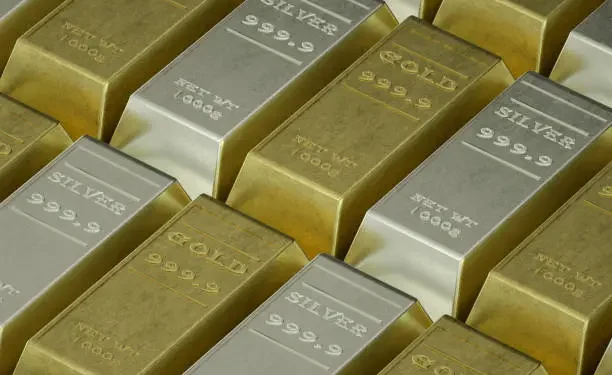
Gold and silver surged to historic highs on Monday, extending a powerful rally driven by escalating geopolitical tensions and growing expectations that the U.S. Federal Reserve will cut interest rates twice in 2026.
Gold climbed more than 1.5 percent to $4,412.94 per ounce, breaking its previous record of $4,381 set in October. Silver jumped as much as 3.4 percent, pushing prices close to the $70-per-ounce mark.
The rally places both metals firmly on course for their best annual performance since 1979, underscoring a dramatic shift in global investor sentiment toward safe-haven assets.
Rate-Cut Expectations and Policy Signals Fuel Demand
Market momentum accelerated as traders priced in looser U.S. monetary policy, a backdrop that traditionally favors precious metals, which do not offer interest income.
U.S. President Donald Trump has repeatedly called for lower interest rates, reinforcing expectations of an accommodative policy stance and further weakening the appeal of yield-bearing assets.
Geopolitical developments have also amplified demand. The United States recently tightened its oil blockade on Venezuela, increasing pressure on President Nicolás Maduro’s government. At the same time, Ukraine carried out its first strike on a Russian shadow-fleet oil tanker in the Mediterranean, marking a significant escalation in the conflict.
In Africa, continued military takeovers particularly in West Africa have heightened regional tensions between ECOWAS and the Alliance of Sahel States (AES), comprising Mali, Burkina Faso, and Niger.
Geopolitical Risks Drive Safe-Haven Flows
Nicholas Frappell, Global Head of Institutional Markets at ABC Refinery in Sydney, said rising geopolitical uncertainty is providing strong support for bullion prices.
“Concerns around Ukraine, the Trump administration’s evolving national security strategy, tensions between Japan and China, and developments in Venezuela are all reinforcing demand for gold,” Frappell noted.
Central Banks and ETFs Power the Rally
Gold has now gained nearly 70 percent this year, supported by sustained central-bank buying and steady inflows into gold-backed exchange-traded funds (ETFs).
Investor appetite has also been driven by what analysts describe as the “debasement trade”, a shift away from sovereign bonds and fiat currencies amid rising global debt levels and fiscal uncertainty.
According to the World Gold Council, gold-backed ETFs have recorded inflows for four consecutive weeks, with holdings increasing in every month of the year except May.
Earlier in the year, momentum was further boosted by concerns surrounding U.S. trade policy and perceived challenges to the independence of the Federal Reserve.
Broader Precious Metals Join the Surge
The rally extended beyond gold and silver. Palladium jumped more than 4 percent, while platinum rose for an eighth straight session, trading above $2,000 per ounce for the first time since 2008.
Platinum has gained approximately 125 percent this year, supported by tightening supply conditions in London markets and strong export demand from China.
Market Outlook Remains Bullish
After a brief cooling-off period in October, when the rally was viewed as overheated, gold has rebounded sharply. Analysts now expect the momentum to carry into 2026.
Goldman Sachs forecasts a base-case price of $4,900 per ounce, warning that upside risks remain as ETF investors increasingly compete with central banks for limited physical supply.
Silver’s gains have been underpinned by speculative inflows and supply disruptions across major trading hubs, following a historic short squeeze in October. Trading volumes for silver futures in Shanghai surged earlier this month to levels close to those seen during the squeeze.
As of 9:21 a.m. London time, spot gold rose 1.7 percent to $4,412.94 an ounce, silver advanced 2.6 percent to $68.88, palladium climbed more than 3 percent, and platinum gained 4.3 percent. The Bloomberg Dollar Spot Index slipped 0.2 percent.
What You Should Know
A recent outlook by the World Gold Council projects that gold prices could rise 15 to 30 percent in 2026.
In 2025 alone, gold recorded more than 50 all-time highs and delivered returns exceeding 60 percent, driven by geopolitical instability, a weakening U.S. dollar, and strong momentum trading.
The Council noted that central banks, institutional investors, and retail buyers have all increased exposure to gold as a hedge against uncertainty and financial market volatility.
About the Author