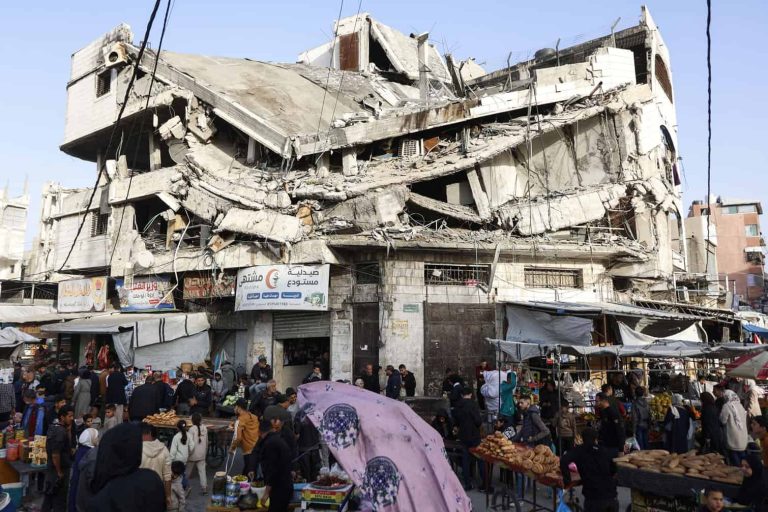
Police on Thursday were forced to fire tear gas at traders at Githurai Market along the Thika Superhighway to disperse them after they set tyres ablaze and blocked the highway.
The unrest followed the halting of business for dozens of roadside traders on Wednesday night after the Kenya National Highways Authority (KeNHA) launched an enforcement operation to remove informal structures along Thika Road under police supervision.
The operation targeted kiosks, wooden sheds and small stalls erected on the road reserve of the Thika Superhighway. Excavators moved in just before dusk, flattening makeshift businesses as traders hurriedly removed their goods in a desperate bid to limit losses.
Some traders expressed anger, claiming the demolitions were carried out with excessive force. While some admitted they had been verbally warned before, many said they did not expect the demolitions to be executed so quickly or in such a manner.
For many small-scale vendors, they said the demolitions represented not just the loss of structures but the disruption of livelihoods built over years in one of the area’s busiest trading hubs.
The demolitions came after the expiry of a seven-day order to vacate road reserves to make way for new bus bays. On Wednesday afternoon, traffic along Thika Road was disrupted as protests erupted near the Githurai overpass, with demonstrators setting tyres alight and blocking sections of the highway.
Police moved in to disperse the crowd, leading to skirmishes between officers and protesters. The unrest caused heavy traffic leaving vehicles heading towards Nairobi’s Central Business District stuck for hours.
Despite the protests, many residents and motorists acknowledged the need for a clean-up, noting that sufficient notice had been given.
“The Githurai roundabout has been a mess for year with congestion and matatu chaos putting pedestrians’ lives at risk daily. It is long overdue for this to be fixed. While I support the clearance, destroying livelihoods without a clear relocation plan is unacceptable.
“The Githurai roundabout was dangerous. I live there, so I know. That place needs to be brought under control,” said a resident who identified himself as Wachira.
Another resident said:“Driving along Githurai was chaotic. Hawkers and traders were actually on the road. I’m glad KeNHA has demolished illegal structures to make way for development.”
Some traders, however, vowed to rebuild their stalls.
“Githurai is the gateway to Mt Kenya. President Ruto promised to turn mama mbogas into shop owners but now he is demolishing our vibandas. Where will we go? Where will I buy my daily food? This is too much for the people who voted for him,” said one vendor.

Although a modern, multi-storey market was built to accommodate the traders, it has not yet been occupied despite its proximity to the road.
On February 10, KeNHA announced scheduled roadworks along the Nairobi-bound corridor at Githurai and both directions at Roysambu.
The works are intended to facilitate the construction of designated bus bays, part of a broader initiative to enhance road safety and improve traffic flow along the busy highway.
“The Kenya National Highways Authority wishes to notify all roadside traders along the Thika Superhighway at the Roysambu (both directions) and Githurai (Nairobi direction) sections to clear their wares from the road reserve within seven (7) days of this notice,” the authority said.
According to KeNHA, the new bus bays will provide safe and orderly passenger pick-up and drop-off points, helping to reduce traffic congestion.
“This project is part of our ongoing road safety improvement efforts, designed to reduce accidents and ensure unobstructed traffic flow along the highway,” the notice read.
The then-acting Director-General Luka Kimeli urged traders to comply with the timelines to avoid disruption and ensure timely completion of the project.
The Thika Superhighway is one of Kenya’s busiest transport corridors linking Nairobi to central and eastern regions adn frequently experiences heavy congestion, particularly around Roysambu and Githurai.
About the Author