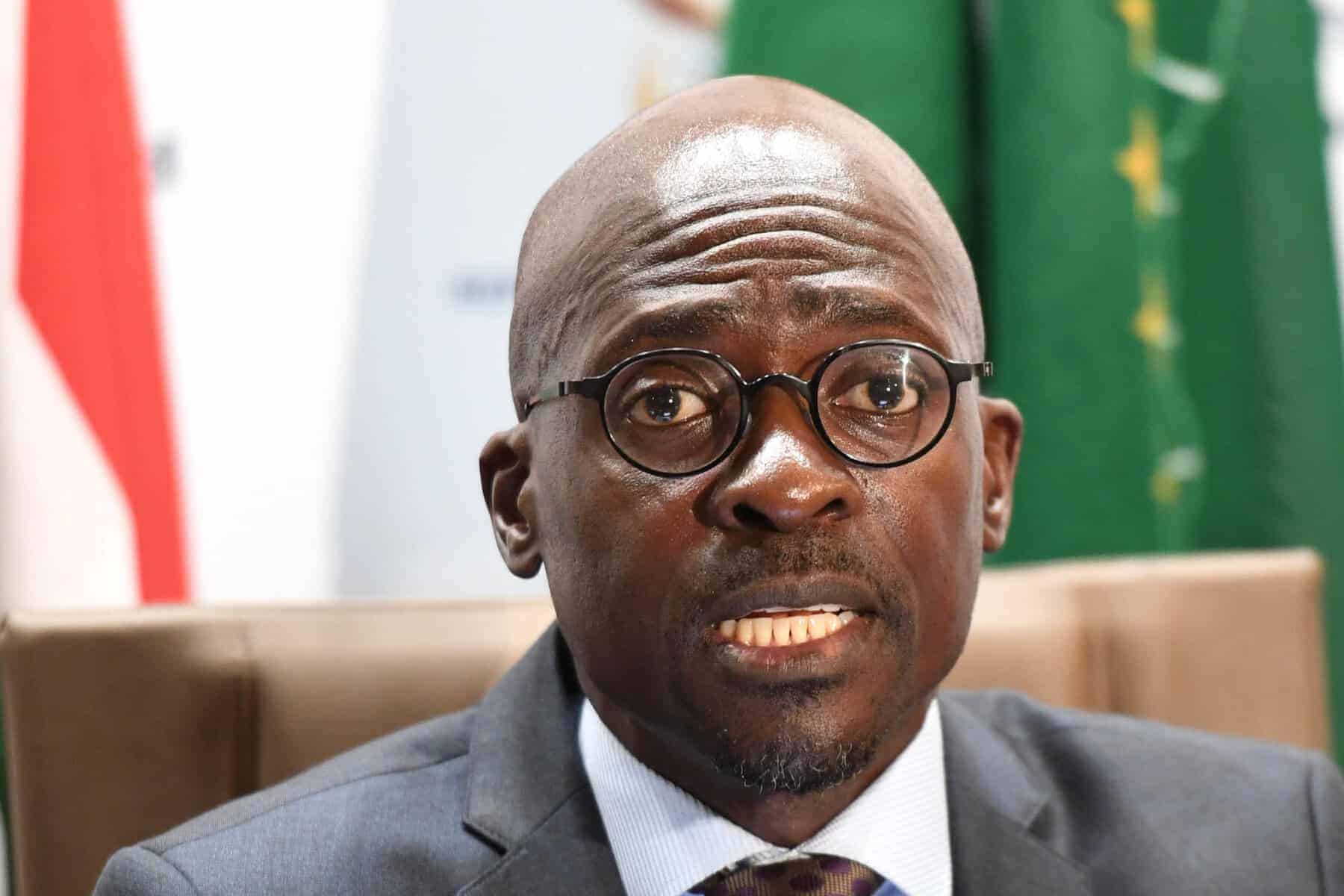
ANC National Executive Committee (NEC) member Malusi Gigaba says he will not step aside from his role as the chairperson of parliament’s joint standing committee on defence (JSCD).
This comes after the EFF’s Carl Niehaus expressed concern with Gigaba’s participation in the portfolio committee meetings while he faces corruption charges in the Johannesburg High Court.
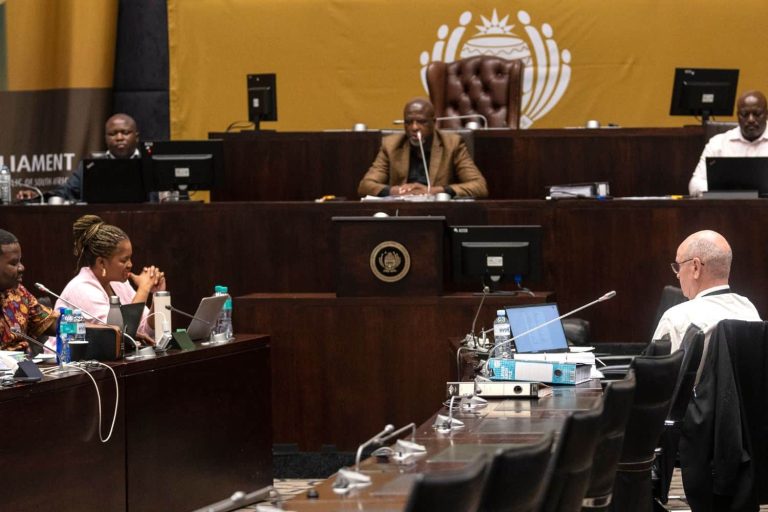
“I would like to raise serious concerns about him continuing to participate as chair in this meeting and in future meetings of theJoint Standing Committee on Defence.
“I think that we are all aware that the honourable Gigaba had in his own party, the African National Congress, to step aside from all political activities.
“The question arises if his party had felt that he should step aside from all political activity, regardless of what one thinks of the issue of step aside is it not more relevant and more important that in this position in parliament that the honourable Gigaba should not continue under the circumstances to chair theJoint Standing Committee on Defence as a co-chair, and his of course here as a member of the ANC. This is a fundamental conflict of interest, chair,” he said.
Gupta link
Niehaus said the joint standing committee has to oversee matters involving the Gupta family’s involvement in corruption at Denel, the state’s arms manufacturing company. Gigaba has been accused of acting as an agent of State Capture on behalf of the controversial family.
ALSO READ: Sars a credible blueprint rebuilding institutional capacity in wake of state capture, Ramaphosa says
Gigaba responds
Following this incident, Gigaba told The Citizen that he will not step aside from his parliamentary duties despite the concerns raised by Niehaus.
“The step-aside process is an internal ANC matter and does not override parliamentary rules or constitutional processes. I have stepped aside from political activities in line with internal ANC processes.
“The Joint Standing Committee on Defence is governed by the rules of parliament and the decisions of the house.
“If any member believes there is a procedural concern, there are established parliamentary mechanisms through which such matters can be raised with the presiding officers,” he said.
Gigaba remains a member of parliament and said he will continue to fulfil his constitutional and parliamentary obligations.
“Matters before the courts will be addressed in the appropriate legal forum,” he said.
The state has accused Gigaba of receiving kickbacks related to the procurement of locomotives by state company Transnet. He was the minister of public enterprises at the time of this deal. He is also accused of receiving money from the Gupta family.
‘ I am only just sitting here’
Last week, Gigaba told the Joint Standing Committee on Defence that he has not been chairing committee meetings since he was charged.
He also accused Niehaus of having relations with the Guptas, something Niehaus denied.
“For your knowledge, which you are aware of, I am not chairing this meeting. I am only just sitting here as a member of the committee,” he said.
Step aside confusion
Theo Neethling, a political analyst from Free State University (UFS) told The Citizen that Niehaus is making the right noises.
“Mr Malusi Gigaba, who has ‘stepped aside’ from all leadership roles within the African National Congress due to serious criminal charges, nevertheless continues to lead and participate in parliamentary oversight as co-chairperson of the Joint Standing Committee on Defence.
“This contradiction goes to the heart of institutional credibility. The position of co-chairperson of the JSCD is not ceremonial; it is one of parliament’s most sensitive oversight responsibilities.
“It demands a member whose integrity is beyond reproach – someone capable of holding the defence establishment to account without any cloud of doubt,” he said.
Neethling said Gigaba’s continued occupation of this role raises profound questions.
“If the charges against him are sufficiently serious to trigger the ANC’s step-aside rule, then it is difficult to justify why those same charges do not disqualify him, at least politically and ethically, from leading defence oversight in parliament.
“Parliament cannot credibly be held to a lower ethical threshold than a political party. The defence portfolio, in particular, is no ordinary committee assignment.”
Neethling said South Africa’s defence sector has, over the years, been marked by governance failures, procurement irregularities, and integrity lapses with serious financial and national security consequences.
“Oversight in this domain must be unimpeachable. It must command public trust. Allowing a member who has stepped aside from party leadership because of serious criminal charges to preside over defence oversight undermines both parliament’s standing and the integrity of the oversight system itself. It risks sending the message that ethical standards are negotiable – firm when politically convenient, flexible when they are not,” he said.
The ANC’s step-aside rule requires party members to step aside to protect the organisation’s image; it appears that party members step aside only from their duties to the organisation, while keeping their jobs in parliament and other government positions.
NOW READ: ANC veterans push for tougher step-aside rules
About the Author