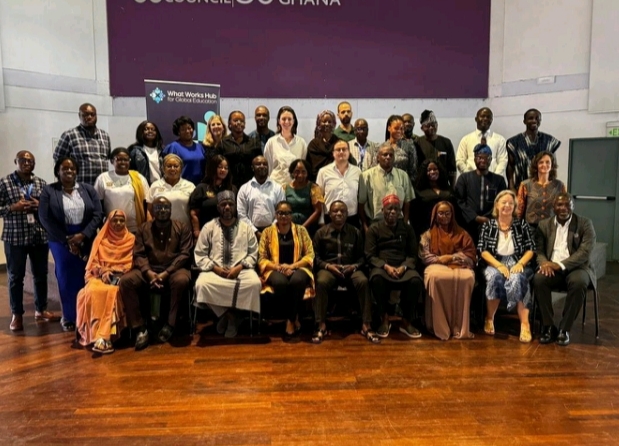
There is an agreement in place between Ghana and Nigeria to enhance their collaboration in addressing the pressing issue of out-of-school children. Both nations are committed to sharing effective strategies aimed at reintegrating children back into classrooms. This agreement emerged from an official visit by a Nigerian delegation to Ghana, which took place from February 2 to 6, 2026.
During the visit, officials gained insights into Ghana’s successful Complementary Basic Education (CBE) program. Facilitated by the United Kingdom through the British High Commissions in Accra and Abuja, this initiative was further supported by the British Council and various UK-funded educational projects.
The Ghanaian Complementary Education Agency (CEA) and Nigeria’s National Commission for Almajiri and Out-of-School Children Education (NCAOOSCE) announced plans to formalize their partnership with a memorandum of understanding focused on knowledge sharing to help reintegrate children into formal education systems.
Nigerian officials observed Ghana’s innovative nine-month accelerated learning program, which targets children aged 8 to 16 and emphasizes essential literacy and numeracy skills. The program boasts an impressive 90% transition rate back into formal education, costing approximately $100 per child.
As Nigeria grapples with one of the highest out-of-school rates in the world, with UNICEF estimating about 18.3 million children out of school, this collaboration represents a proactive approach within the Education Sector Reform Initiative spearheaded by the Federal Ministry of Education.
During their visit to Ghana’s Northern Region, the Nigerian delegation engaged with local schools, government officials, community leaders, and education practitioners to explore effective classroom practices and the interplay between national and local educational authorities. This partnership signals a promising step towards improving educational access for children in both nations.
Officials from both countries emphasised the importance of community-driven approaches, accelerated learning curricula, small class sizes, child-centred teaching methods and the use of local languages in education programmes.
They also highlighted the need to integrate catch-up programmes into government systems and establish mechanisms for tracking children’s progress as they transition into mainstream schools.
Both sides expressed optimism that continued cooperation would help adapt successful models to their respective contexts and improve access to basic education for millions of children.
About the Author