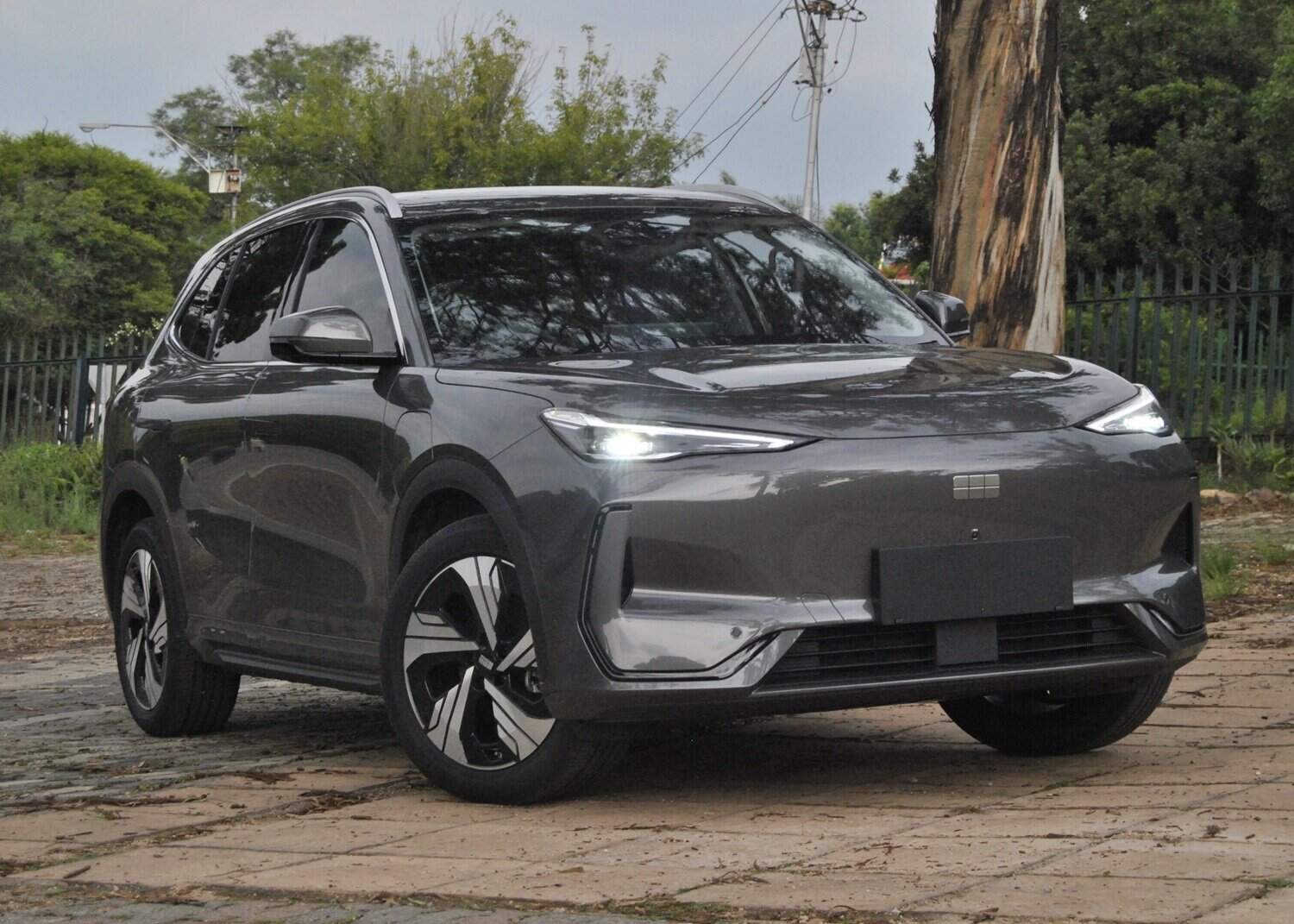
One of the numerous Chinese brands that have entered or returned to South Africa this year, Geely has, arguably, been the most bullish in wanting to change previous product perception.
Change has started
Compared to Chery’s re-entry four years ago, the parent company of Volvo has set its sights on the new energy vehicle segment right from the start instead of playing it safe by introducing a range of normal combustion engine products.
ALSO READ: Geely back in business with plush and well-priced E5 SUV pair
Similar, therefore, to BYD, the manufacturer once responsible for the underwhelming, tiny LC hatch, the Opel Astra-aping MK hatch and sedan and the EC7 sedan makes its local market comeback with the E5 crossover SUV offered either as an EV or a plug-in hybrid called the EM-i.
All on its own?
Revealed in its home market last year as part of the Galaxy range of new energy vehicles, the E5, or Galaxy EX5 in China, finds itself uniquely placed with no real competition from either BYD, Chery, Omoda & Jaecoo or even Great Wall Motors (GWM).
Available in two trim levels, the electric E5 carries a price tag of R699 999 and R759 999 which, unlike the EM-i plug-in hybrid – known as the Galaxy Starship 7 abroad – affords it the luxury of being the only battery-powered vehicle of its kind within the mentioned price bracket.
While set to change with the arrival of the GAC Aion Y Plus next year, the E5’s arrival for the week-long stay, in range-topping Apex grade, came as a huge departure from the current range of Geely SUVs, which have been present since 2022 via struggling Malaysian brand, Proton.
Part of an eventual four brand roll-out including Furizon, Zeekr and Riddara from 2026, the E5 caused a great deal of consternation among onlookers unfamiliar with the badge previously used on the EC7 sold locally as the Geely Emgrand.
Nothing like before
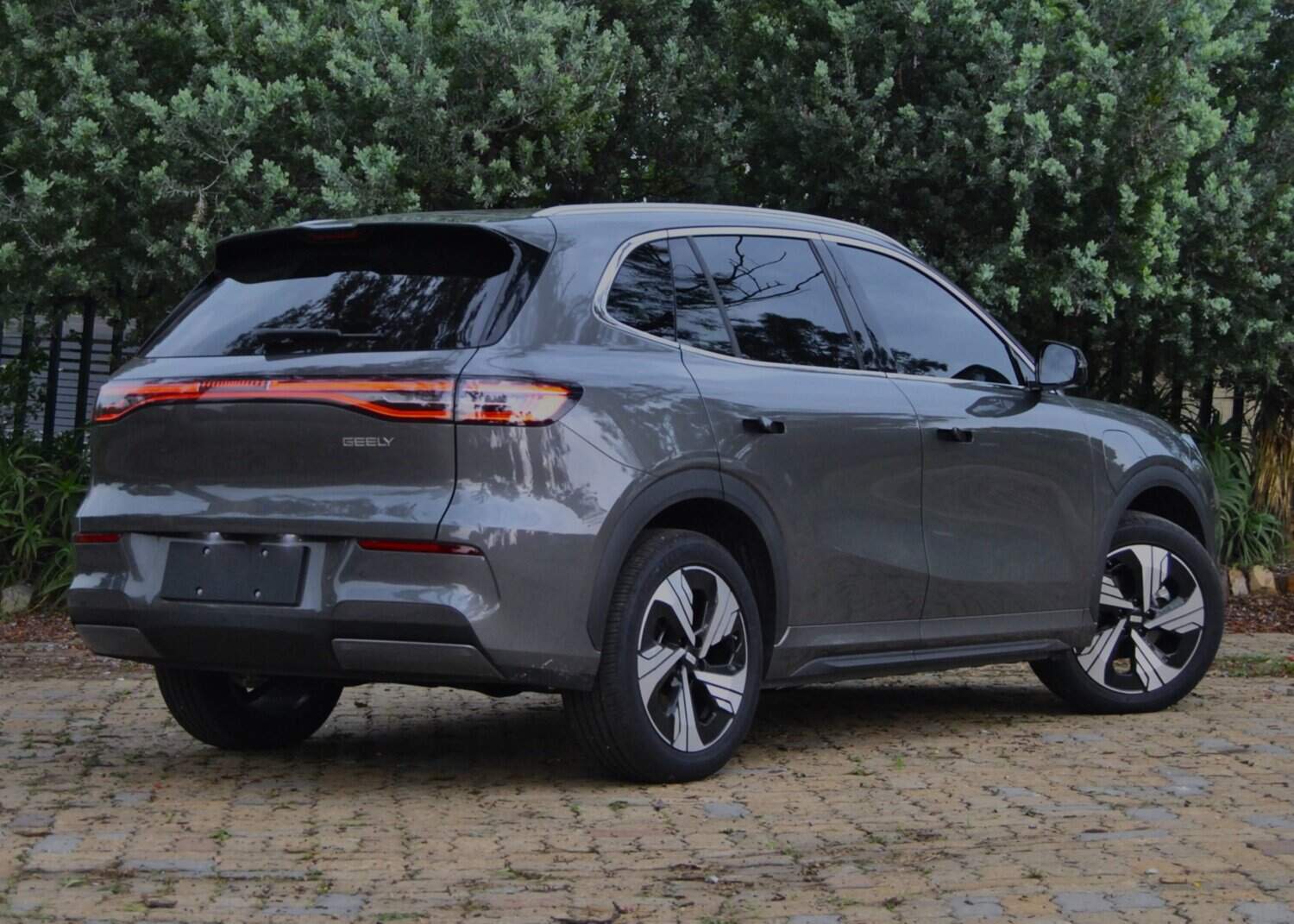
Identified only by a small Geely badge on the tailgate, the nondescript Frost Grey paint option failed to detract from the extensive finger pointing and inquiries the E5 received whether charging or on the move.
Typically Chinese futuristic in appearance, but with a few styling cues “borrowed” from the outgoing Mercedes-Benz GLB when viewed from the rear and side, the E5 still ventures on the discreet side compared to the more flamboyant BYD Sealion 7.
Riding on 19-inch alloy wheels, the newcomer belies its compact and almost too conservative appearance with an interior that undoubtedly rates as its centrepiece.
From the future inside
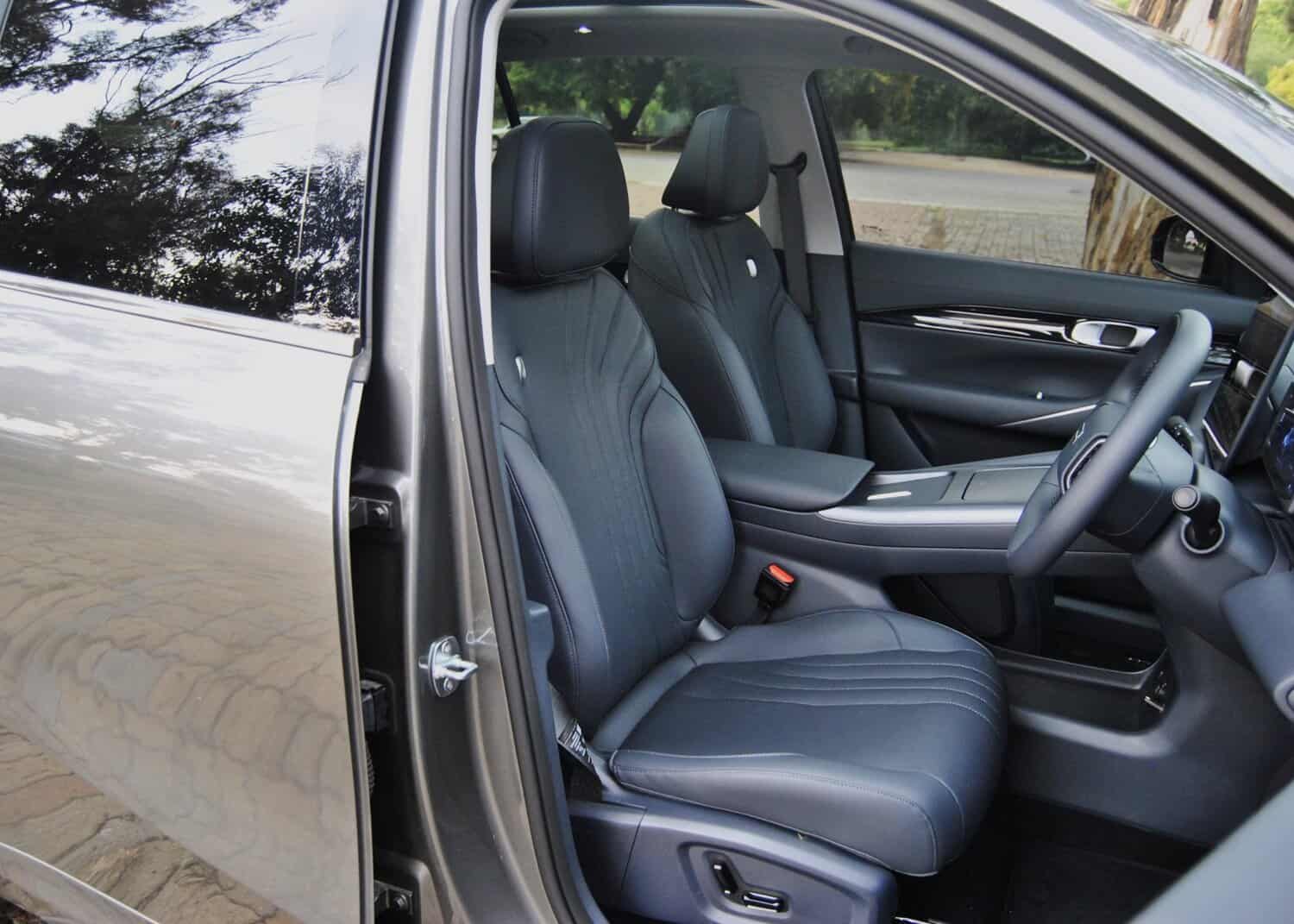
Tugging open the pop-out door handles sees the “spaceship” theme continue as the now customary minimalist design involves all of the various functions, bar those of the dual-zone climate control, being located within the 15.4-inch infotainment system.
A layout, thankfully, streamlined to be as user-friendly, the setup still comes with a number of sub-menus, but as experienced with the Jaecoo J5, works relatively well and slick without being overly confusing or frustrating.
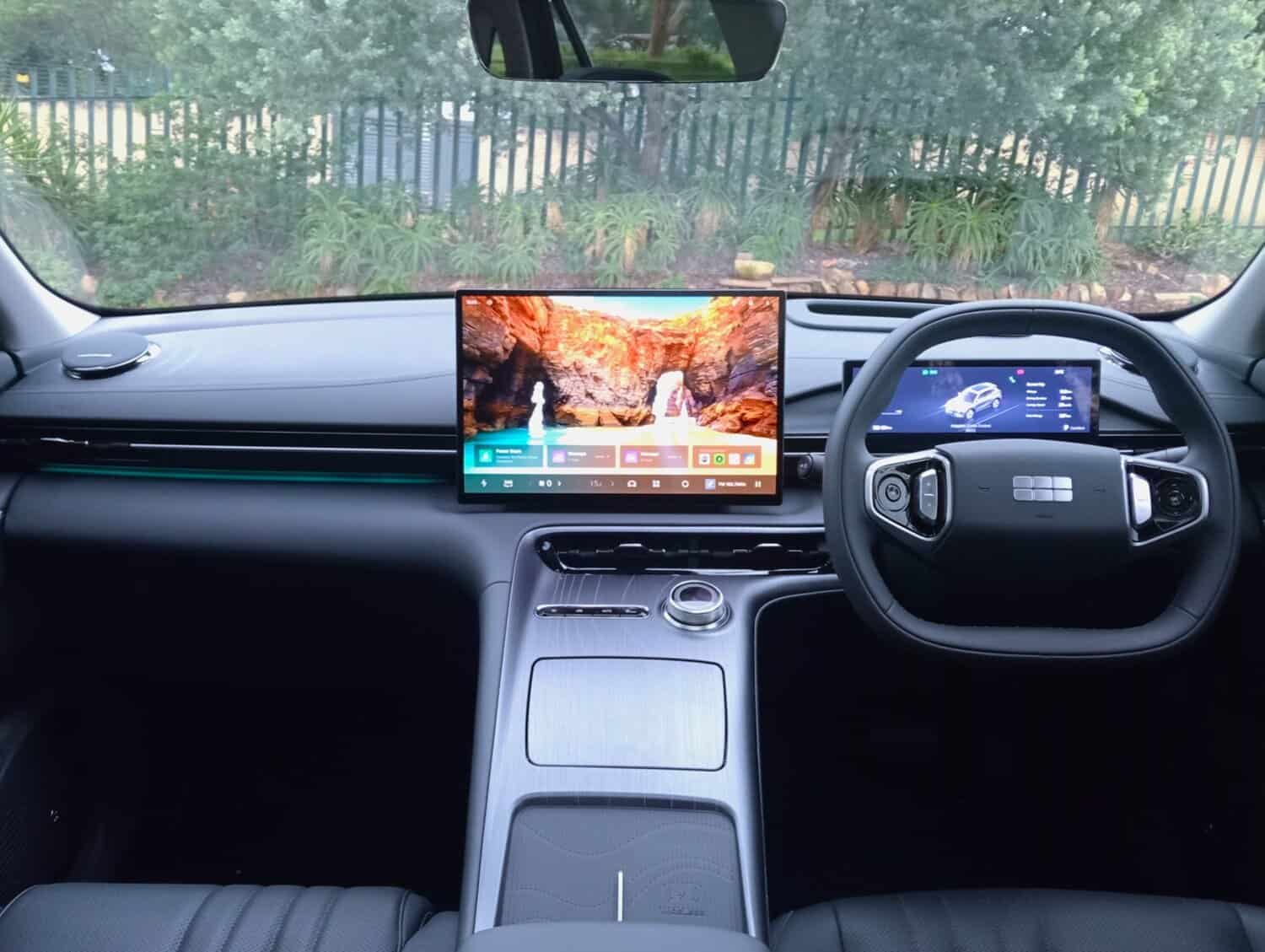
Equally as impressive is the display’s resolution, even at night, and more so with the 360-degree camera activated.
Despite this, the system only comes with Apple CarPlay as Android Auto is supplemented by the Carbit Link app that requires downloading onto one’s smartphone before being paired.
Aside from the retention of the physical climate control buttons, the E5’s bridge-like floating centre console also houses a rotary dial for the audio system, a pair of cupholders and a wireless smartphone charger.
Well laid out, fit-and-finish also failed to disappoint with soft-touch materials, an anything but cheap feel to the imitation grained silver finish on the control and upmarket faux leather trim.
In fact, the only real gripes involve the less than intuitive interface for the 10.25-inch digital instrument cluster requiring the constant “pushing” of the menu button to scroll through the various functions, and the awkward feel of the almost quartic steering wheel.
As has become the norm with most Chinese vehicles, the E5’s doesn’t lack for comfort, though only the front seats offer electric adjustability with added ventilated and massaging functions.
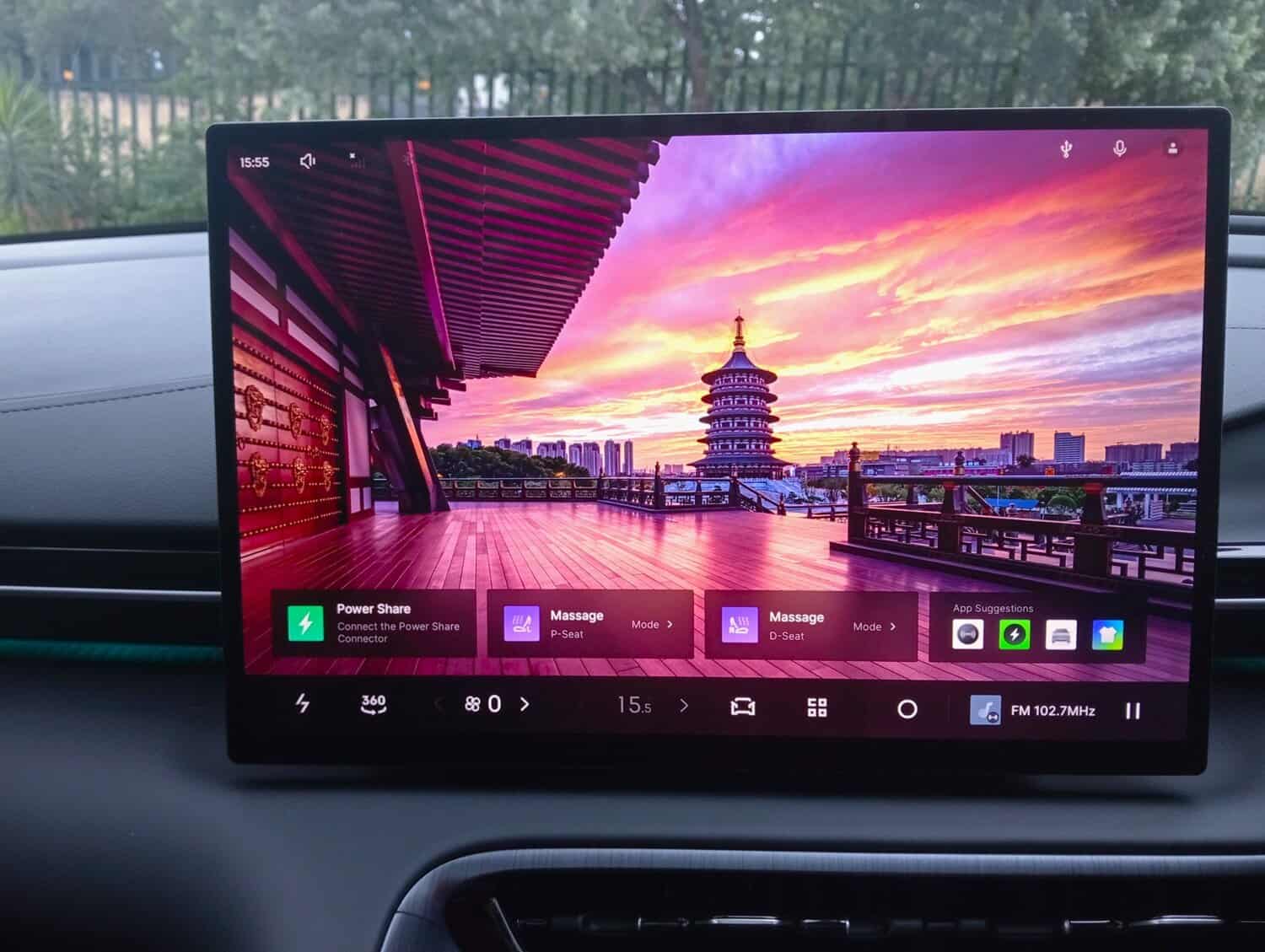
Reserved for the passenger’s seat is the ability to fold in an ottoman fashion, though frustratingly, this requires pressing the desired function on the screen instead of a simple “one-touch” arrangement.
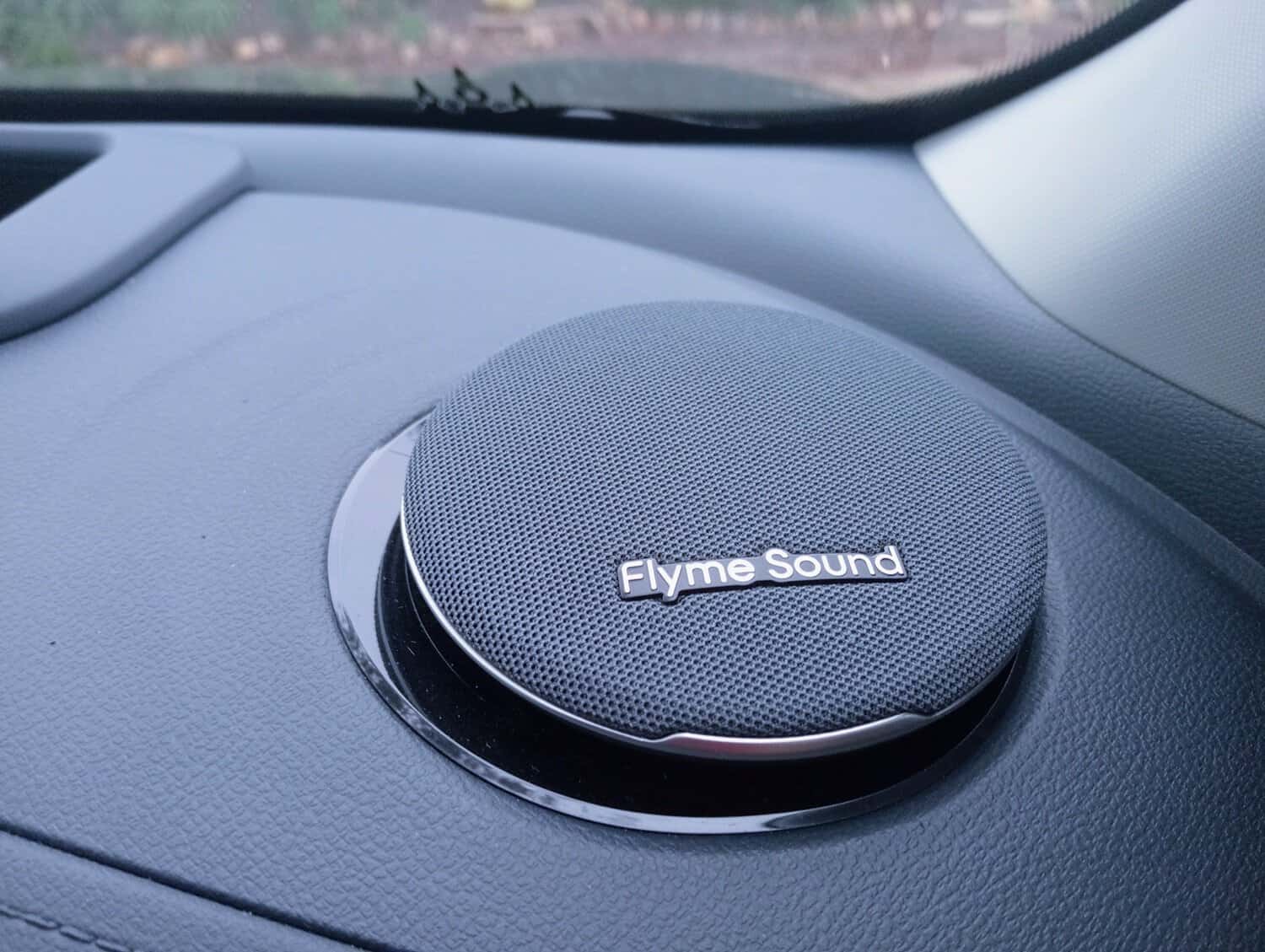
A shortcoming likely to be seen as nitpicking, the seats are still comfortable and supportive, and the quality of the in-house 16-speaker Flyme Sound audio system acceptable as opposed to sublime.
Space and comfort supreme
The biggest surprise, however, is boot and rear passenger space. Riding on Geely’s GEA or Global Intelligent New Energy Architecture, the E5’s electric motor sits directly on the front axle with the downside being a lack of storage underneath its bonnet.
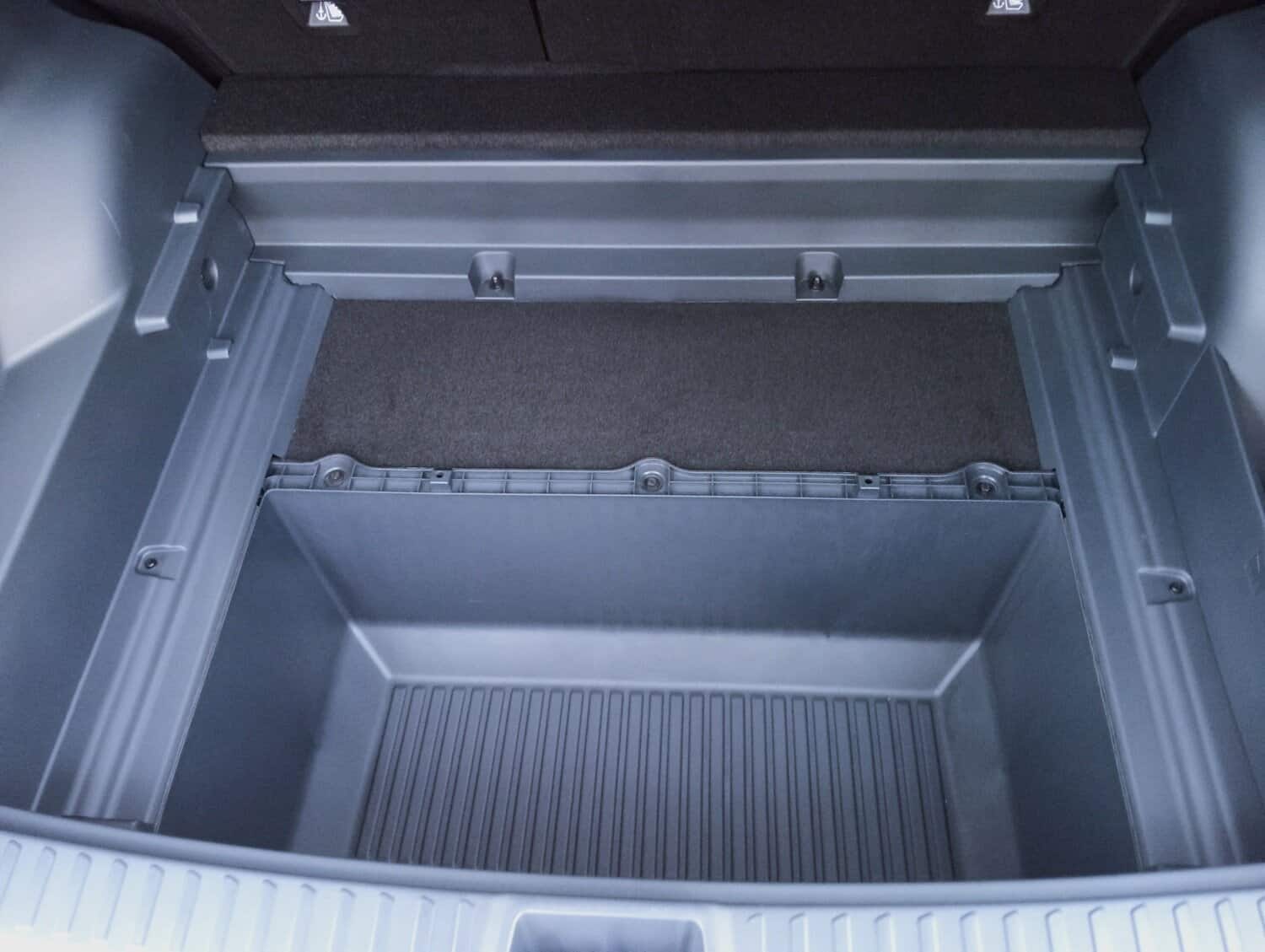
Instead, this comes in the form of a false floor beneath the boot board, which has been rubberised to accommodate items likely to be wet or dirty.
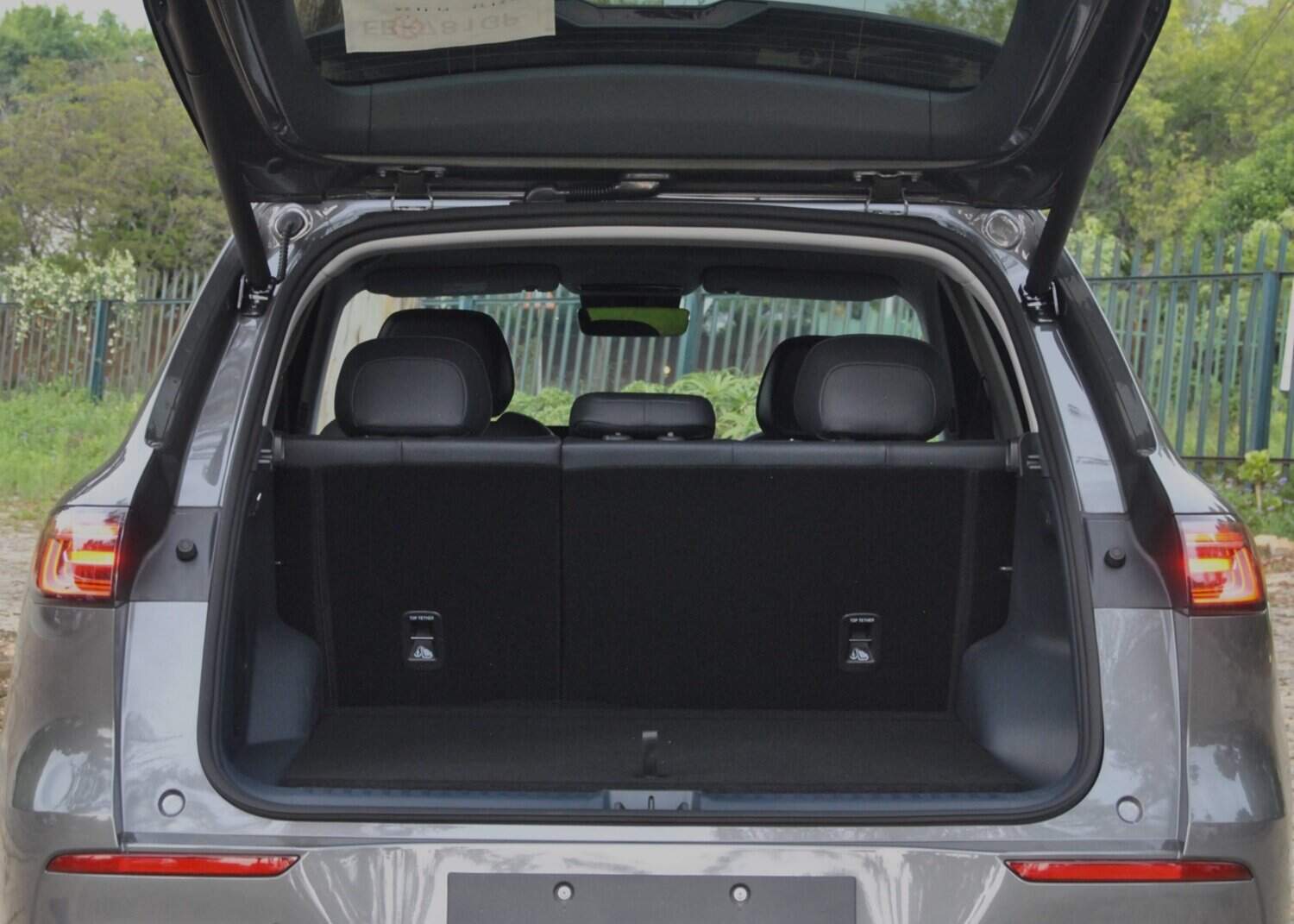
The downside is that a dedicated recess for the on-board charging cable is omitted, meaning these will likely be stored in the mentioned hold than simply lying in the boot.
Overall, utility space with the rear seats up comes to 461-litres, which extends to 1 877-litres with the 60/40 split rear back folded down.
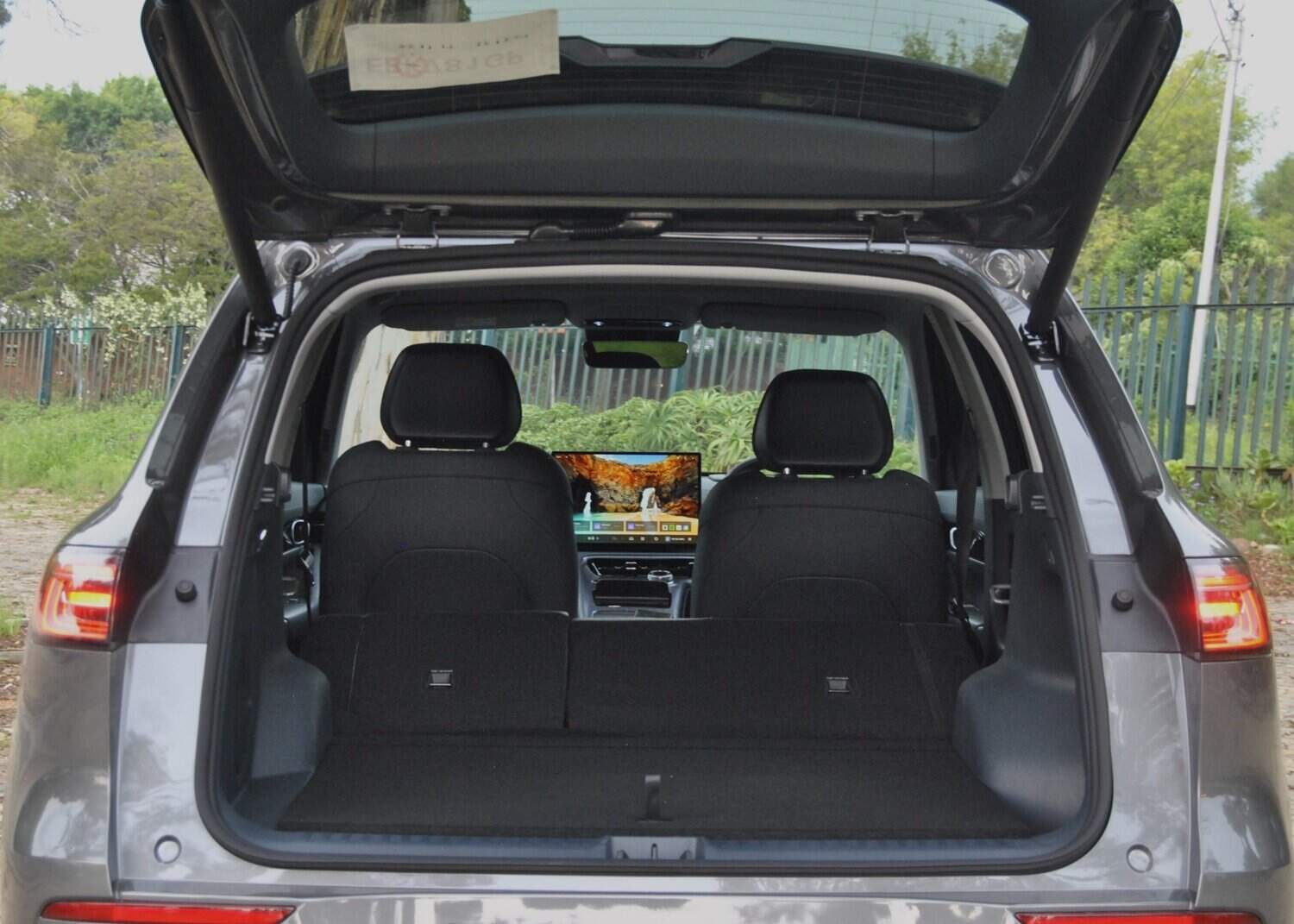
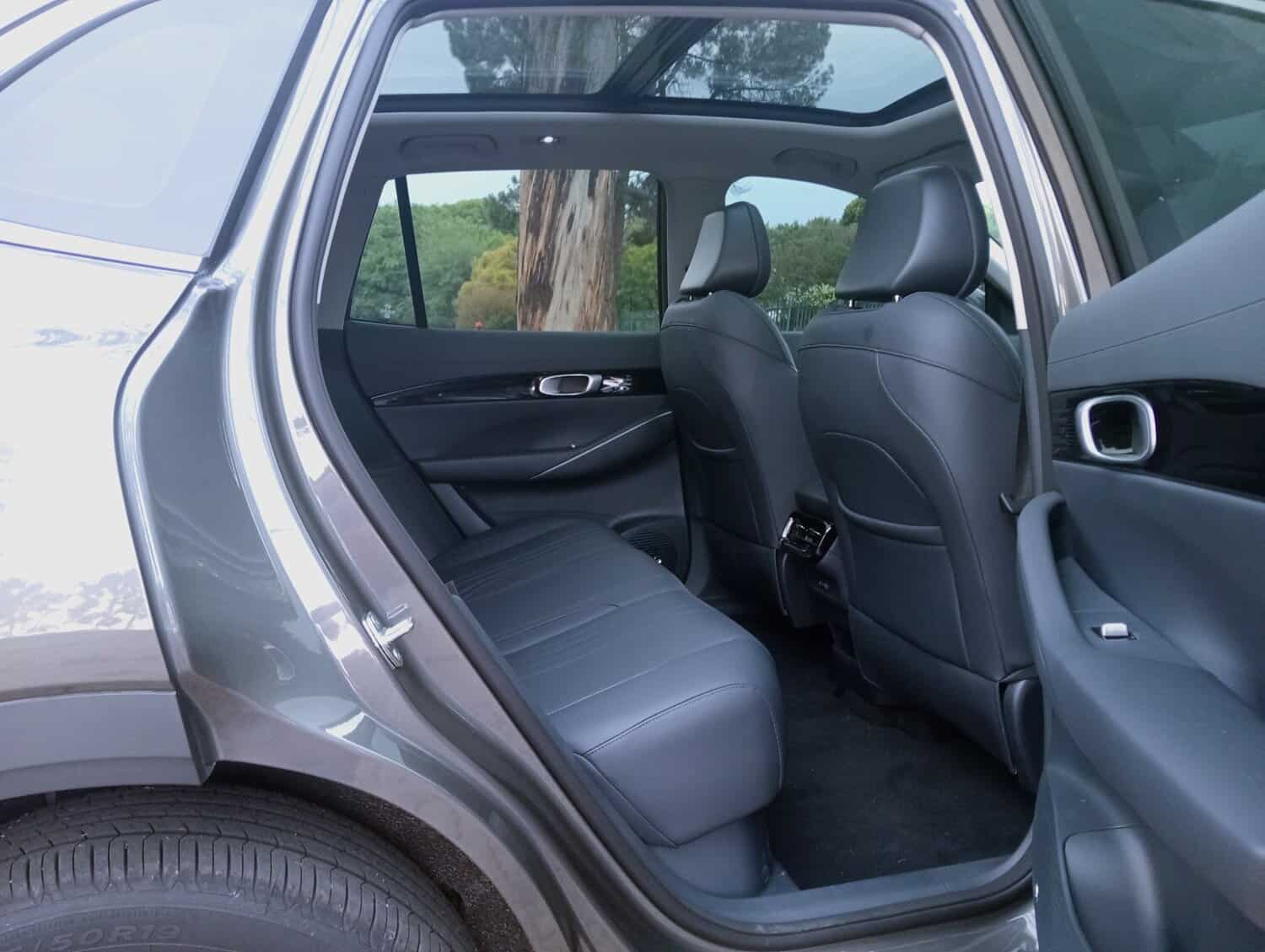
As with the driver and passenger, those seated in the rear are unlikely to complain of feeling cramped, especially on the legroom front, with no intrusion on headroom being present even with the standard panoramic glass roof.
Being the flagship, the Apex skimps for little on the specification side as, apart from the features already mentioned, it comes standard with ambient lighting, LED headlights, front and rear parking sensors, Head-Up Display, Adaptive Cruise Control, Automatic Emergency Braking, Traffic Sign Recognition and Rear Cross Traffic Alert to name a few.
In what is steadily also becoming the norm, all of the various safety and driver assistance systems can be turned off completely, without then engaging automatically each time the ignition is turned back on.
That being said, this doesn’t apply to the most aggressive setting of the brake regenerative system or the steering, which both had to be “manually” adjusted from their default Comfort settings back into Sport.
Not warp speed but…
Located in the middle of the chassis, the E5’s propulsion comes from a 60.2-kWh battery powering the mentioned single electric motor.
Outputting 160kW/320Nm, the E5 isn’t stereotypically EV fast, but feels in-line with Geely’s claimed figures of 0-100 km/h in 7.1 seconds and top speed of 175 km/h.
What’s more, the usual Chinese vehicle issue of an improperly calibrated throttle is gone, resulting in an instant response but, as mentioned, without being as savage as expected.
Reserved for the Apex is a drive mode selector with three settings: Eco, Comfort and Sport.
Charging
While only sporadic use of the latter was made, leaving it in Comfort for the majority of the seven days and 420 km resulted in an eventual best indicated consumption figure of 13.4 kWh/100 km – beating Geely’s claim by 3.4 kWh/100 km.
Needing to be charged twice, which in both cases required a wait of less than 40 minutes using an 80 kW DC charger, the actual charging process went smoothly, but unsurprisingly, at a cost.
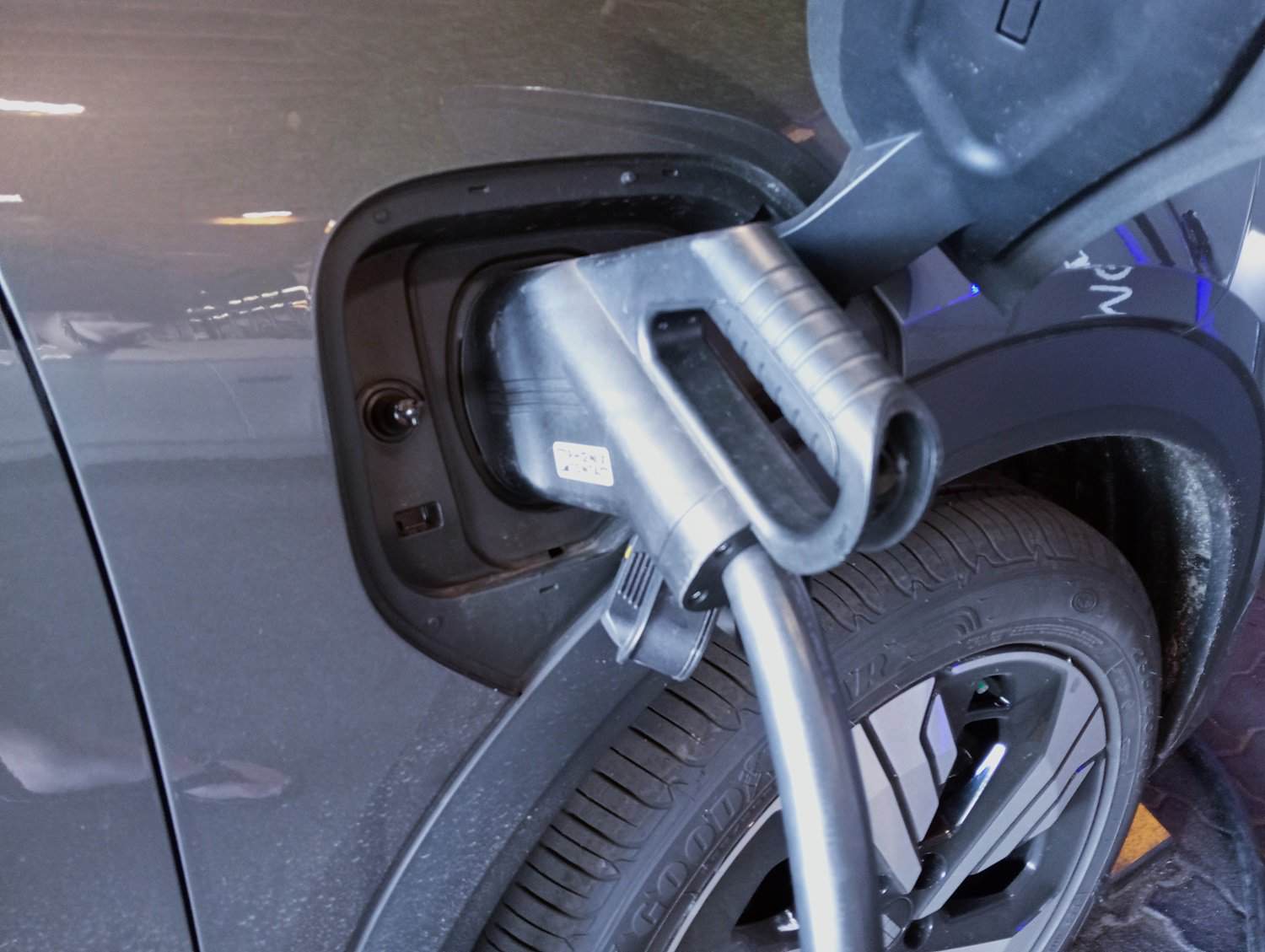
In the first instance, 28.6 kW was fed back into the battery, while the second required 30.4 kW – figures which amounted to respective costs of R210 and R223 based on the charging rate of R7.35 per kilowatt hour.
In both instances, a coverable distance of 362 km was displayed on the instrument cluster, well off Geely’s 410 km claim for the Apex, but also admittedly realistic given the battery’s size.
Offsetting the hefty public charging fee somewhat is the inclusion and installation of an AC wallbox home charger on both electric E5 derivatives.
On the move
On the move, the modest power outputs don’t translate to the E5 feeling lethargic or underpowered when mashing the accelerator into the floor.
In fact, the main complaint centres around the ride, which feels pliant, but becomes firm and then jiggly and brittle on uneven surfaces.
At the same time, the steering, even in its sportiest setting, is still light but with a bit more feedback.
Conclusion
As risky as it has been with its return by not offering a traditional combustion engine product, Geely’s move has, to a large extent, been successful, given what the electric E5 presents.
While smart money will still be on the EM-i, simply as a means of veering off concerns about range anxiety, the EV still makes for a compelling buy as electric vehicle acceptance gradually continues to grow,
However, and even at a sub-R800 000 price tag, the E5 will still be somewhat of a niche player and subject to long-term proof under “new Geely” before buyers flock to it in the numbers it expects.
NOW READ: Welcome back: Geely returning to South Africa before year-end
About the Author