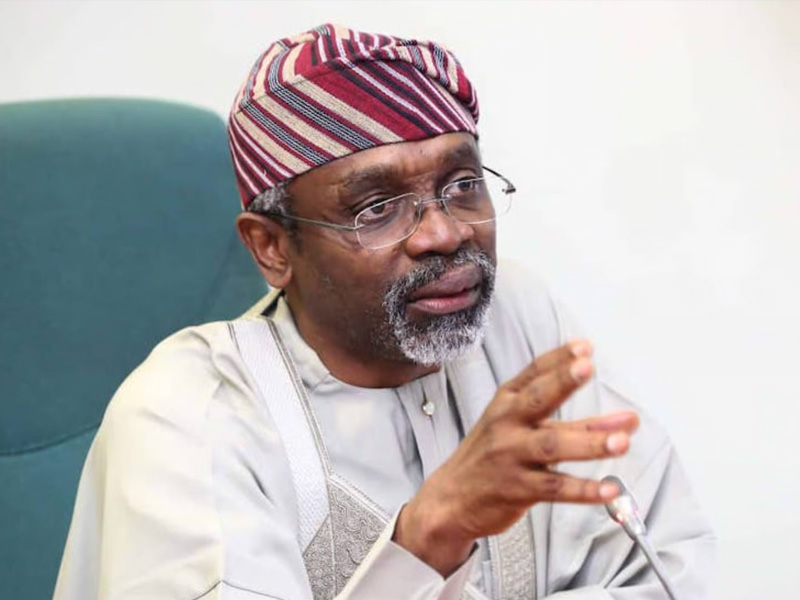
The Chief of Staff (CoS) to the President, Hon. Femi Gbajabiamila, has warned that Nigeria’s survival and relevance in an increasingly unstable global environment depends heavily on national unity, describing national cohesion as a strategic imperative rather than merely a moral choice.
This comes as President Bola Tinubu’s re-election bid received more endorsements Saturday, with former members of the National Assembly, operating under the umbrella of the National Forum of Former Legislators (NFFL), formally adopting him as their preferred candidate for the 2027 presidential election.
The group also called for a rotational presidency to be entrenched in the Constitution as a permanent mechanism to promote national cohesion beyond 2031.
Speaking Saturday at the NFFL’s 2026 National Summit, themed “National Unity and Nation Building Beyond 2031,” which he convened in Abuja, Gbajabiamila noted that global instability had made internal solidarity and experienced leadership more important than ever.
Quoting the opening lines of Nigeria’s Constitution, Gbajabiamila noted that the country was founded as a united entity, not as competing factions.
“Those words affirm that Nigeria was never meant to be a collection of rival camps, but one people bound together by a shared hope and a common future,” he said.
Gbajabiamila added that unity was a solemn duty Nigerians owed to one another and cautioned that internal divisions would significantly weaken Nigeria’s ability to operate effectively in a rapidly evolving global system.
“In a world that increasingly rewards scale and strategic clarity, internal disunity weakens national capacity, a divided nation struggles to project strength, negotiate effectively, or protect its interests,” Gbajabiamila added.
Gbajabiamila, who warned that prolonged disunity would heighten Nigeria’s exposure to economic and security risks, also insisted that “disunity at this moment does not merely delay progress; it multiplies risk, magnifies vulnerability and transmits insecurity across generations.”
Referring to recent remarks by Canada’s Prime Minister at the World Economic Forum in Davos, he said the decline of the global rules-based order presented both risks and opportunities for Nigeria.
“For Nigeria to participate effectively in shaping the new world order, we must first secure unity of purpose at home. Such clarity cannot be achieved in disunity.”
Commending President Tinubu’s leadership, Gbajabiamila said the administration had consistently prioritised equity, inclusion, and balanced national development.
“We are fortunate that at this pivotal moment, Nigeria is led by a president who understands both the fragility and the strength of our diversity. National unity must never be sacrificed on the altar of narrow ambition or short-term political gain.”
He described the rotational presidency between the North and South as a stabilising political arrangement grounded in collective wisdom.
“The principle of a rotational presidency stands as one of the clearest expressions of principled compromise in the service of our national interest. No personal aspiration should be allowed to endanger the hard-won balance that sustains our country,” he added.
According to him, “we meet at a moment when the world appears unsettled and uncertain of its direction. Yet it is precisely in moments such as these that leadership is most needed. Your willingness to convene and contribute once more to national discourse speaks volumes about your enduring commitment to the idea of Nigeria.”
Gbajabiamila also warned against identity-driven politics, stating that ethnic and religious mobilisation for political advantage undermined national stability.
“When political competition amplifies ethnic suspicion or religious fear, it corrodes trust and weakens the foundations of the state,” he said.
Highlighting government initiatives, he pointed to the creation of development commissions in all six geopolitical zones, nationwide infrastructure projects, and social intervention programmes as evidence of inclusive governance.
He conveyed President Tinubu’s goodwill to the forum and described the NFFL as a valuable pool of experience that continues to influence government policy.
In his closing remarks, Gbajabiamila urged leaders and citizens alike to reject division and embrace responsible leadership, stressing that the work of national unity was not glamorous.
“It requires listening when it is easier to shout, compromising when it is tempting to dominate, and trusting when suspicion seems safer.
“May history record that when Nigeria stood at a crossroads, we chose the harder path of unity, the longer road of cooperation, and the higher calling of nationhood.”
Ex-lawmakers Endorse Tinubu for 2027, Demand Constitutional Backing of Power Rotation
On their part, the former members of the National Assembly, operating under the umbrella of NFFL, formally adopted President Tinubu as their sole preferred candidate for the 2027 presidential election and called for the rotational presidency to be entrenched in the Constitution as a permanent mechanism to promote national cohesion.
The decisions were contained in a communiqué released after the NFFL’s 2026 National Summit.
Earlier in his remarks, the NFFL National Coordinator, Hon. Raphael Nnanna Igbokwe, explained that extensive nationwide consultations informed the forum’s stance on power rotation.
“Following our Northern and Southern dialogue sessions, we collectively agreed that in the interest of unity, peace, and national progress, the South should complete its eight-year term,” Igbokwe said.
While presenting the communiqué, the forum explained that its discussions were driven by the need to strengthen democratic practices, build confidence among Nigeria’s diverse regions, and guarantee lasting political stability.
The communiqué emphasised that dialogue and peaceful engagement remained essential to resolving the country’s challenges.
“We reaffirm that dialogue, consultation and peaceful engagement must always remain Nigeria’s primary tool for resolving political, social and regional challenges,” the forum stated.
It further stressed that Nigeria’s problems should be addressed internally by Nigerians through dialogue and constitutional and democratic means.
On power rotation, the former lawmakers agreed that the presidency should return to the North in 2031, in keeping with the principles of fairness, inclusiveness, and balanced representation.
Reiterating this position, the communiqué stated:
“In keeping with the spirit of fairness and national balance, we affirm that the presidency should return to the Northern region in 2031, after the completion of the Southern presidency.”
To prevent future uncertainty and reduce political tension, the forum proposed that the rotational presidency arrangement should be formally embedded in Nigeria’s Constitution.
“We call for the constitutional entrenchment of rotational presidency to promote fairness, strengthen national unity, and provide clarity for future generations,” the forum added.
“To consolidate ongoing reforms, strengthen national unity and deepen democratic governance, we collectively resolve that the current President of the Federal Republic of Nigeria should be supported to complete the full eight years,” it stated.
“We, therefore, adopt President Bola Ahmed Tinubu as our sole candidate for the 2027 general election.”
They reaffirmed the forum’s commitment to a peaceful, united, and prosperous Nigeria, urging both leaders and citizens to uphold democratic principles, justice, and national unity.
“We call on all political leaders, institutions, and citizens to uphold the values of democracy, justice, and national cohesion in the collective interest of our great nation,” the group added.
Sunday Aborisade, Juliet Akoje
About the Author