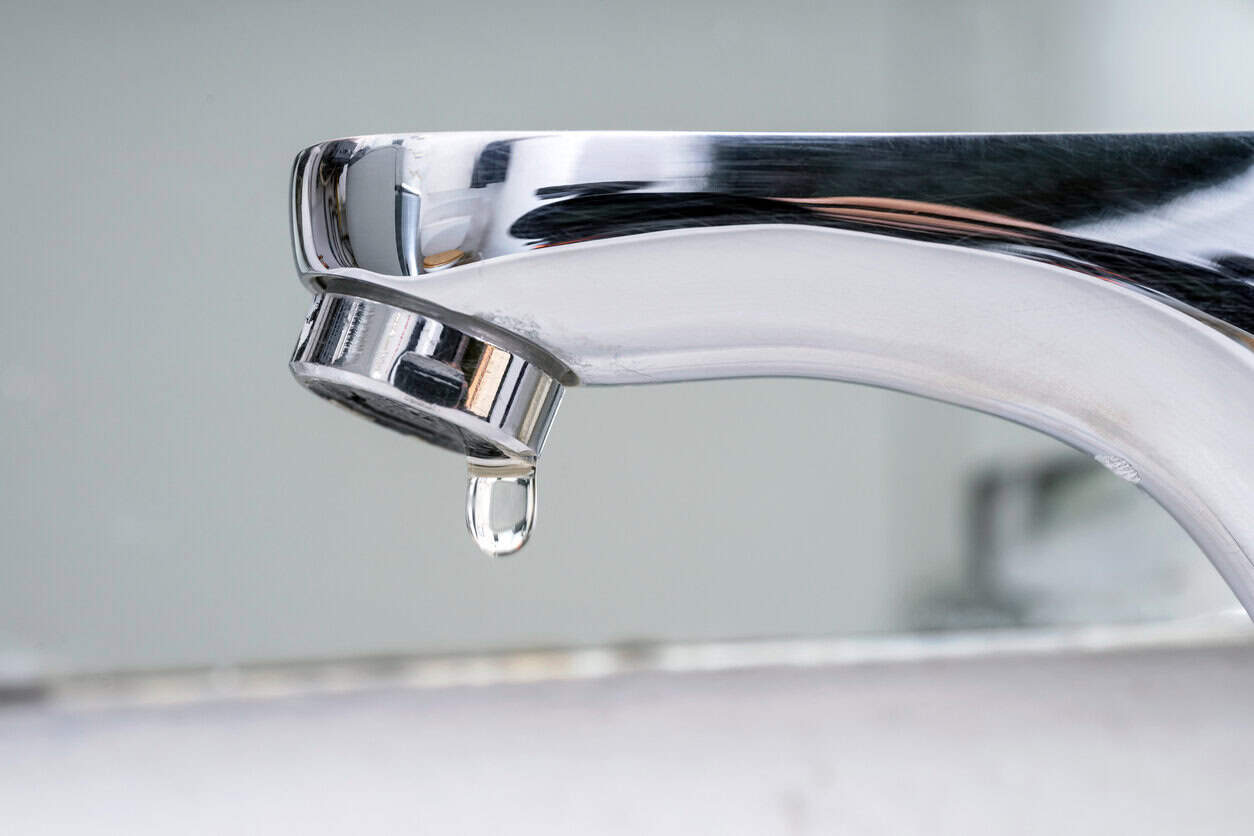
Drop of water falling from faucet. Water supply cuts due to drought. Severe restrictions measures for water saving. Increase in prices and taxes on the water bill.
While government and opposition leaders trade plans to keep South Africa’s taps flowing, Gauteng residents continue reporting empty pipes and dry days.
Rand Water insists it is exceeding legal supply quotas, but experts warn the crisis is rooted in ageing infrastructure, leaks, and mismanagement – not consumption alone.
Rand Water defends its supply figures
Rand Water spokesperson Makenosi Maroo said the utility exceeds the legal water supply quota as it is supplying over 5 000 megalitres per day to its customers compared to the legally required of 4 400 megalitres.
Maroo said there were no blockages or problems in their systems that prevented water from going to customers.
“Water consumption fluctuates from municipality to municipality,” she said. “The City of Joburg is the highest consumer of water.
“The water consumption in Gauteng per person per day is over 300 litres, which is well above the global average of 173 litres per person per day. Consumption per person in the country is 237 litres of water per person per day.”
Maroo said Rand Water is not throttling the water supply to its customers.
“Consumption has increased due to several reasons, including heatwave – high temperatures, irresponsible use of water, water leakages and illegal connections – water theft,” she said.
ALSO READ: Helen Zille reveals DA will take Joburg Water and the city to court over water crisis
Blame placed on infrastructure, not demand
African Water Resilience Blueprint architect and forensic analyst Tarryn Johnston said consumption is not the primary cause, adding Gauteng’s water crisis is overwhelmingly infrastructure-driven, not demand-driven.
Johnston said the real drivers adding to the strain were ageing infrastructure (40-60 years old in many areas), high levels of leaks (30-40% of treated water lost before reaching households), pump failures and power instability, municipal under-maintenance, delayed upgrades to reservoirs and bulk pipelines and Rand Water’s system running at or near maximum capacity.
“We cannot say water is being restricted deliberately, but we can say the system is vulnerable to mismanagement and procurement abuse – and that weak governance creates the conditions where corruption can thrive,” she said.
Systemic neglect warning
Ferrial Adam, executive manager of civil society group WaterCAN, said the current crisis is not primarily about people watering gardens or filling pools.
She said that narrative “is convenient, but it is misleading”.
Gauteng’s highest demand is typically in late spring and peak summer – when temperatures are high, evaporation increases and outdoor water use rises. Winter generally has lower demand.
The province experienced a hot January and February.
“The failures we are seeing now are a system that cannot cope, even outside of peak summer pressure. That tells us the problem is structural, not seasonal – and actually it is systemic,” said Adam.
ALSO READ: SAHRC calls for water crisis to be declared a national disaster
“When a system is well managed, seasonal fluctuations do not result in communities going without water for weeks. A resilient system absorbs demand changes. Ours is not resilient. There hasn’t been a ‘sudden’ failure.”
She said what the province is witnessing is the cumulative result of years of neglect.
“Infrastructure does not collapse overnight. It deteriorates slowly – until it reaches a tipping point,” said Adam.
“Johannesburg’s water network is decades old in many areas. Preventive maintenance has been deferred for years. Technical skills have been hollowed out. Budgets have not matched infrastructure realities.”
Governance failures and corruption concerns
She said one cannot look at the system without also looking at Rand Water.
“If Rand Water sneezes, Joburg catches Covid. So this is not a mysterious spike. It is the predictable outcome of systemic neglect.”
Adam said the absence of deliberate sabotage does not mean that it is not an issue.
“The water tanker mafia is real and affecting issues in some way or another. In addition, when you have leadership and governance failure, it opens the door for corruption,” she said.
“We need to have technically competent people, open and transparent procurement processes, as well as an audit of senior officials and politicians to see if people have shares in water tanker companies and other water services.”
NOW READ: Intergovernmental war room established to help fight Johannesburg’s water crisis
About the Author