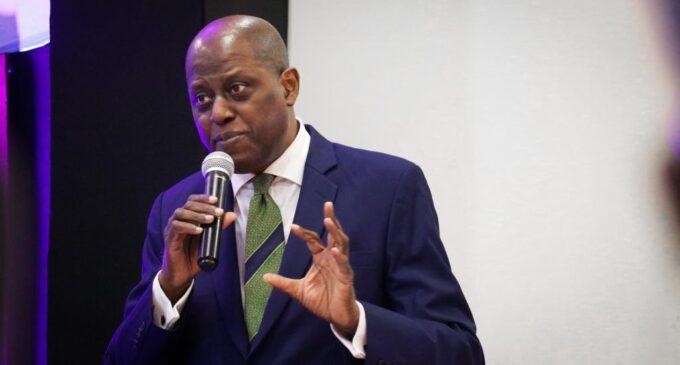
Apex bank chief says exchange rate unification and tighter monetary policy have improved liquidity, cut parallel market premium, and attracted foreign investment….
The Governor of the Central Bank of Nigeria (CBN), Olayemi Cardoso, says the bank’s foreign exchange reforms are beginning to yield tangible results, driving stronger capital inflows, improving liquidity in the currency market, and restoring investor confidence in the naira.
Cardoso made the remarks on Thursday in Lagos while delivering a distinguished alumni lecture at St. Gregory’s College during the school’s Founder’s Day celebration.
According to the CBN governor, the reforms were designed to eliminate long-standing distortions in Nigeria’s foreign exchange market while improving transparency and strengthening the overall stability of the financial system.
FX Market Reforms Showing Results
Cardoso said recent policy actions by the apex bank have fundamentally reshaped how the foreign exchange market operates.
He noted that one of the key achievements of the reforms was the removal of the country’s multiple exchange rate system, which had long created arbitrage opportunities and inefficiencies.
“Through deliberate policy actions, we eliminated the system of multiple exchange rates and significantly reduced the parallel market premium from around 50 percent in 2022 to less than two percent on average in 2025,” Cardoso said.
He added that the FX market now functions with greater efficiency and liquidity, reducing the need for extraordinary interventions by the central bank.
Backlog of FX Demand Cleared
The CBN governor also revealed that the bank has cleared a backlog of foreign exchange demand that had previously constrained businesses and discouraged investors.
According to him, the improved FX environment has helped attract more capital into the Nigerian economy.
Cardoso said investment inflows into Nigeria grew by nearly 200 percent between 2023 and 2025, reflecting stronger confidence among both domestic and foreign investors.
He noted that the reforms have also supported improvements in Nigeria’s balance-of-payments position and contributed to relative stability in the country’s currency market.
Inflation Moderating
Cardoso added that the CBN has returned to a more orthodox monetary policy framework, tightening financial conditions to combat rising inflation.
According to him, inflation has declined significantly from a peak of 34 percent to about 15 percent as the bank implemented stricter policy measures aimed at restoring macroeconomic stability.
He stressed that transparent markets and resilient financial institutions are critical for sustaining long-term economic growth.
FX Reforms Part of Broader Economic Adjustments
The foreign exchange reforms form part of a wider set of macroeconomic adjustments aimed at addressing structural weaknesses in Nigeria’s currency market.
For years, Nigeria operated multiple exchange rate windows, which critics said encouraged speculation and created pricing distortions.
Cardoso explained that the previous system largely benefited a small group of market participants while undermining transparency and efficiency.
The current reforms are intended to unify exchange rates, improve price discovery, and create a more credible and competitive foreign exchange market.
External Reserves Hit 13-Year High
Recent data also point to improvements in Nigeria’s external position.
The CBN reported that the country’s gross external reserves climbed to $50.45 billion as of February 16, 2026, the highest level recorded in more than a decade.
According to the apex bank, the increase in reserves has been supported by stronger export earnings and higher remittance inflows from Nigerians abroad.
Officials say the improved reserves position, alongside FX market reforms, is helping to strengthen the resilience of Nigeria’s economy amid global uncertainties, including geopolitical tensions and volatile energy prices.
About the Author