Amid global tensions and rising transportation costs, the government says Nigeria’s growing refining capacity and economic resilience will help the country navigate international shocks…..
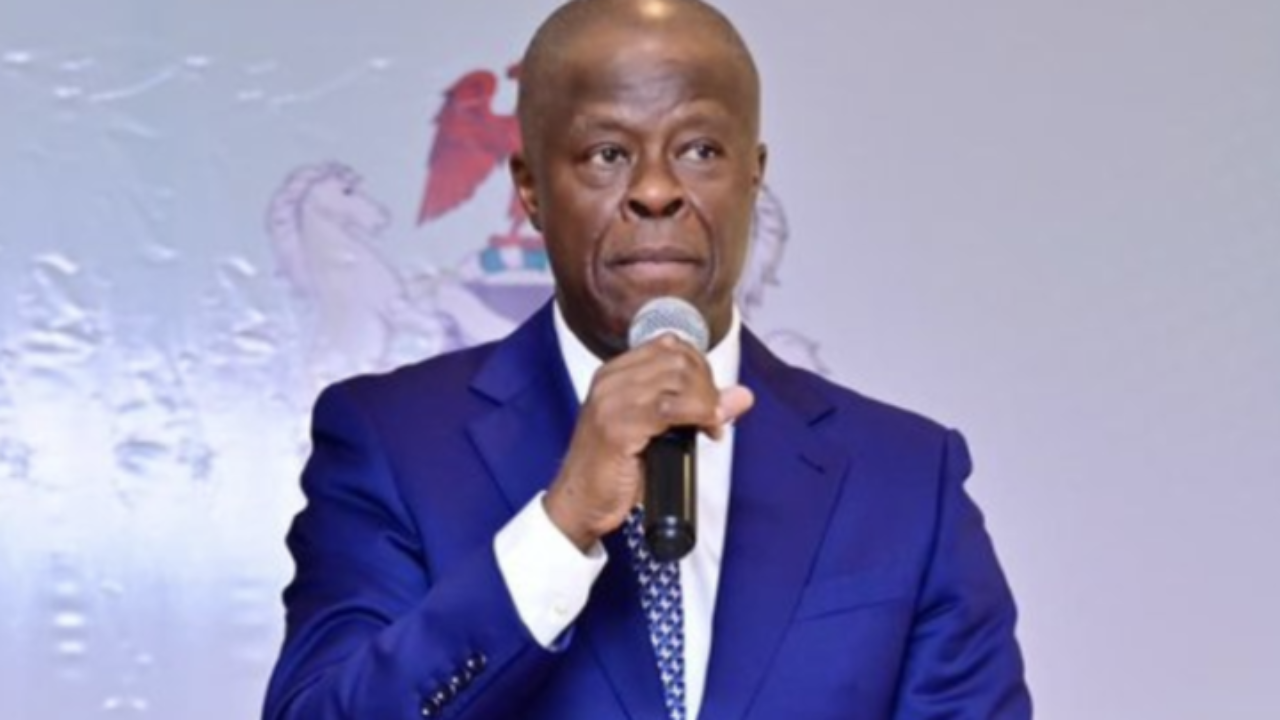
Nigeria’s Minister of Finance and Coordinating Minister of the Economy, Wale Edun, has said the current price of petrol reflects prevailing market realities, urging Nigerians to recognise the significance of the country’s expanding local refining capacity.
Speaking during an interview on Channels Television’s Politics Today aired on Wednesday, Edun explained that recent increases in fuel prices are largely the result of global market dynamics rather than domestic policy decisions alone.
According to him, the pricing mechanism currently in place aligns with the market-driven approach introduced by President Bola Ahmed Tinubu, a shift he said had been absent for many years.
“The market price for petroleum products is the system that has been established by the president. It is important for people to understand that the process is influenced by market forces and does not move in only one direction,” Edun said.
He pointed to price adjustments by the Dangote Refinery, which he noted had previously reduced petrol prices from around ₦1,200 per litre to just above ₦1,000, as evidence of how competition and supply dynamics can influence costs.
The minister emphasised that the presence of the refinery owned by Nigerian industrialist Aliko Dangote has become a critical pillar for the country’s energy sector.
He noted that private investment in refining is helping to strengthen Nigeria’s capacity to process crude oil domestically and reduce dependence on imported petroleum products.
“The resilience we are seeing in the Nigerian economy is partly due to investments like the one made by Aliko Dangote in refining,” Edun said. “It is important that we support local refiners just as other countries support theirs to ensure a steady flow of petroleum products.”
Edun added that Nigerians should take pride in the country’s ability to convert its crude resources into refined products locally, describing it as a major step forward for the energy industry.
The Dangote Refinery, the largest in Africa, began producing petrol in 2024, marking a major milestone for Nigeria’s downstream oil sector. With a refining capacity of about 650,000 barrels per day, the facility had earlier started producing diesel and aviation fuel in January of the same year.
However, the refinery recently adjusted petrol prices several times, citing fluctuations in global crude oil prices as the driving factor.
In a statement explaining the adjustments, the company said its pricing reflects changes in international crude benchmarks as well as the cost structure under which it purchases crude.
“All crude supplied to us is priced according to global benchmark rates with an additional premium of between $3 and $6,” the company said. “Foreign exchange used in our transactions is obtained at the prevailing market rate, and there are no subsidies on crude supply or foreign exchange.”
The refinery also clarified that crude supplied under the government’s naira-for-crude arrangement is still benchmarked against international prices before being converted to naira using the current exchange rate.
Meanwhile, the finance minister maintained that Nigeria’s economy remains on a steady path despite external pressures.
He noted that ongoing global developments including the prolonged war in Ukraine and renewed tensions in the Middle East continue to create uncertainty in international markets.
Despite these challenges, Edun expressed optimism about Nigeria’s economic outlook.
“We are gradually coming out of the difficult period,” he said. “There is a light at the end of the tunnel as long as we stay committed to the reforms.”
According to him, the government’s focus remains on strengthening the economy so it can withstand global shocks and maintain stability even when international conditions shift.
“Our goal is to build resilience,” he added. “When global conditions change drastically, the economy should still be able to keep moving forward.”
About the Author