The Financial Sector Conduct Authority (FSCA) is assessing a complaint of possible insider trading in Curro shares in the weeks and months leading up to the Jannie Mouton Foundation’s R7.2 billion offer to acquire all remaining shares in the private school group.
The regulator confirmed to Moneyweb that one of the statutory bodies responsible for monitoring market activity had reported suspicious trades to the FSCA in the months before the announcement, and that the “complaint is under assessment”.
A Moneyweb analysis of Curro’s shareholder registers since last year identified a series of unusually timed transactions by five different entities in the period of less than six months before the offer was announced.
The FSCA did not identify the parties involved in the trades, the nature of the suspicious transactions, or which entity reported them.
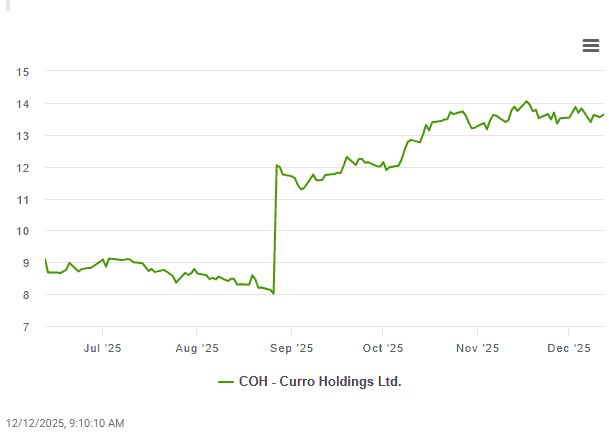
The trades preceded Curro’s Sens announcement on 27 August of a R7.2 billion offer in which the Jannie Mouton Foundation proposed to buy out minority shareholders, delist the company, and convert it into a public benefit organisation that would reinvest all future profits into building new schools, expanding facilities, and providing bursaries.
The announcement caused Curro’s share price to surge by 60% on the day.
Jan Mouton, a trustee of the Foundation and son of Curro founder Jannie Mouton, described the transaction in an interview with RSG Geldsake as unprecedented in scale, saying: “According to our research, this R7.2 billion donation is the largest in South Africa’s history”.
Under the Financial Markets Act, institutions such as the JSE, central securities depositories, and clearing houses are required to report suspicious transactions to the FSCA for investigation into market abuse, including insider trading, which is a criminal offence.
Moneyweb’s analysis of Curro’s shareholder registers reveals suspicious trades by Citiclient Nominees No. 8 and the Public Investment Corporation (PIC).
It also identified transactions that could be regarded as unusually timed by entities linked to the Mouton family, which were properly disclosed in the Circular explaining the offer.
London-based Citiclient Nominees No. 8 is a nominee account of Citigroup, one of the world’s largest financial institutions.
A nominee account is an arrangement in which a financial institution holds securities in its own name on behalf of the underlying investor.
Citigroup did not disclose the identity of the beneficial owner, citing the group’s policy “not to comment on such matters”.
The shareholder registers show that Citiclient Nominees No. 8 held a stable position of around 13 million Curro shares from at least July 2024, but began accumulating additional shares early in 2025. It acquired about 1.7 million shares in early April and then accelerated its purchases in June and August, just weeks before the announcement, adding a further 7.1 million shares in total.
Citiclient then sold 8.7 million shares a few days later, in early September, at the sharply higher prices, effectively returning to its pre-April holding.
The trades generated an estimated profit of around R31 million.
The PIC, which manages the Government Employees Pension Fund’s funds, also purchased shares shortly before the announcement.
It has been a long-standing shareholder in Curro and held around 51 million shares in July 2024. It sold 1.2 million shares in June 2025 but repurchased a significant 7.2 million shares in July, less than two months before the announcement. The trades resulted in a gain of more than R21 million.
In response to questions, the PIC said it had no engagement with Curro or the Jannie Mouton Foundation before the offer was announced.
“It is instructive to note that the decision to increase and/or reduce exposure to any stock is a function of our portfolio rebalancing exercise or the trading activity of PIC-appointed active managers.”
The transaction seems negligible given that the PIC manages assets of more than R3 trillion.
Perhaps the most notable trades were the share acquisitions by three entities owned by the Jannie Mouton Familietrust between 10 April and 2 May.
The timing – less than six months before the announcement – has generated some critical commentary, as such proximity to a significant and complex corporate proposal is unusual and has therefore raised eyebrows.
The entities – Jan Mouton Beleggings (‘investments’), Piet Mouton Beleggings and My Favourite Beleggings – each acquired 7.84 million shares in April and May, at a cost of approximately R70.14 million per entity, or about R210 million in total.
On the announcement date, their combined gain was roughly R74 million. The transactions increased their collective shareholding in Curro by a substantial 32% to 98 million shares, which equates to a total interest of 16% in Curro.
The transactions were disclosed. Curro disclosed in April that the entities’ shareholding has increased to beyond 5% of Curro’s issued shares, as required by the JSE. The detailed breakdown of the trades themselves was also disclosed in the October Circular.
Moneyweb engaged Curro and several members of the Mouton family, who acknowledged that the timing of the transactions was unfortunate but stressed that there was nothing untoward about them.
Piet Mouton, CEO of PSG and a director of Curro, said the names of the entities may create a misleading impression about who controls them, as the companies are wholly owned and controlled by the Jannie Mouton Familietrust.
He said his father, PSG founder Jannie Mouton, registered the companies in the names of his three children – Jan, Piet and Charité – with My Favourite Beleggings referring to his daughter.
“Of these three, Piet Mouton Beleggings can create a lot of confusion as it might be perceived as my investment company [Piet Mouton], but it is not. Given that I serve on numerous listed boards, the trades the company makes would need to be announced if it were my investment company. However, since it’s not my company, the requirements to announce changes substantially,” Piet Mouton said.
He added that each of the three companies has four directors, but that the ultimate decision-makers are the trust’s six trustees.
He said that, as a trustee of the Jannie Mouton Familietrust, he also recuses himself from any investment decisions made through the investment entities into companies on which he serves as a director.
Jan Mouton said the trustees’ decision to buy the shares was taken “in the normal course of long-term investment”. He noted that Curro shares were substantially undervalued, as the prevailing share price of around R8.70 at the time was trading at a considerable discount to the net asset value of R12.46.
Idea conceptualised only after Bill Gates’s announcement
Jan Mouton explained the rationale for the offer in detail.
He said the Foundation had been considering a R97 million donation to build a new school, but thought it did not have the capacity to operate it sustainably.
“The Foundation met on 15 May, and I was not in favour of it, given the cost, timing and management issues. Also, Bill Gates’s decision on 8 May 2025 to spend the whole endowment of the Gates Foundation by 2045, made me rethink whether the Foundation should have an endowment or whether it should rather do something big during the lifetime of the Foundation’s founder, Jannie Mouton. This got me thinking specifically about Curro as a potential vehicle.”
He said he believed the R7.2 billion buyout of 189 Curro schools would be a more effective way to increase the Foundation’s contribution to education, as these schools are well-managed and sustainable.
“I thought this could be a win-win for all stakeholders and would be in line with my father’s education dream. This would create a true legacy for him.”
Jan Mouton said he conceptualised this idea on 17 May, almost three weeks after the three entities acquired the shares.
He said the Foundation did not consult any external party, such as City Group or the PIC. He also added that the Foundation submitted the offer to the Curro board on 26 August, the day before the announcement.
“Neither I nor the family nor the Foundation will do anything that will prejudice our reputation. The transaction was uncertain from the day the idea was conceptualised until the day the formal offer was made to the Curro board.”
This article was republished from Moneyweb. Read the original here.