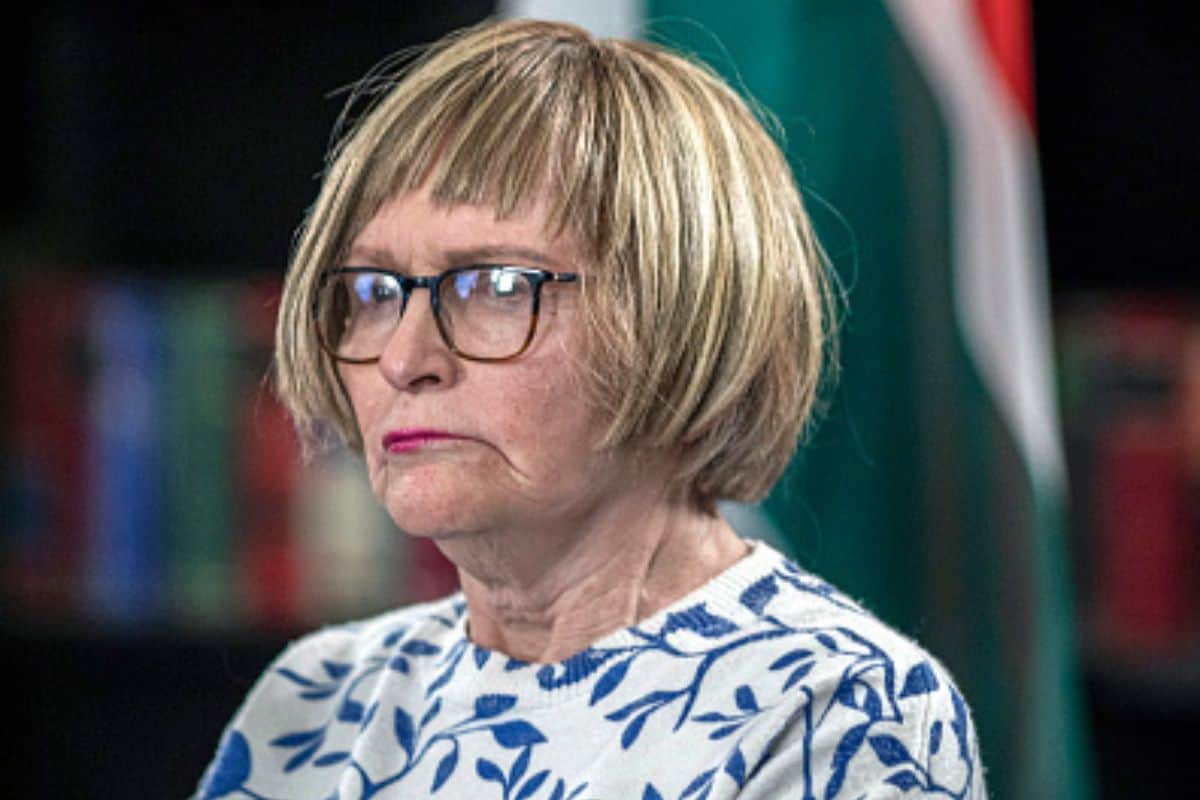
From getting roasted on national television to dodging questions about Gaza’s genocide and running for mayor, Helen Zille has had quite the year.
The 74-year-old chairperson of the DA’s federal council has ping-ponged between comedy stages, controversial interviews, and internal party drama.
Here are five defining moments from Zille’s eventful 2025.
Zille getting dragged for laughs
In what some saw as a desperate bid for relevance and others as a surprising show of self-awareness, Zille became the subject of the Showmax Roast of Helen Zille in May.
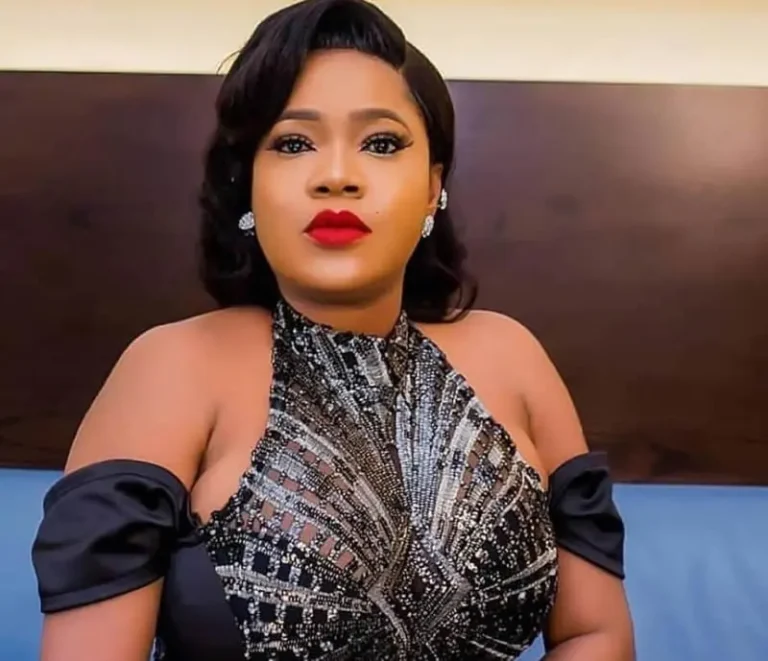
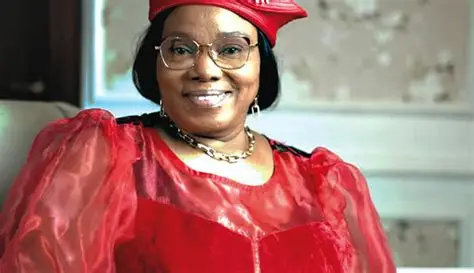
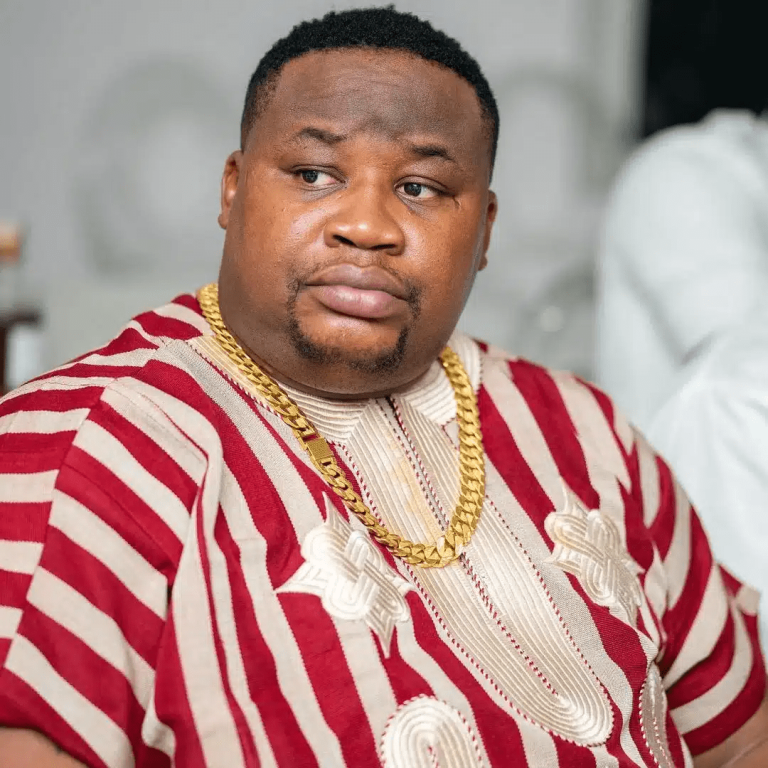
The show, premised on celebrities being made fun of by other celebrities, saw Zille face off against a panel including comedian Loyiso Gola, broadcaster Bongani Bingwa, and even fellow politician Patricia de Lille.
The public’s reaction? A collective cringe mixed with reluctant amusement.
“Watching Tannie Helen Zille sing Vulindlela was odd… I didn’t like it,” one viewer commented.
Another gave her a “very reluctant 10/10”, while yet another dismissed the performance as “so whack, but I didn’t have high expectations”.
Critics were less kind, with some suggesting Zille was “hungrier for fame than the Kardashians”.
Zille responded to “mean” social media on Showmax ahead of the premiere of her roast and told the audience that “nothing can make me likeable”.
Whether the appearance actually made her more relatable to young voters or simply provided meme fodder remains to be seen.
ALSO READ: ‘Ma, are you crazy?’: Helen Zille’s sons react to Showmax Roast
Joburg mayoral bid sparks debate
Beyond the entertainment sphere, Zille’s political year took a significant turn when the DA announced that she would run for Johannesburg mayor in the upcoming elections.
The news generated a rollercoaster of reactions across the political spectrum.
At 74, and after years of Cape Town-centric politics, Zille’s sudden interest in Johannesburg raised eyebrows.
Many critics argued that under Zille’s leadership, Johannesburg would mirror Cape Town’s alleged inequality, where they claim whites and the wealthy thrive while black residents and the poor suffer.
Others, however, lauded her audacity and suggested she may be what the struggling ‘World Class African City’ needs to revive itself.
Despite being born in Johannesburg, many were still suspicious of Zille’s intent to run for mayor.
In her speech during the DA’s announcement, Zille said 30 years ago Joburg “was the place to be – now just over 30 years later, many see it as a place to flee”.
This comment was met with much ridicule, considering that 30 years ago the country was tasting freedom after decades of suffering under apartheid.
The announcement reignited debates about spatial justice and service delivery, with one social media user sarcastically noting that Zille “misses Joburg 30 years ago, when black Joburgers had less water, electricity, housing, education and healthcare than now.”
Others questioned why, if the DA already had strong leadership in Johannesburg, they needed her.
Zille herself was characteristically unapologetic, promising to “wrestle the city back from a criminal mafia”.
ALSO READ: ‘Will Soweto get services?’ – Mashaba questions whether Zille will be good for Joburg (VIDEO)
Spicy interviews
Sidestepping the genocide question
Zille landed herself in hot water during a September interview on broadcaster Newzroom Afrika when she refused to answer whether Israel was committing genocide in Gaza.
Her response became instant fodder for critics who accused her of moral cowardice.
“Genocide is a very big word. I haven’t been to Gaza, and I don’t know. But I certainly do know that Hamas has spent all its energy trying to obliterate the state of Israel,” Zille said, sidestepping the question.
When the interviewer pushed further, citing the UN Independent International Commission of Inquiry’s conclusion that genocide was being committed, Zille deflected again.
“The DA has not discussed that particular issue. What we do discuss is the issue of what we propose to solve the problem, and that is a two-state solution,” she said.
The comments triggered swift backlash.
Some claimed that Zille’s party assisted Ukraine when Russia attacked, but did not have the same energy in the Middle East.
ALSO READ: ‘Genocide is a very big word’ – Zille on Israel’s attacks on Gaza [VIDEO]
Zille on the 947 hot seat
Perhaps the most explosive moment came during Zille’s appearance on Anele Mdoda’s 947 radio breakfast show, where tensions escalated into a full-blown confrontation about race, service delivery, and Zille’s controversial past statements.
Depending on which angle one views it from, Zille was either lashed by Anele Mdoda in September, or she did the lashing herself.
The exchange reached its peak when Mdoda raised a question of trust.
“As a person who is living in Johannesburg, as a black person who lives in Johannesburg, black people struggle to see you wanting to forward them, right?” she said.
Zille fired back: “And when were you elected as the spokesperson of all black people? You weren’t. How can you speak for black people? I can’t speak for white people.”
When Mdoda pointed out that public perception matters, noting “You see what people say about you, babe,” Zille dismissed social media criticism.
“Twitter is not the voters,” she insisted, adding: “I bet I did more to fight apartheid than everybody sitting in the studio today.”
Defending the ‘least bad option’
In a revealing interview with late EWN political journalist Tshidi Madia, Zille defended the DA’s position in the government of national unity while pushing back against suggestions the party was caving to ANC pressure.
When pressed on whether the DA was simply rescuing the ANC, Zille admitted the party was choosing between bad options.
When challenged about the party’s red lines and alleged backtracking, particularly around the dismissal of former higher education minister Blade Nzimande, Zille was defiant.
“We’re never going to get what we want in its entirety while we’ve got 22% of the vote,” she said.
On Nobuhle Nkabane’s reshuffle, Zille insisted: “She was only on her way out because the DA said we won’t accept her in. She lied to us. She lied to Parliament.”
When challenged about whether the DA was simply rescuing the ANC, Zille pushed back.
“We sit strategically and say what is the least bad option? Obviously, we’d like to have a good option, but until we become the majority party, there’s not going to be a really good option for South Africa,” she said.
Zille also revealed that scheduled meetings between the DA and ANC leadership regularly failed to materialise.
The interview raised questions about whether the DA was truly holding the line or simply justifying its increasingly uncomfortable position in government.
Zille plays referee in the Steenhuisen-George showdown
Just when it seemed Zille’s year couldn’t get more dramatic, she found herself mediating an explosive internal party dispute between DA leader John Steenhuisen and finance committee chairperson Dion George.
The conflict centred on allegations that Steenhuisen had abused the party’s credit card for personal expenses, including Uber Eats orders.
The timing was hardly coincidental, emerging after Steenhuisen allegedly orchestrated George’s removal as Minister of Forestry, Fisheries, and the Environment over sexual misconduct allegations.
Stepping into the fray, Zille announced that the party’s Federal Executive would investigate both men.
She added a stern warning to both camps: “FedEx also issued an injunction to everyone involved, either directly or peripherally, to stop prosecuting their arguments through the media, and allow the parties’ processes to take their course.”
When asked about potential factionalism ahead of the party’s 2026 elective conference, Zille shut down further questions.
“I have said everything FedEx wants to say in the statement, nothing more than that,” she said.
The dispute offered an unflattering glimpse into the DA’s internal tensions, with Zille cast in the uncomfortable role of schoolteacher separating squabbling students.
Whether her intervention will restore party unity or simply paper over deeper cracks remains uncertain.
As 2025 draws to a close, Zille faces pivotal decisions about her political future.
If she becomes the mayor of Johannesburg, she has indicated she’ll step down as federal council chairperson.
At 74, this would likely be her final major political role.
Whether it ends in triumph or another addition to the list of controversies, only time will tell.
READ NEXT: Did Steenhuisen violate the DA’s constitution? Party investigates bitter feud between leaders
About the Author