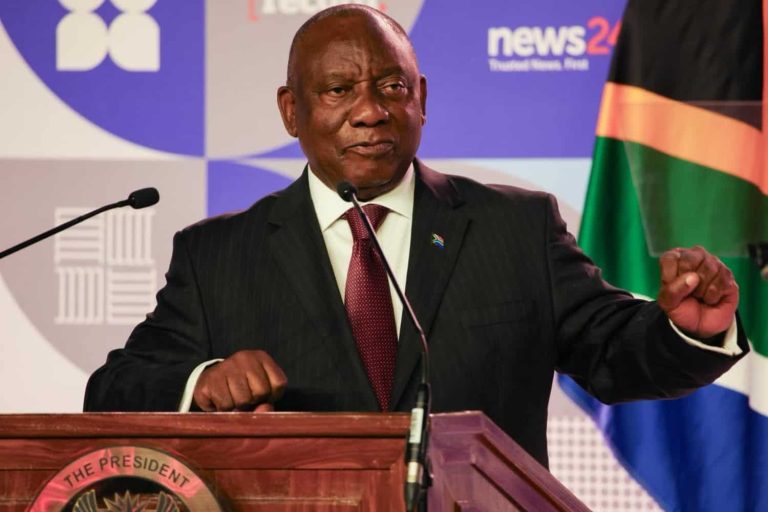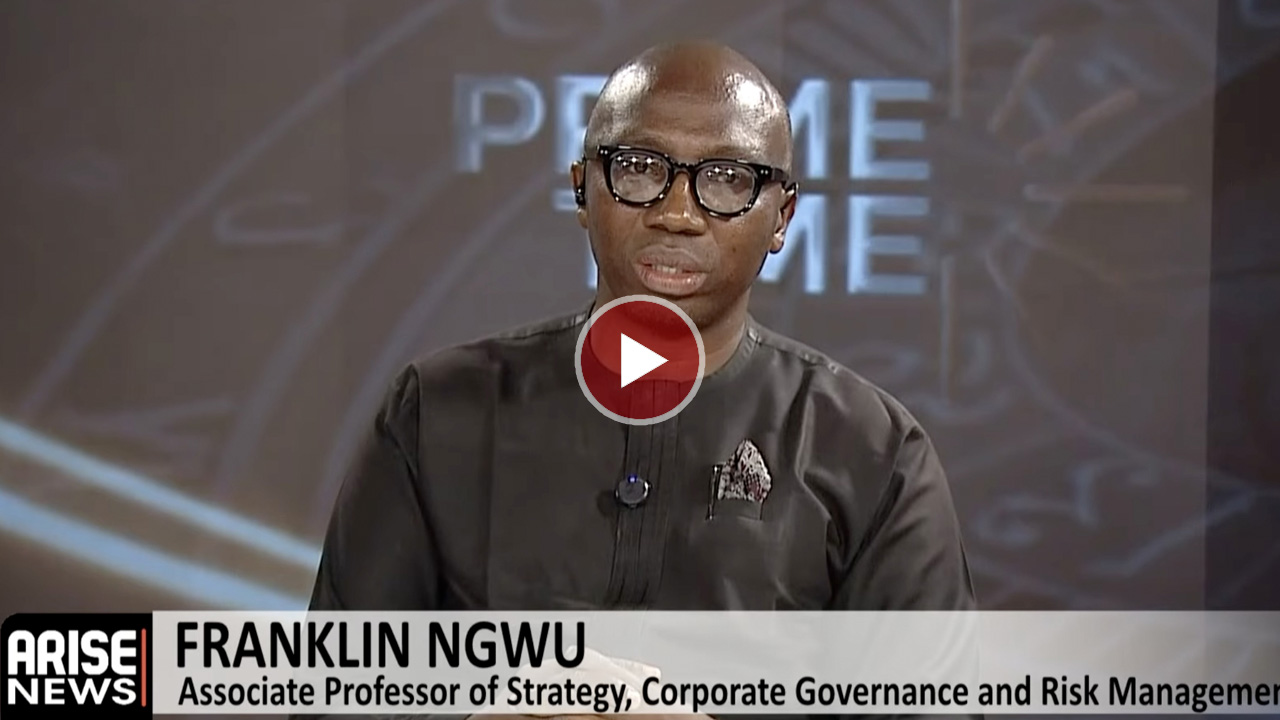
Associate Professor of Strategy, Corporate Governance, and Risk Management, Franklin Ngwu, has emphasised that Nigeria must clearly define its national interests to fully benefit from the President and First Lady’s historic UK visit.
Speaking during an interview on ARISE News on Thursday, Ngwu said that while the visit marked a significant diplomatic milestone as the first in nearly four decades, the country risks missing real socioeconomic gains without a clear strategic plan.
“Sincerely, from my own assessment, I’m not sure that the government, the people of Nigeria, that we really sat down and said, what is our national interest? What are we trying to achieve? So while if you read the newspapers, watch the news and all that, the main thing that we’re celebrating is that the president has been welcomed and been received and is the first visit in over 37 years and all that. We have already paid emphasis in terms of what are we offering, in terms of our productivity, in terms of our potential, in terms of what we’re going to be giving to the global economy. And that’s my concern, that we’re not really defining what we are supposed to say,” Ngwu said.
He raised concerns over Nigeria’s continued reliance on crude oil exports, noting that 50 years on, the nation’s key exports to the UK remain largely unchanged.
“50 years before, our key exports to the UK remained crude oil. 50 years, currently at 2026, what are we exporting to the UK? Still mainly crude oil. So the question then is what has changed and what have we done differently?” he questioned.

Ngwu acknowledged that the visit achieved tangible agreements, including a £746 million port modernisation deal where British Steel will supply 120,000 tonnes of steel to Lagos ports. However, he said the focus should be on Nigeria’s value proposition and economic productivity rather than ceremony.
“It’s good that we’re modernising our steel ports. But interestingly, what should also concern us is, let me just do a bit of comparison. UK, I think it’s something about 70 million people, has over 120 ports, 10 of them accounting for 70% of the trades in the UK with a GDP of close to $5 trillion. Nigeria, a country of 230 million people, has a GDP of about $285 billion. And we have only maybe two or three functional seaports.
And 2026, we are still celebrating that UK is helping us to come and modernise our two seaports, Tinca and Apapa, in Lagos. And interestingly, they are financing us with about £746 million. I mean, good. But when you look at it very well, and if you look at the commentaries, the CEOs of British Steel and other companies in UK are celebrating. But this is the first time they are getting the kind of contract that they have to supply pillets that we’re going to use for this post-modernisation,” Ngwu said.
He also highlighted Nigeria’s trade deficit with the UK, pointing to the limited diversification of exports as a structural challenge.
“So if you look at Nigeria and UK, you find out that the trade, they were exported about $2.7 billion of goods to UK, and we imported about over $5.7 billion. So it means that we’re in deficit. Why is it a disaster? Because we’re not really focused on our productivity. We’re not really focused on what we are giving to the world. We’re not really focused on what we are giving to the UK. We’re not even focused on what we are giving to the Commonwealth of Nations,” he said.
Ngwu suggested that sectors such as agriculture, IT, logistics, manufacturing, and education could be leveraged to expand Nigeria’s contributions to the global economy.
“Even if we are focusing on agricultural products and say we’re going to ensure that we supply the UK with maybe banana, with maybe potato, maybe with coconut, and all that, and be serious about it. But in terms of this idea that for 50 years down the line we are still focusing on supplying only crude oil, I’m not sure. That’s why I keep saying that we need to be more clear and serious in terms of what we’re offering,” he said.
He added that addressing export standards and ensuring consistent supply would enable Nigeria to capture larger market shares in the UK and beyond.
“And I remember during our research we asked the UK supermarkets why they are not getting from Nigeria. Two reasons that they gave. One is that there is no standard international packaging centre in Nigeria that will meet with the European or UK standards of exports. That’s one. Number two is that they are not sure if they will be able to get the kind of supply that they need, maybe for coconut, maybe for banana, maybe for potato, maybe for any other thing,” Ngwu said.
Faridah Abdulkadiri
About the Author