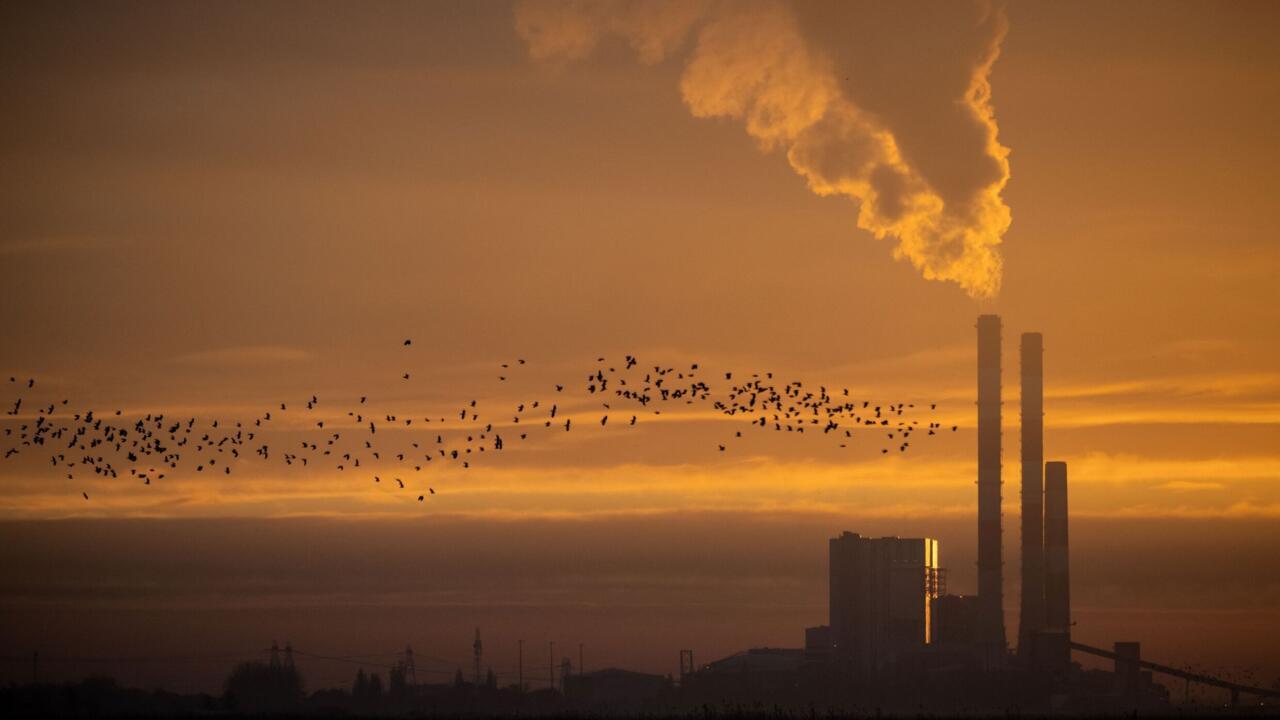
France’s efforts to curb greenhouse gas emissions are losing steam, leaving the country increasingly off track to meet its climate commitments, according to a provisional government-commissioned forecast released on Tuesday.
The report, produced by Citepa, a non-profit organisation responsible for compiling France’s greenhouse gas inventory for the ecology ministry, estimates that emissions fell by just 1.6 per cent in 2025 compared with the previous year. That reduction—equivalent to 5.8 million tonnes of carbon dioxide—was “well below the pace required to meet France’s 2030 targets” and marked the second consecutive year of slowing progress.
France updated its roadmap to carbon neutrality by 2050 in December, outlining the scale of action needed this decade. Under that pathway, emissions must decline by an average of 4.6 per cent annually through 2030. Current trends, however, fall far short of that benchmark.
After posting stronger cuts of 3.9 per cent in 2022 and 6.8 per cent in 2023, the slowdown became evident in 2024, when emissions dropped by only 1.8 per cent. Although Citepa had initially projected an even weaker decline of 0.8 per cent for 2025, revised data and improved calculation methods led to a slightly more optimistic—but still insufficient—estimate.
The report showed modest gains in traditionally high-emitting sectors such as industry, agriculture, and transport. However, emissions from the energy sector and waste treatment remained largely unchanged, underscoring the difficulty of decarbonising areas that are central to industrialised economies like France.
As one of Europe’s largest economies and a self-styled leader in the low-carbon transition, France faces mounting pressure to accelerate its shift away from fossil fuels. Anne Bringault, a director at Climate Action Network France, said the findings should serve as a wake-up call.
“It is high time to take climate risk seriously,” she said, “but also the geopolitical risk of continued dependence on fossil fuels, which are overwhelmingly imported.”
France’s experience mirrors a broader regional trend. In neighbouring Germany, emissions declined by just 1.5 per cent in 2025, according to figures released last week by energy think tank Agora Energiewende.
Across the bloc, the European Union has committed to cutting net greenhouse gas emissions by 90 per cent by 2040 compared with 1990 levels. By 2023, it had achieved a 37 per cent reduction—progress that highlights both how far Europe has come and how much faster major polluters must now move to keep global climate goals within reach.
About the Author