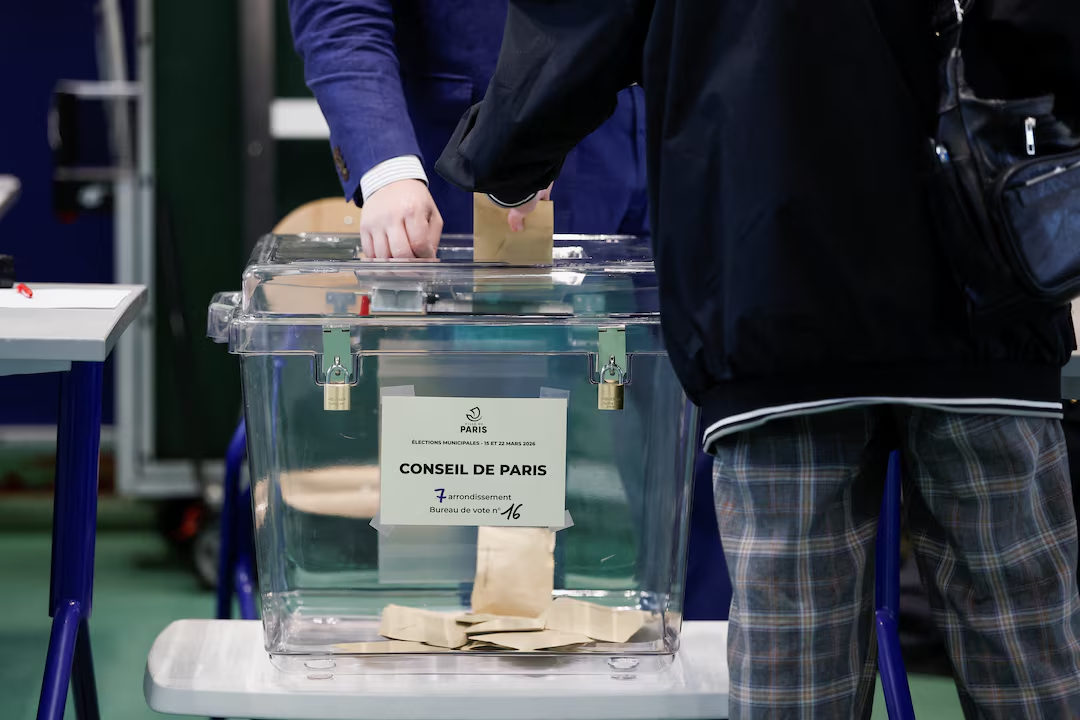
Voters across France headed to the polls on Sunday for decisive mayoral run-off elections in several major cities, including Paris, in contests widely seen as an early political test ahead of next year’s presidential election.
While most of France’s nearly 35,000 municipalities elected local leaders during the first round last weekend, about 1,500 communes — largely in major urban centres — proceeded to second-round voting after no candidate secured an outright majority.
The local elections are being closely watched for signals about voter sentiment, shifting alliances, and the growing influence of the far right as the country prepares for the race to succeed Emmanuel Macron.
In Paris, where left-wing parties have governed for the past 25 years, the contest has emerged as one of the most closely followed nationwide.
Leftist candidate Emmanuel Grégoire, a former deputy to outgoing mayor Anne Hidalgo, is facing a strong challenge from conservative rival Rachida Dati, a former minister seeking to return the capital to right-wing control.
Dati, a former justice and culture minister and long-time ally of Nicolas Sarkozy, has strengthened her position after both a centre-right and a far-right candidate withdrew in her favour.
If successful, she would become the second consecutive female mayor of Paris.
However, her campaign continues under the shadow of a corruption trial scheduled for September — allegations she strongly denies.
Grégoire, meanwhile, declined support from a hard-left candidate who remained in the race, a move that could divide the left-wing vote in the capital.
Political cooperation between leftist and centrist blocs has helped contain far-right advances in previous elections, but those alliances have come under strain following recent political tensions linked to the killing of a far-right activist last month.
Elsewhere, National Rally, led politically by Marine Le Pen, is seeking significant gains beyond its traditional strongholds.
The anti-immigration party says it and its allies retained control of 10 municipalities in the first round, including Perpignan — currently the largest French city governed by the far right.
It also claims first-time victories in 14 additional districts and is targeting larger urban breakthroughs.
In Toulon, RN’s candidate emerged well ahead in the first round and could secure control of the largest city ever governed by the party if confirmed in the runoff.
In Marseille, France’s second-largest city, RN candidate Franck Allisio finished just behind incumbent left-wing mayor Benoît Payan, though the left remains favoured after a hard-left candidate withdrew.
Meanwhile, in the northern port city of Le Havre, former prime minister Édouard Philippe appears well positioned to retain the mayoralty.
Philippe, who has declared interest in the 2027 presidential race, is widely seen as one of the strongest centrist challengers to the far right, whether represented by Le Pen or her political ally Jordan Bardella.
National turnout in the first round stood at 57 percent — among the lowest recorded for local elections outside the pandemic-disrupted 2020 vote.
Results from Sunday’s run-offs are expected later in the evening and could offer an important snapshot of France’s political direction ahead of the next presidential contest.
About the Author