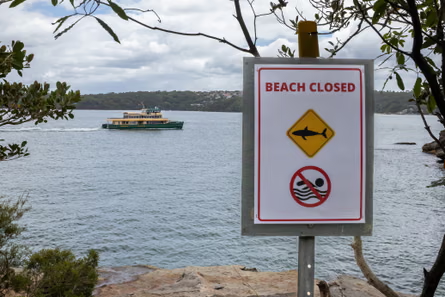
A surfer has been hospitalised after being bitten by a shark off Australia’s New South Wales (NSW) coast, marking the fourth shark attack in less than 48 hours and prompting authorities to shut several popular beaches as a safety precaution.
The latest incident occurred on Tuesday morning near Crescent Head, where a 39-year-old man suffered minor injuries after a shark bit through his surfboard.
The attack happened close to the Point Plomer campground, approximately 450 kilometres north of Sydney. He was taken to hospital and is reported to be in stable condition.
The incident follows three other shark encounters reported around Sydney over the past two days. In response, police announced that all beaches across Sydney’s northern coastal areas will remain closed until further notice.
Authorities have linked the recent surge in shark activity to days of heavy rainfall across the state, which may have altered coastal conditions. NSW Police Superintendent Joseph McNulty said the weather may have created what he described as a “perfect storm environment” for shark encounters.
Heavy rainfall can wash nutrients into coastal waters, attracting bait fish and drawing sharks closer to shore, while murky water reduces visibility, increasing the risk of accidental encounters.
Surf Life Saving NSW Chief Executive Steve Pearce described the Crescent Head victim as “very fortunate” to have avoided serious injury. He strongly urged the public to stay out of the water, particularly near river mouths, where sharks are more likely to congregate.
“We really strongly advocate that nobody swim or surf near river mouths,” Pearce said, adding that people should avoid entering the ocean when visibility is poor.
Earlier on Monday, a young surfer narrowly escaped serious injury at Dee Why Beach, while a separate attack at nearby Manly left a 27-year-old surfer with life-changing injuries. On Sunday, a 12-year-old boy was critically injured in a shark attack at a popular Sydney Harbour beach.
Authorities believe bull sharks may be responsible for several of the recent attacks. According to the Australian Museum, bull sharks are among the species considered most dangerous to humans and rank as the third deadliest shark species globally.
While Australia is a known hotspot for shark encounters, experts stress that the risk of being bitten remains extremely low.
However, due to ongoing poor water quality and limited visibility, police have advised residents and visitors to avoid swimming across NSW waterways for the time being.
“I would recommend not swimming in the harbour or our other river systems across NSW at this time,” Superintendent McNulty said.
About the Author