Nineteen individuals have been sentenced over the attack on a concert hall near Moscow that left 149 people dead and more than 500 injured, marking the deadliest mass shooting in Russia in two decades.
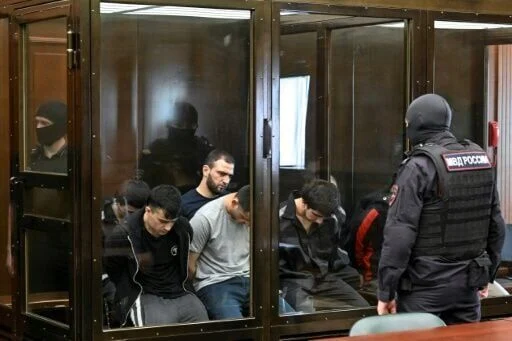
A Russian military court handed life sentences to four gunmen and 11 accomplices, while four other defendants received prison terms ranging from 19 to 22 years, according to state media.
The assault took place at Crocus City Concert Hall on the outskirts of Moscow on 22 March 2024 during a rock concert attended by roughly 6,000 people.
Gunmen opened fire before setting the venue ablaze, causing the roof to collapse. Many victims died from gunshot wounds, while others succumbed to smoke inhalation.
The four men convicted of carrying out the shooting were identified as citizens of Tajikistan. The 11 others sentenced to life imprisonment were found guilty of providing financial support, weapons, or links to terrorist organizations.
The remaining four defendants were jailed for assisting the attackers with a car and helping them rent an apartment. It remains unclear whether any of the convicted will appeal their sentences.
An affiliate of the Islamic State (IS-K) claimed responsibility for the attack and released video footage of the assault, which was verified as authentic by the BBC. IS-K is a branch of IS operating in Central Asia, seeking to establish a caliphate across Afghanistan, Pakistan, Turkmenistan, Tajikistan, Uzbekistan, and Iran.
The trial, conducted behind closed doors, raised concerns over possible coerced confessions. When the accused first appeared in court two years ago, they showed visible signs of having been beaten, and one was brought in on a wheelchair.
Russian authorities have repeatedly alleged Ukrainian involvement in the attack, claims strongly denied by Kyiv. President Volodymyr Zelensky described it as “absolutely predictable” that President Vladimir Putin would blame Ukraine, while no evidence supporting Russia’s accusations has been provided.
The Moscow concert attack remains one of the most devastating acts of mass violence in recent Russian history, highlighting ongoing security and geopolitical tensions in the region.
About the Author