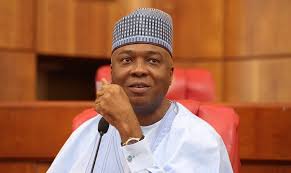
Former Senate President, Bukola Saraki has called for an honest, non-partisan assessment of Nigeria’s Fourth Republic, urging leaders to prioritise strengthening democracy over personal or party interests. He made the call while chairing the 23rd annual Daily Trust Dialogue, themed “Nigeria’s Fourth Republic: What Is Working and What Is Not”, in Abuja.
Addressing scholars, policymakers, public servants, and journalists, Saraki described media-led platforms as vital for democratic development, urging them to go beyond reporting events to interrogating governance. He stressed that Nigeria’s democracy has been “tested, strained, but not broken,” and called for candid reflection on its achievements and shortcomings.
Highlighting successes, Saraki noted over 26 years of uninterrupted civil rule, peaceful transfers of power, media freedom, vibrant civil society, judicial interventions, economic expansion, and emerging sectors such as fintech and entertainment. He warned, however, that continuity without quality should not be mistaken for success, urging focus on delivering tangible benefits to citizens.
Saraki identified four priorities for deepening democracy: judicial independence and speedy justice, improved societal values, effective anti-corruption measures, and credible elections. He expressed confidence in participants’ ability to offer practical ideas for strengthening governance, concluding that history will judge the Fourth Republic by its service to the people, not its longevity.
Also speaking, the Olubadan of Ibadanland, Oba Rashidi Ladoja, praised the dialogue’s longevity and highlighted achievements like sustained civilian rule and peaceful power transfers, while expressing concern over insecurity, corruption, and economic hardship. He urged stronger institutions to regain public trust.
Speaking further, former Minister of Youth and Sports Development, Sunday Dare, stressed the importance of clear, strategic communication for democratic governance, describing democracy as a learning process shaped by competing demands.
He acknowledged gains such as media freedom and civic space, while noting challenges including declining trust, insecurity, economic hardship, and weak sub-national governance. Dare defended the Tinubu administration’s reforms, including subsidy removal and exchange rate unification, citing signs of recovery like moderating inflation, improved reserves, and expanded social safety nets.
About the Author