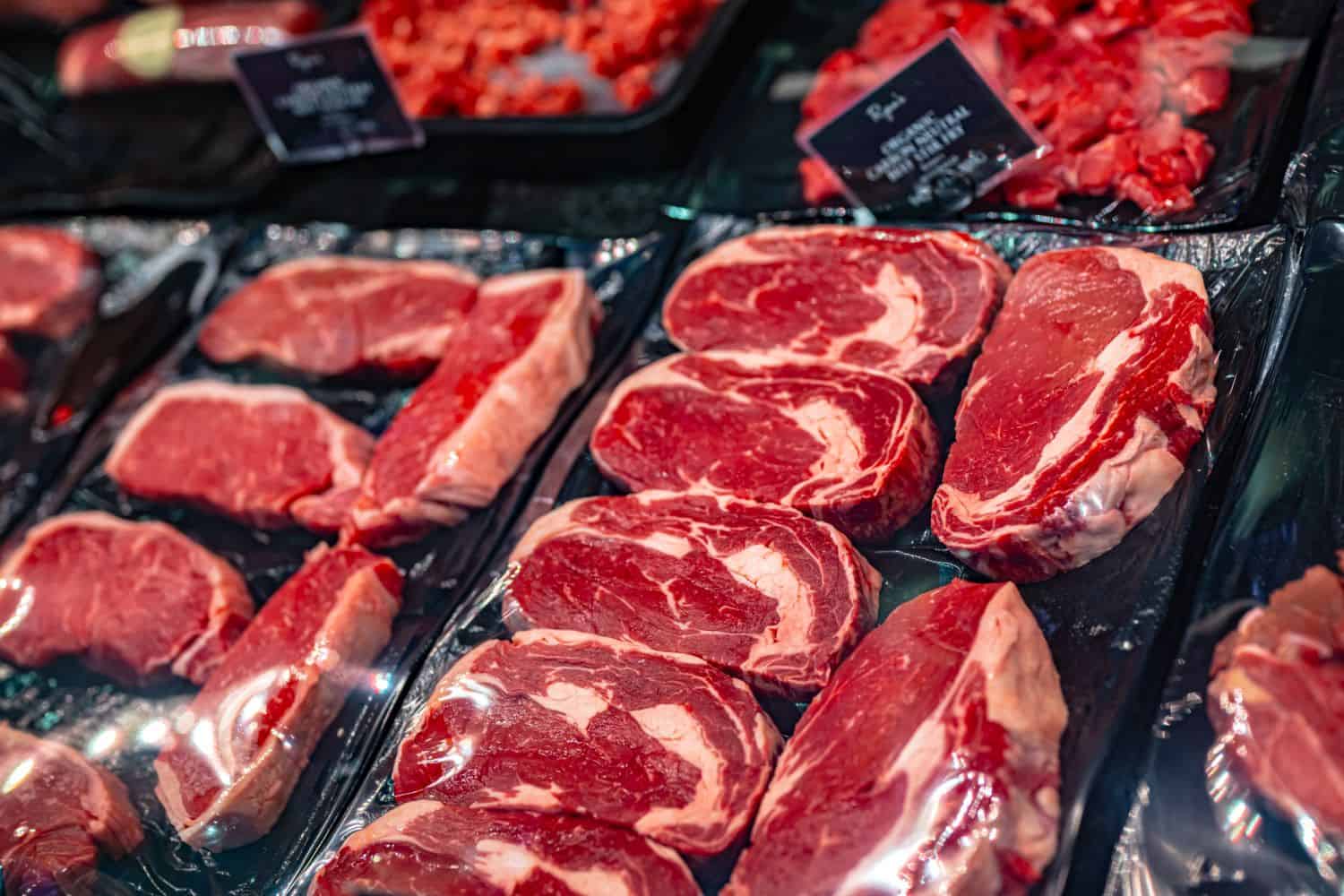
Meat products put up for sale in a supermarket commercial refrigerator
In 2025, South Africans faced rising food prices, especially for meat. Several factors have contributed to these increases, but the key ones are inflation and foot-and-mouth disease (FMD).
With overall meat prices up more than 12% year-on-year, South Africans need to prepare to pay more for less meat. This, as food price inflation sees a steep rise in costs, making it the highest since 2018.
December has also seen the cases of FMD increase, especially in Limpopo. Moneyweb reported that most farmers in the province have not been able to sell livestock this festive season, driving demand, therefore resulting in higher prices of meat.
ALSO READ: Meat and milk shortage loading? Cattle crisis worsens as foot-and-mouth disease cases rise
Meat under siege
It was in March when authorities warned that no cloven-hoofed animals should be accepted from areas under FMD restrictions in KwaZulu-Natal, Eastern Cape, Limpopo and Mpumalanga.
This was after the virus was detected in six dip tanks in KwaZulu-Natal, including districts around Vryheid, Newcastle and Mtubatuba.
FMD was detected in 2021, but it persisted in the Eastern Cape and KwaZulu-Natal. KZN has recorded.
KZN struggles to deal with meat virus
The Department of Agriculture has confirmed that since the outbreak was detected in 2021, the province has been struggling to address it.
Things worsened for the beef producer industry when the country’s largest beef producer, Karan Beef, recorded an outbreak of the FMD at its Heidelberg feedlot in Gauteng.
The outbreak came at a time when the poultry industry was divided over the ban on chicken imports from Brazil. At the time, Brazil had experienced an outbreak of highly pathogenic avian influenza, commonly known as bird flu.
Most chicken consumed in the country is imported from Brazil. Some say the ban will cause a shortage in the country, while others argue that South Africa can produce enough chicken.
ALSO READ: Why beef producers are still optimistic about 2025, despite foot-and-mouth disease warning
Affected cattle
Back to FMD, Anso Bracken, Karan Beef marketing manager, said approximately 120 000 cattle are housed at the Heidelberg facility. The company produces an estimated 100 million kilograms of beef annually from this site alone.
The department expressed concerns about the outbreak of the disease on 10 May, when cases were increasing. At the time, the investigation revealed that the same virus found in Gauteng was the one circulating in parts of KwaZulu-Natal.
An epidemiological investigation was launched to trace back and trace forward all other animals bought and sold at the same auction.
R72 million shipment of FMD vaccines
In June, the department of Agriculture said it would receive a shipment worth R72 million of FMD vaccines.
Deputy Director-General for Agricultural Production, Biosecurity and Natural Resources Management, Dipepeneneng Serage, told Moneyweb the vaccines are being imported from Botswana “due to South Africa’s limited domestic manufacturing capacity”.
In a statement, Agriculture Minister John Steenhuisen said the department has estimated the vaccine requirements for FMD for the 2025-26 financial year at R1.2 billion, with each dose expected to cost around R100.
However, Serage said this amount may have to be increased.
Bad news for meat lovers in South Africa
Meat prices recorded a 12% hike in the 12 months to November, making this the highest annual rate since January 2018.
Meat prices are still going up, even though overall inflation slowed down to 3.5% in November.
Specifically, pork, mutton, lamb, and sausages are getting pricier. For example, stewing beef costs around R150 per kg, and steak can go up to R350 per kg, depending on the cut and shop.
NOW READ: BMA stops illegal animal vaccines at Polokwane Airport
About the Author