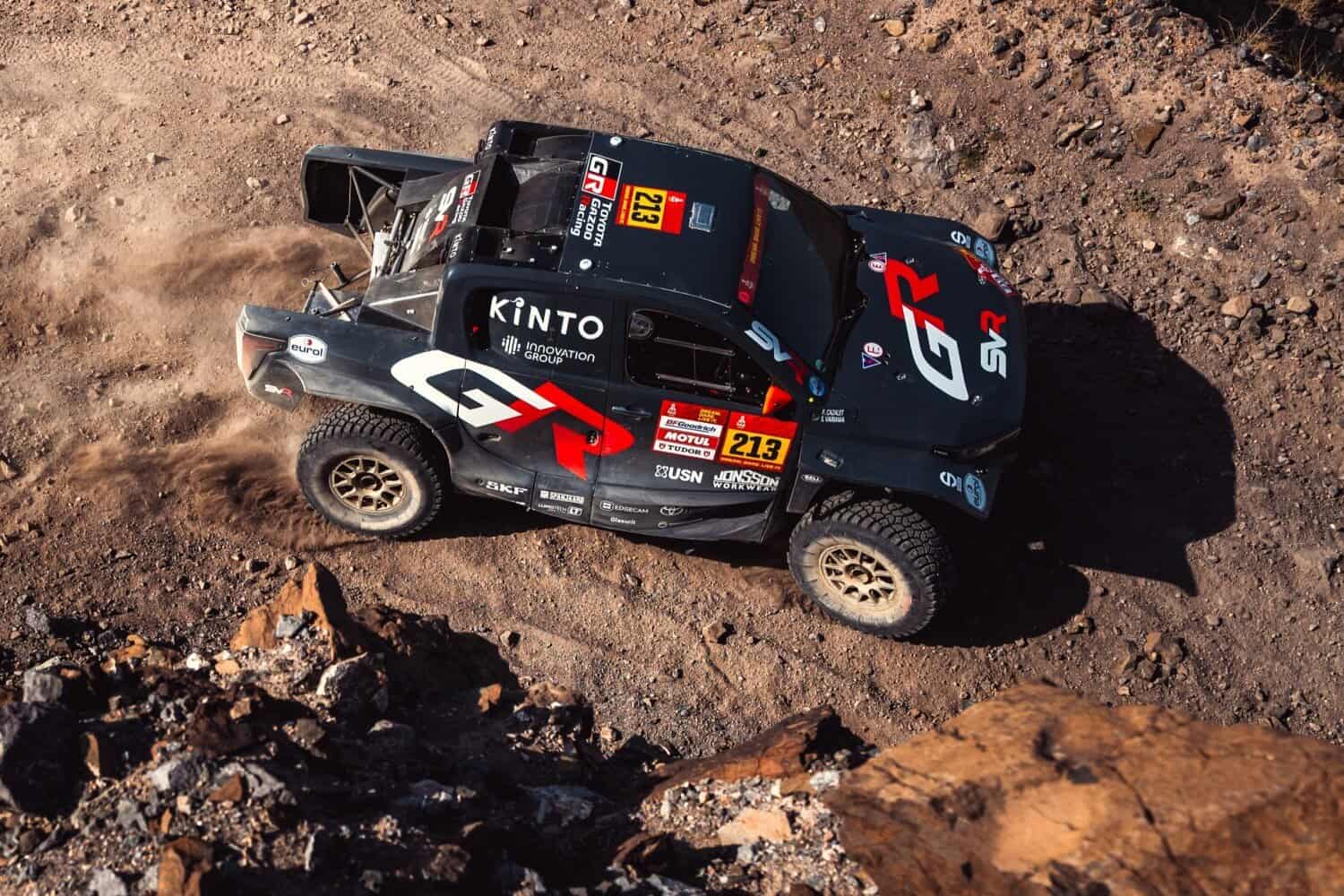
Two full weeks of action. Over 400 vehicles entered. 8 000km of flat out racing across some of the most unforgiving territory known to mankind. And I was there! An invite from Toyota Gazoo Racing South Africa ensured that I would get to spend the final two days of Dakar 2026 with the team in Yanbu, Saudi Arabia.
Our first stop on day one of the trip was a long drive out into the desert where we would set up camp at a spectator point to witness stage 12 of the race. The heat relentless and it wasn’t even midday yet. Loaded up with as much water as we could carry, we headed out on foot to find the best vantage place to see the action.
Fighting machine and fatigue
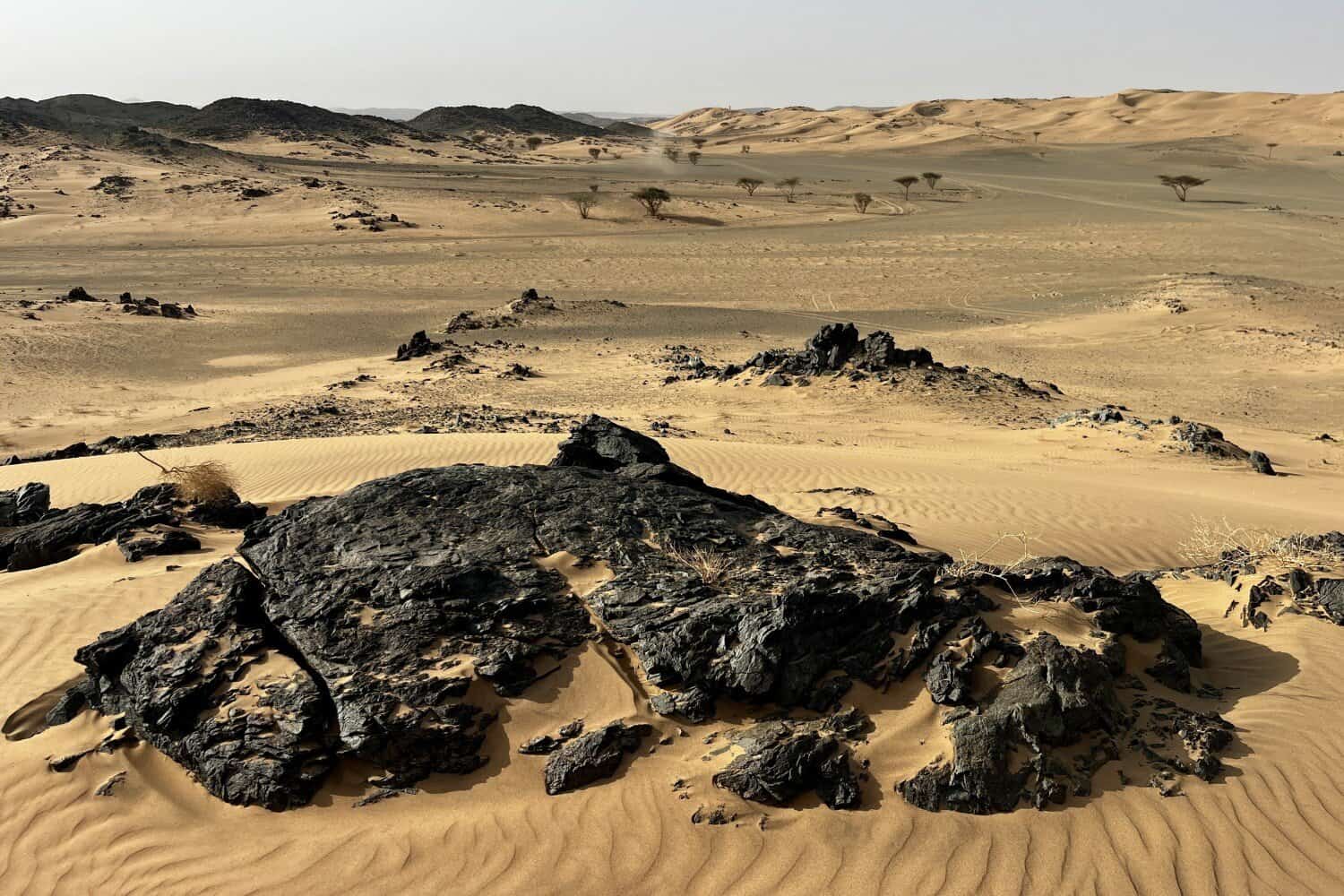
One moment the desert was silent, and the next it started to come alive as the first motorbike came winding through the canyons and right past us. We had found a good spot with some rocks for protection and the tiniest bit of shade under an acacia thorn tree.
ALSO READ: What’s coming? South Africa’s new bakkie arrivals for 2026 are…
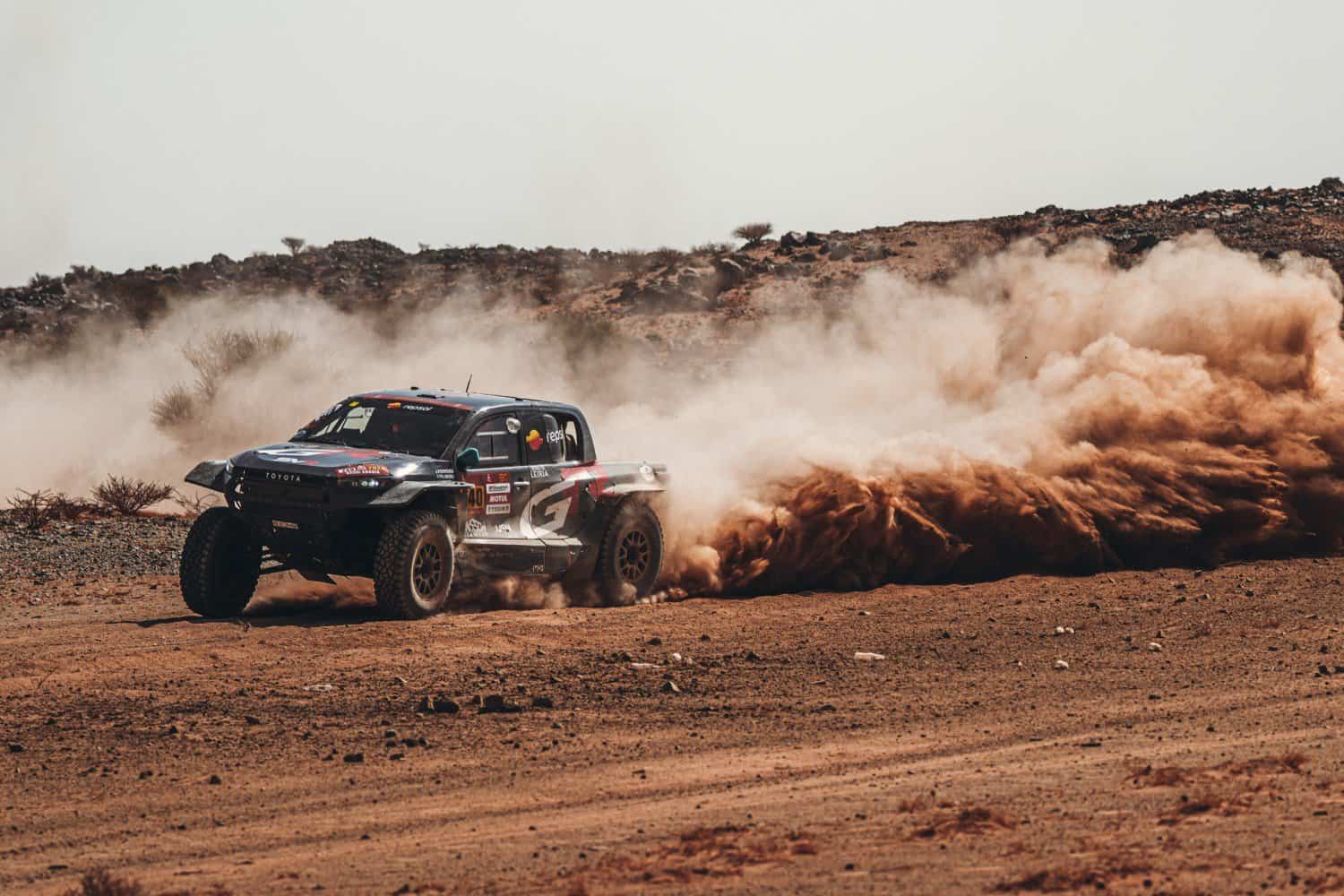
Sand spraying up in the air. Front wheel in the air. The front runners flew past with confidence and control, while others arrived at our spectator point a bit battered and limping. Clearly fighting both machine and fatigue.
After what seemed like an eternity, the mountains filled with the sound of a wailing race engine. You could hear the first car from miles away. Camera in hand. The car came into view and blasted past in complete opposite lock, and foot flat. These boys were not playing. They had a Dakar to win.
The South Africans were flying
Saood Variawa and co-pilot François Cazalet, Guy Botterill and Oriol Mena, plus João Ferreira and Filipe Palmeiro make up Team Toyota Gazoo Racing South Africa. And with all three cars safely through the stage, sunburnt and dusty, we headed to bivouac.
The bivouac is a special place. It’s a massive village in the middle of nowhere that plays home to around 2 500 to 3 500 people a day. 8 000 to 9 000 meals are also served daily. There is a full suite of portable toilets, showers, power outlets, waste management and press facilities on site.
Surrounded by 1 400 team vehicles and 350 organisational vehicles is a state-of-the-art medical facility manned by the best trauma specialists in world. With all the cars, bikes, trucks, competitors, support crew, caterers, and medical personnel running around the place. The bivouac was buzzing with activity and talk of navigation errors and near crashes.
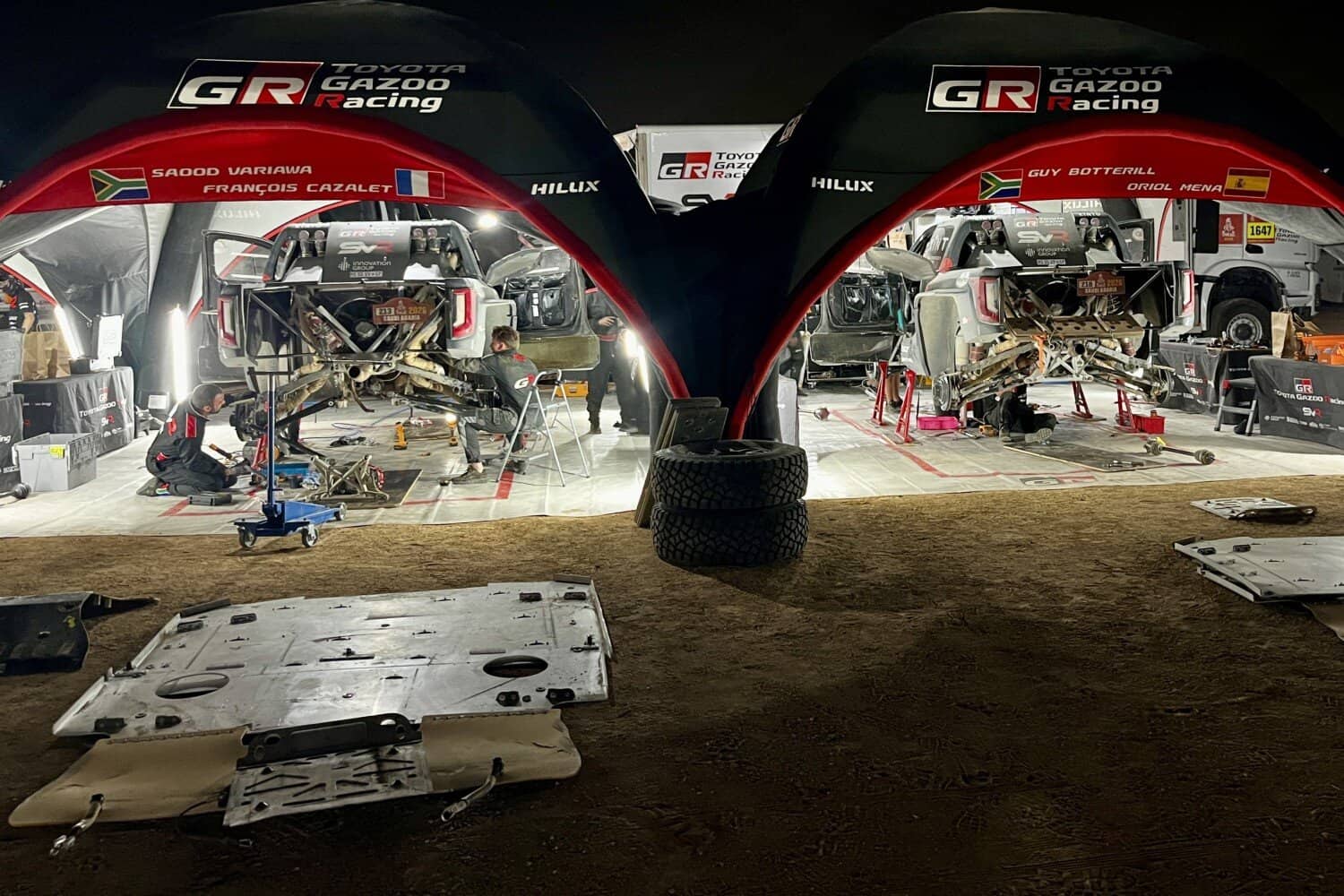
Late nights were on the cards
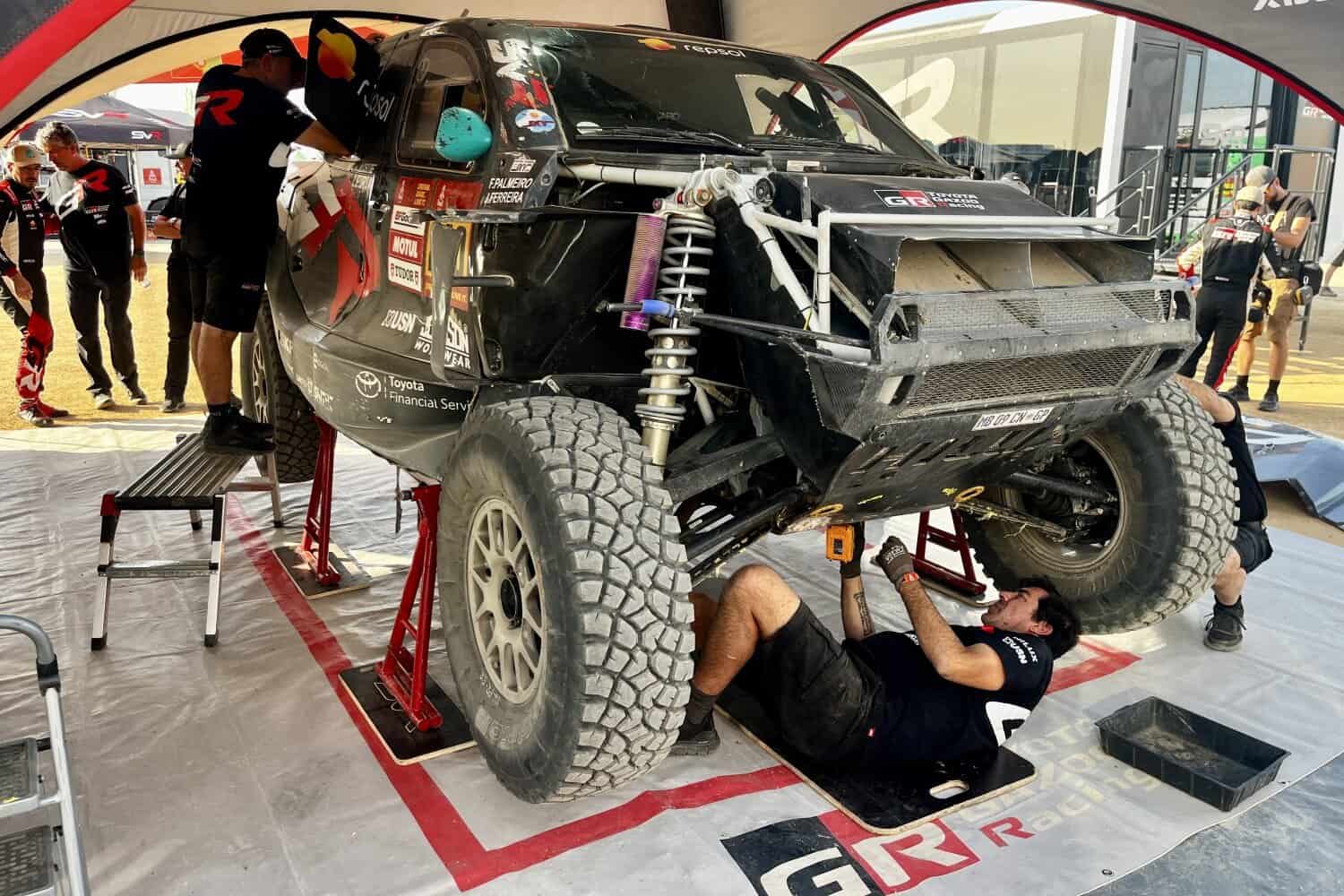
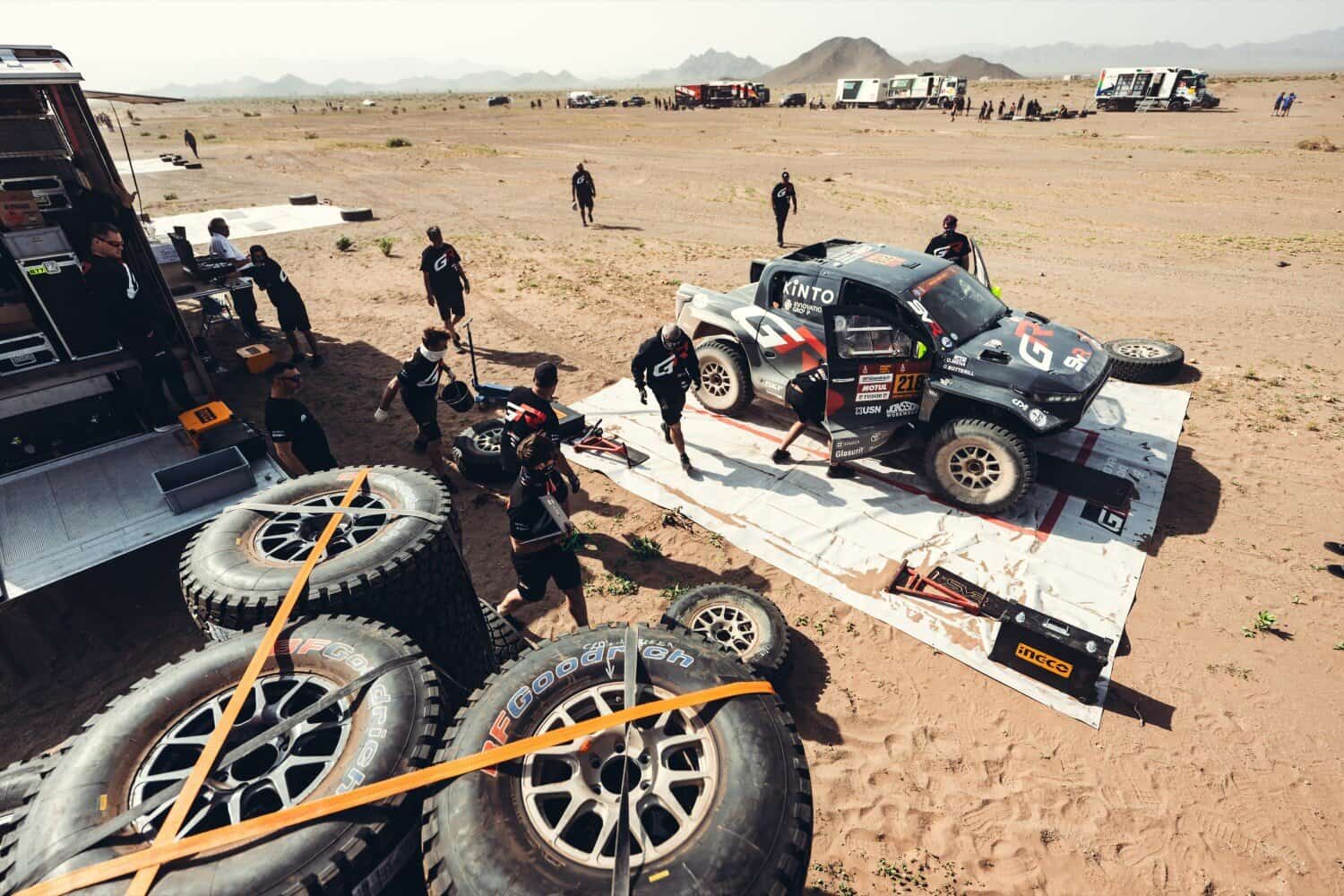
As the sun set, the desert transformed again, cooling just enough to let people breathe. Under harsh artificial lights, mechanics worked with almost surgical focus, tearing down the cars and rebuilding them again in mere hours. Tomorrow would be the final day of competition.
Day 2 for us meant heading out to a spot literally on the Red Sea right near the finish for stage 13. The air off the ocean brought a little bit of relief from the heat coming off the beach sand. From our vantage point we could see for miles in either direction up or down the coast. We waited in anticipation for the first cars to come into view.
This feeling does not get old. It’s something to experience. Toyota Gazoo Racing South Africa’s locally developed and built Hilux IMT Evos run the 3.5-litre V6 twin-turbo from their Land Cruiser 300. No official power and torque figures are quoted by the team but think around 260 kW and 600 Nm of howling fury.
Traffic scuppers comeback
Flat out was once again the order of the day. With only the cross firing of the anti-lag system giving a clue as to when the drivers came off the throttle for brief moments. Washing the entire area in dust, Saood Variawa was first through, followed closely by João Ferreira. Guy Botterill was lagging. Fate saw him stuck behind traffic but still on his way to a solid finish.
Back at the bivouac, you could not only sense the mood had changed and the tension leave the entire crew because the rally had come to an end. All around teams and drivers were celebrating. Some wildly, while others quietly removed their helmets and stared into the distance, absorbing what they had just accomplished. They had finished the Dakar.
ALSO READ: Wait over: Sharper new Toyota Hilux finally revealed
Impressive results for the team
Team Toyota Gazoo Racing South Africa also had plenty to celebrate. Saood Variawa and co-pilot François Cazalet had made the Top 10 in 10th to be the best placed South African pairing. Guy Botterill and Oriol Mena recovered for a solid 14th place, while João Ferreira and Filipe Palmeiro brough their Toyota Hilux IMT Evo home in 18th place.
The night cooled and all too soon the crews started breaking down camp. In only a few hours, the desert would go silent and return to sand and rock. As I left, I could feel the adrenalin fading after a high-octane weekend. But safe in the knowledge that plans for Dakar 2027 were already on the table.
About the Author