Government unveils ambitious financing blueprint, pledges N3tn BOI recapitalisation and 1,000 new AfCFTA exporters by 2027……
The Federal Government has unveiled plans to channel N800 billion into agro-processing and renewable energy as part of its newly launched National Industrial Policy 2025.
The policy document, released Tuesday by the Federal Ministry of Industry, Trade and Investment, outlines a sweeping industrial financing strategy aimed at accelerating economic diversification and boosting local production capacity.
Sector-Specific Credit Allocations
According to the document, the government intends to dedicate 3 to 5 percent of Nigeria’s Gross Domestic Product annually to industrial development financing.
Within that framework, it has earmarked:
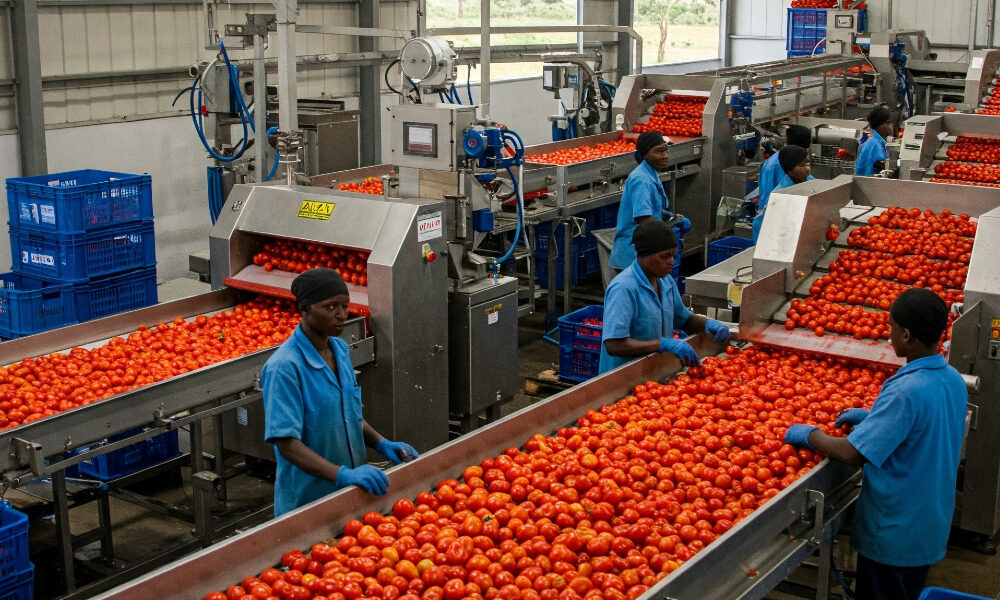
- N500 billion for agro-processing
- N300 billion for renewable energy
The targeted funding is designed to strengthen value addition in agriculture and expand clean energy capacity, two sectors viewed as critical to job creation, export growth and energy security.
Recapitalising Development Finance Institutions
A major plank of the strategy involves reinforcing domestic development finance institutions (DFIs) to address long-term funding gaps faced by industries.
The government said it plans to recapitalise the Bank of Industry to N3 trillion by 2026, while expanding sector-specific intervention funds from N1 trillion to N3 trillion under its broader stabilisation plan.
The objective is to provide industrial financing at single-digit interest rates, in collaboration with continental and international DFIs.
Five-Year Roadmap and PPP Push
The policy introduces a five-year implementation roadmap (2025–2030) with clearly defined milestones, including:
- Strengthening policy coordination and stability
- Rolling out a Public-Private Partnership (PPP) framework
- Upgrading infrastructure
- Expanding financing access for micro, small and medium enterprises (MSMEs)
The government said it will leverage PPPs to combine public support with private-sector efficiency in delivering industrial projects.
In addition, the Central Bank of Nigeria has been tasked with developing mechanisms to encourage commercial banks to increase lending to priority industries.
Expanding Financing Tools
Beyond traditional loans, the ministry said it would promote innovative financial instruments to deepen industrial funding options. These include:
- Credit guarantees to reduce lending risks
- Equity and venture capital financing
- Impact investment
- Crowdfunding platforms
- Factoring and alternative trade finance tools
Officials said creating an enabling regulatory environment for these instruments is central to unlocking private capital for industrial expansion.
1,000 New Exporters to AfCFTA
On the trade front, the government aims to onboard 1,000 new Nigerian exporters into markets under the African Continental Free Trade Area by 2027.
This effort will involve strengthening trade negotiation capacity, implementing bilateral and multilateral agreements, and integrating Nigerian firms into global value chains under the African Continental Free Trade Area framework.
According to the policy document, the export drive forms part of broader measures to improve competitiveness in marketing and distribution, both domestically and across African markets.
Industrial Ambitions Take Centre Stage
The National Industrial Policy 2025 signals a renewed push to reposition Nigeria’s economy toward manufacturing, value addition and sustainable energy.
If implemented as outlined, the scale of funding combined with institutional reforms and export expansion could mark one of the most ambitious industrial financing efforts in recent years.
The real test, however, will lie in execution: translating allocations and policy promises into measurable output, jobs and globally competitive industries.
About the Author