Budget Office report shows spending outpaced earnings amid weak oil output and rising domestic debt obligations
The Federal Government recorded a ₦2.66 trillion fiscal deficit in the second quarter of 2025, with the shortfall financed entirely through domestic borrowing, according to the Budget Office of the Federation (BoF).
The disclosure is contained in the Second Quarter and Half-Year 2025 Budget Implementation Report, which shows that total government revenue stood at ₦5.97 trillion, while expenditure climbed to ₦8.63 trillion during the quarter under review.
The report noted that although revenue performance remained weak, it showed signs of gradual improvement, enabling the government to continue meeting its non-discretionary obligations, including debt service and recurrent spending.
Oil output below target, revenue impact felt
Data from the report showed that crude oil production averaged 1.68 million barrels per day in Q2, significantly below the budget benchmark of 2.12 million barrels per day, with adverse consequences for oil revenue.
Between April and June 2025, aggregate federally collected revenue stood at ₦5.23 trillion, representing 58.45 per cent of the prorated target.
Oil revenue accounted for ₦1.50 trillion, or 28.5 per cent of total revenue, but fell short of its target by 71.5 per cent, reflecting continued volatility in oil output and prices.
Non-oil revenue outperforms projections
In contrast, non-oil revenue performance exceeded expectations, driven by improved collections from Company Income Tax (CIT), Value Added Tax (VAT), Electronic Money Transfer Levy (EMTL) and Education Tax (TETFund).
The report put non-oil revenue at ₦8.90 trillion, accounting for 85.6 per cent of total revenue and surpassing projections, a development attributed to recent administrative reforms.
Spending patterns and debt pressures
Total federal government expenditure, including spending by Government-Owned Enterprises (GOEs) and project-tied loans, stood at ₦8.63 trillion, compared to a prorated expenditure target of ₦13.75 trillion.
Capital releases to Ministries, Departments and Agencies (MDAs) amounted to ₦393.86 billion, while non-debt recurrent expenditure reached ₦2.72 trillion during the quarter.
Debt service payments rose sharply to ₦4.44 trillion, exceeding projections by 24.1 per cent, largely due to increased domestic debt obligations.
Government highlights growth amid fiscal strain
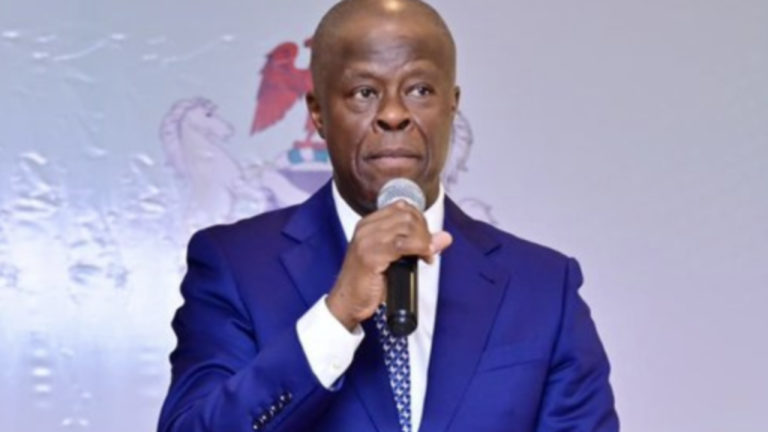
Minister of Budget and Economic Planning, Abubakar Bagudu, said that despite mounting fiscal pressures, the government continued to prioritise capital investment and domestic revenue mobilisation to support long-term fiscal sustainability.
Bagudu noted that the economy recorded real GDP growth of 4.23 per cent during the review period, driven mainly by the services and non-oil sectors.
He added that although inflation remained elevated, it trended downward to 22.22 per cent, while external reserves declined to $37.82 billion, reflecting persistent revenue challenges in both oil and non-oil segments.
Structural risks and reform priorities identified
The report warned that continued volatility in oil revenue exposes fiscal outcomes to production and pricing shocks, while structural underperformance remains a concern amid lower global oil prices.
Bagudu said recent gains in non-oil revenue validated ongoing reforms in compliance enforcement, customs automation, and independent revenue remittance, though fiscal space remains constrained.
The debt service-to-revenue ratio was described as still elevated, underscoring the need for urgent revenue expansion and expenditure reprioritisation.
Bottlenecks slow project execution
The Budget Office also acknowledged persistent cash management challenges, including delays in bottom-up cash planning, which have slowed project execution and increased cost risks.
Among its recommendations, the report called for:
- Aligning oil production assumptions with verifiable capacity
- Adopting conservative oil price benchmarks
- Deepening tax compliance enforcement
- Rationalising tax expenditures
- Accelerating e-customs implementation
- Improving independent revenue remittance
It also advocated institutionalising value-for-money audits, prioritising high-impact projects, and reducing the debt service-to-revenue ratio in 2025 through revenue growth and increased use of concessional financing.
The report further urged reforms to streamline cash release mechanisms to enhance predictability and improve project delivery timelines.
The 2025 budget, titled “Budget of Restoration: Securing Peace, Rebuilding Prosperity,” is designed to stabilise the economy, improve living conditions and lay the groundwork for sustained growth under the Federal Government’s Renewed Hope Agenda.
About the Author