Oyedele Says Informal Operators, Low-Income Earners to Be Shielded From Multiple Taxes
The Federal Government has unveiled plans to introduce tax exemption cards for small businesses and informal sector operators as part of Nigeria’s ongoing tax reform programme.
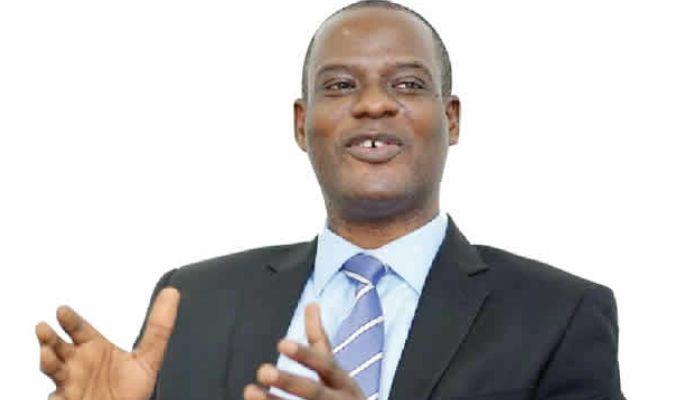
The initiative is aimed at protecting low-income earners from multiple taxation and excessive levies, according to the Chairman of the Presidential Committee on Fiscal Policy and Tax Reforms, Taiwo Oyedele.
Oyedele disclosed the plan while speaking on a Channels Television programme on Wednesday.
Ending a Regressive Tax System
According to Oyedele, the tax reforms are deliberately structured to move Nigeria away from what he described as a regressive tax system that places a disproportionate burden on the most vulnerable citizens.
He said opposition to the reforms has largely been driven by misinformation and deliberate manipulation, even though low-income Nigerians and small businesses stand to gain the most.
Oyedele argued that given the government’s limited enforcement capacity, tax authorities must focus on high-yield taxpayers rather than pursuing low-income earners.
NDIC Data and Resistance to Reform
Citing data from the Nigeria Deposit Insurance Corporation (NDIC), Oyedele noted that about 98 per cent of bank account holders in Nigeria have balances below N500,000.
“Those are the people fighting the reform,” he said, alleging that some wealthy individuals mobilise public opposition to avoid paying taxes.
He also claimed that some high-earning digital content creators, earning as much as $10,000 monthly, oppose the reforms while presenting the debate as though ordinary Nigerians’ bank accounts would be arbitrarily debited.
Oyedele dismissed such claims, stressing that the reforms do not empower the government to debit bank accounts automatically.
“At the end of the year, you declare your income. If you are exempted, you simply state that you are exempt,” he explained.
Tax Exemption Cards for Micro-Businesses
A key feature of the reform, according to Oyedele, is the formal protection of small businesses and informal operators.
Under the proposed presumptive tax regime, businesses with an annual turnover of N12 million or less will be deemed unable to pay tax.
He clarified that turnover does not equate to profit, noting that such businesses must first cover operating costs and expenses.
To prevent abuse by tax officials, Oyedele said the government has gone further to clearly define categories of micro-businesses that are effectively non-taxable.
These include vulcanisers, roadside food vendors, and other informal operators whose earnings remain minimal even under full operation.
“What we are planning is for them to get tax exemption stickers, so nobody will bother them,” he said.
Harmonising State and Local Government Taxes
Oyedele linked the exemption initiative to broader efforts to harmonise taxes and levies at the state and local government levels.
He said the Federal Government, working with the Joint Revenue Board, developed a harmonised tax framework for sub-national governments, even though constitutional provisions prevent the centre from imposing tax laws on states.
According to him, several states have already enacted harmonised tax and levy laws, including Ekiti, Zamfara, Anambra and Kano, while Lagos State has also indicated plans to follow suit.
The objective, he said, is to eliminate arbitrary levies, multiple taxation and harassment of small business owners.
Growing State-Level Alignment
In line with federal reforms, Anambra State recently became the third state to adopt the Harmonised Taxes and Levies Law, following Zamfara State, where Governor Dauda Lawal signed a similar revenue reform law.
Ekiti State earlier became the first sub-national government to domesticate the Nigeria Tax Administration Act (NTAA) after Governor Biodun Oyebanji signed the Ekiti State Revenue Administration Law, 2025.
About the Author