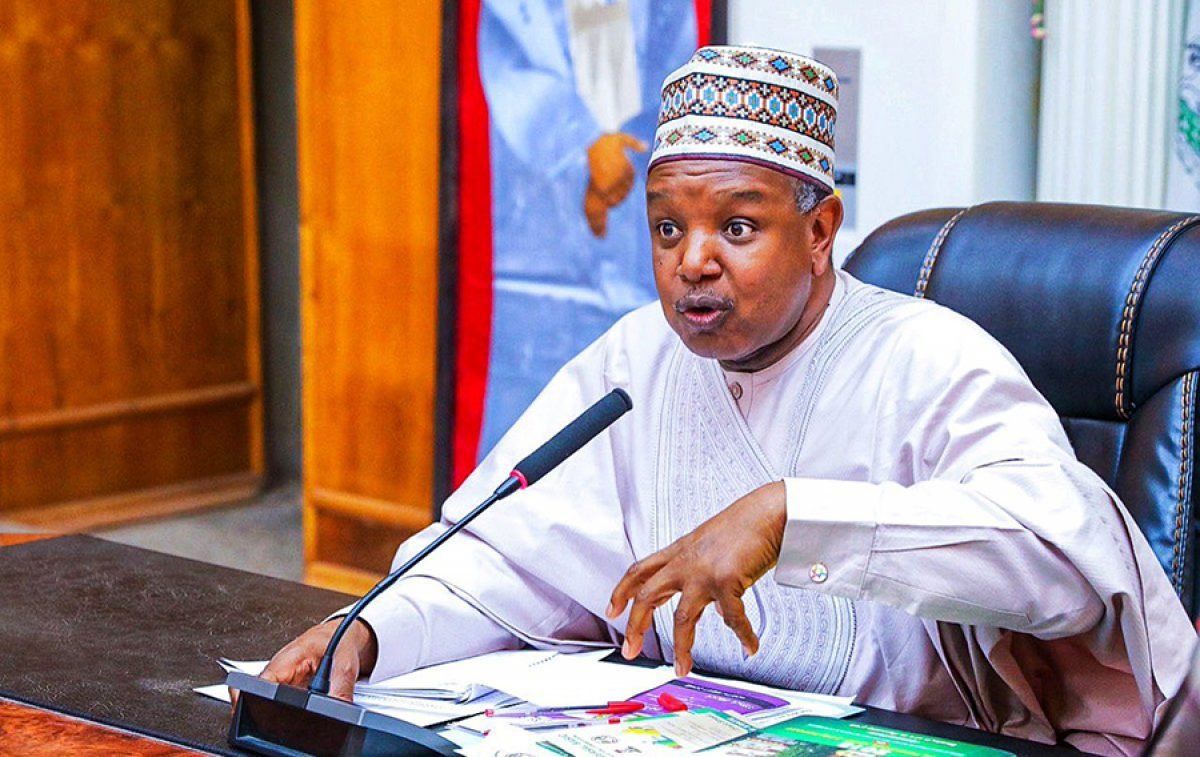
2026 Abridged Budget Call Circular restricts new capital projects, prioritises completion of ongoing ones as revenue pressures force tighter spending controls.
The Federal Government has instructed all Ministries, Departments and Agencies (MDAs) to carry over 70 percent of their 2025 capital allocations into the 2026 fiscal year, under a new budgeting approach designed to prioritise ongoing projects and curb spending pressures.
The directive is contained in the 2026 Abridged Budget Call Circular issued by the Ministry of Budget and Economic Planning and circulated to ministers, service chiefs and heads of federal agencies.
Under the new framework, the government has capped the 2026 capital budget ceiling at 70 percent of each MDA’s 2025 capital project allocation. Only 30 percent of next year’s capital votes will be released in 2025, while the remaining 70 percent will form the basis of capital spending in 2026.
The circular also imposes strict conditions for preparing the 2026 budget, including an outright ban on introducing new capital projects, reflecting the administration’s resolve to complete existing ones amid weaker revenue inflows and rising fiscal pressures.
MDAs, according to the document, must “upload 70 percent of their 2025 FGN Budget to continue in FY2026” and ensure that all rollover projects align with the government’s priority areas, national security, economic growth, agriculture, infrastructure, power, energy, education, health and social safety programmes.
The Budget Ministry noted that the rollover policy is aimed at strengthening continuity, preventing duplication and ensuring that uncompleted capital projects are not abandoned.
Despite inflationary pressures, MDAs were warned not to exceed their 2025 overhead ceilings in their 2026 submissions. “We are constrained by revenue challenges,” the circular said. “While we note the impact of inflation, proposals that exceed approved ceilings will be adjusted downward.”
The government also directed that the 2026 spending plan must reflect the strategies outlined in the Medium-Term Expenditure Framework (2026–2028), the Renewed Hope Infrastructure Development Plan, the Ward Development Plan, the National Development Plan, and the Accelerated Stabilisation and Actualisation Plan.
MDAs are required to submit their budget proposals through the GIFMIS Budget Preparation Subsystem, while government-owned enterprises will submit via the Budget Information Management and Monitoring System. All submissions must be completed by Tuesday, December 9, 2025.
The circular provides new fiscal projections showing a tightening revenue environment. Statutory transfers are expected to fall from N3.64 trillion in 2025 to N3.15 trillion in 2026, while recurrent non-debt spending is estimated at N15.26 trillion.
Debt servicing is projected to rise sharply to N15.52 trillion in 2026, up from N13.94 trillion this year.
Aggregate capital expenditure will decline from N26.19 trillion in 2025 to N22.37 trillion in 2026. Capital allocations to MDAs will drop from N12.39 trillion to N8.67 trillion, while project-tied loans are expected to reduce from N3.36 trillion to N2.05 trillion.
The budget deficit is forecast to widen significantly, climbing from N14.10 trillion in 2025 to N20.12 trillion next year.
Personnel costs have already been computed using IPPIS data and earlier submissions, with each ministry set to receive its specific personnel cost ceiling for 2026.
Total funds available to the Federal Government, including contributions from government-owned enterprises are projected at N54.46 trillion for 2026, slightly lower than the N54.99 trillion expected in 2025.
About the Author