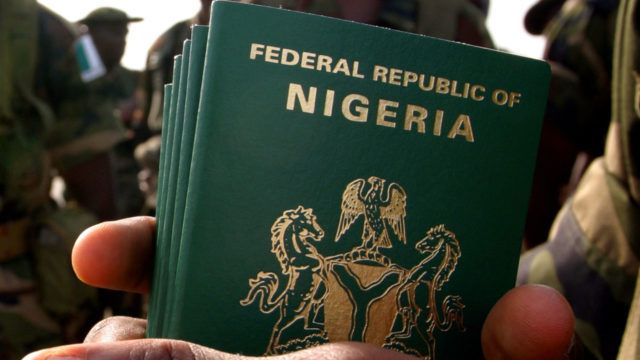
Interior Minister says directive will tighten border controls and eliminate misuse of Nigerian travel documents….
The Federal Government has directed the Nigeria Immigration Service (NIS) to immediately deactivate and withdraw passports issued to individuals who have formally renounced their Nigerian citizenship.
The directive was issued by the Minister of Interior, Olubunmi Tunji-Ojo, through an official statement released on Saturday, signaling a stricter enforcement of laws governing citizenship and national identity.
According to the minister, the order applies specifically to individuals whose renunciation requests have been duly approved and registered by the President, in line with constitutional requirements.
He explained that once a person ceases to be a Nigerian citizen, they are no longer entitled to hold sovereign documents such as a Nigerian passport. Maintaining such documents after renunciation, he noted, contradicts the legal framework that defines citizenship status.
The move is anchored on provisions of the 1999 Constitution (as amended), which outlines the process for renouncing citizenship. Under the law, a declaration of renunciation only takes effect after it has been formally registered by the President, at which point the individual officially loses their Nigerian nationality.
Officials say the latest directive is part of a broader effort to strengthen border security and prevent identity-related fraud. By ensuring that only eligible citizens possess Nigerian travel documents, authorities aim to close loopholes that could be exploited within the system.
The policy also introduces greater clarity in official records, reducing instances where individuals maintain dual status in ways that conflict with legal provisions.
Under existing guidelines, Nigerians seeking to renounce their citizenship must follow a structured process. This includes submitting a formal declaration, providing supporting documents such as a birth certificate and valid passport, and demonstrating eligibility for citizenship in another country. The process also involves prescribed administrative fees before final approval is granted.
While the government has not disclosed how many individuals may be affected, the directive underscores a shift toward stricter compliance and enforcement in matters relating to nationality and documentation.
The development comes amid ongoing reforms within the Nigeria Immigration Service aimed at improving efficiency and transparency. Recent upgrades, including enhanced passport tracking systems, have been introduced to address long-standing complaints around delays and administrative bottlenecks.
Together, these measures reflect a broader push by the government to modernise immigration processes while reinforcing regulatory oversight and national security.
With immediate effect, the focus now turns to implementation, as authorities move to ensure that Nigeria’s travel documents remain secure, credible, and reserved strictly for its citizens.