RMAFC says new monitoring framework, revenue formula review and possible executive action aim to restore grassroots governance…..
The Federal Government has renewed its push to stop long-standing interference by state governments in funds meant for Nigeria’s 774 local government areas, signalling stronger measures to enforce financial autonomy at the grassroots.
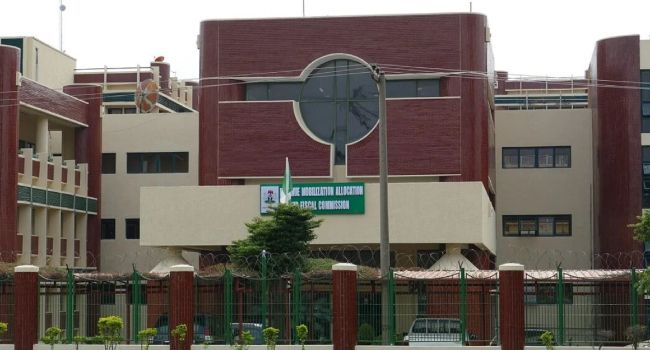
Chairman of the Revenue Mobilisation Allocation and Fiscal Commission (RMAFC), Mohammed Shehu, made the position known on Thursday in Abuja during the 2025 budget performance review and 2026 budget defence before the House of Representatives Committee on Finance.
Shehu decried what he described as persistent encroachment by state governments on local government finances and said the commission was ready to take concrete steps to ensure councils gain full financial independence.
He disclosed that the commission plans to re-establish a Local Government Committee to closely monitor the finances and operations of all local governments across the country.
“The commission intends to set up a Local Government Committee again, as we did previously, before the Supreme Court ruled otherwise. This time, we will monitor every single local government in Nigeria,” he said.
Shehu revealed that President Bola Tinubu had personally engaged state governors on the issue, warning that failure to allow local government autonomy could trigger executive action. He expressed the commission’s full backing for the President’s position.
“I am pleased that Mr President has spoken directly to the governors, making it clear that if local government autonomy is not respected, an Executive Order may be issued. The commission fully supports this course,” he said.
According to him, weak functionality of local governments remains a major contributor to Nigeria’s governance challenges, noting that even during the military era, local councils performed more effectively than they do today.
The RMAFC chairman also commended the House Committee on Finance, led by Abiodun Faleke, for strengthening the commission’s institutional relevance and improving collaboration with key revenue-generating agencies.
“I sincerely appreciate this committee for the support given to RMAFC. Today, the commission enjoys stronger engagement with revenue-generating agencies such as the Nigeria Customs Service and the Nigerian Upstream Petroleum Regulatory Commission, among others,” he said.
Highlighting recent achievements, Shehu disclosed that the commission had completed an audit of oil assets in the Niger Delta and was nearing completion of work on a new revenue allocation formula for the three tiers of government as well as remuneration for political office holders.
“We are at the final stage of analysing the data for the new revenue allocation formula, which will soon be presented. The remuneration package for political office holders has been concluded and submitted through the Secretary to the Government of the Federation to the President,” he added.
Following the presentation, Chairman of the House Committee on Finance, Abiodun Faleke, commended the RMAFC management for its contributions toward improving national revenue performance.
Interference in local government finances has long remained a contentious issue in Nigeria’s federal system. Although the 1999 Constitution recognises local governments as a tier of government, allocations to them are often controlled by state governments through the State–Local Government Joint Account system.
In practice, this arrangement has allowed many state governments to withhold, deduct or redirect local government funds, weakening governance and service delivery at the grassroots.
Over the years, successive administrations, civil society organisations and labour unions have linked poor rural development, weak primary healthcare and education systems, and the general decline of local governance to the erosion of local government autonomy.
Recent Supreme Court rulings and renewed federal pressure on states have brought the issue back into focus, with the Federal Government signalling a tougher stance, including the possibility of executive intervention, to ensure financial independence for local councils.
About the Author