Budget Office Report Shows ₦16.2trn Shortfall as Oil Output Remains Below Benchmark
The Federal Government earned 63.49 per cent less than its projected oil revenue in the first half of 2025, despite a modest improvement in crude oil production, according to the Second Quarter Budget Performance Report released by the Budget Office of the Federation on Monday.
The report revealed that gross oil revenue of ₦9.32 trillion was recorded between January and June 2025, significantly lower than the ₦25.52 trillion pro-rated budget projection for the period. This resulted in a ₦16.20 trillion revenue shortfall, highlighting the continued vulnerability of Nigeria’s oil-reliant fiscal structure.
Data from the report showed that average crude oil production stood at 1.68 million barrels per day (mbpd), falling short of the 2.12mbpd benchmark set in the 2025 budget, with direct implications for revenue inflows into the Federation Account.
Although production remained below target, output improved marginally compared with earlier periods, rising by 0.08mbpd from 1.6mbpd in the first quarter of 2025, and by 0.27mbpd above the 1.41mbpd recorded in the same period of 2024.
Despite the revenue shortfall, the half-year performance marked a notable year-on-year improvement, as oil revenue increased by ₦2.78 trillion, representing a 42.59 per cent rise compared with actual earnings in the first half of 2024.
According to the Budget Office, “Gross oil revenue amounting to ₦9.32 trillion was collected in the first half of 2025 as against the ₦25.52 trillion pro-rated budget projection. This represents a decrease of ₦16.20 trillion (63.49 per cent). However, it reflects an increase of ₦2.78 trillion (42.59 per cent) over the actual half-year performance recorded in 2024.”
Crude oil has remained Nigeria’s dominant source of foreign exchange and public revenue for more than five decades, accounting for 80–90 per cent of export earnings and over half of government revenue in most fiscal years. Oil proceeds largely determine foreign exchange availability, naira stability, and funds shared among the three tiers of government through the Federation Account Allocation Committee (FAAC).
However, the report stressed that oil revenue remains highly sensitive to fluctuations in global oil prices, production volumes, exchange rates, and fiscal terms, exposing government finances to external shocks.
A breakdown of revenue components showed mixed outcomes. Concessional rentals surged to ₦24.82 billion, exceeding the half-year projection of ₦2.06 billion by ₦22.77 billion (1,106.99 per cent). Miscellaneous oil revenue, including pipeline fees, rose to ₦29.73 billion, surpassing its projection by ₦18.01 billion (153.65 per cent).
In contrast, major revenue streams underperformed sharply. Crude oil and gas sales generated ₦712.57 billion, falling short of the ₦2.36 trillion target by 69.76 per cent. Petroleum Profit Tax and Gas Tax yielded ₦4.16 trillion, missing the ₦15.69 trillion projection by 73.47 per cent.
Similarly, oil and gas royalties stood at ₦3.53 trillion, below the ₦6.86 trillion estimate, while incidental oil revenue, including royalty recoveries and marginal field licences, came in at ₦438.90 billion, undershooting projections by 25.83 per cent.
The report noted that gas flaring penalties and exchange gains, which had no half-year budget projections, contributed ₦267.25 billion and ₦148.31 billion, respectively.
On pricing, Nigeria’s crude oil averaged $74 per barrel in the second quarter of 2025, representing a slight decline from the previous quarter and a sharper drop compared with the same period of 2024. The average price was also $1 below the $75 benchmark set in the 2025 budget.
In the second quarter alone, gross oil revenue stood at ₦4.77 trillion, reflecting a ₦7.99 trillion (62.62 per cent) shortfall from the quarterly projection of ₦12.76 trillion. Nevertheless, this figure was ₦1.59 trillion higher than revenue recorded in the corresponding quarter of 2024.
On the non-oil side, gross non-oil revenue of ₦4.46 trillion was recorded in Q2 2025, exceeding estimates by ₦404.26 billion (6.68 per cent). After deductions, net distributable revenue available to the federal, state, and local governments stood at ₦9.85 trillion, representing a 41.58 per cent shortfall.
The Budget Office attributed improved oil revenue performance relative to 2024 to higher production levels and better collection of petroleum profit tax and royalties, while gains in non-oil revenue were linked to inflationary pressures and increased economic activity.
However, the report warned that Nigeria’s oil sector continues to face structural challenges, including crude oil theft, pipeline vandalism, weak security, underinvestment, regulatory uncertainty, and limited domestic refining capacity, despite reforms under the Petroleum Industry Act.
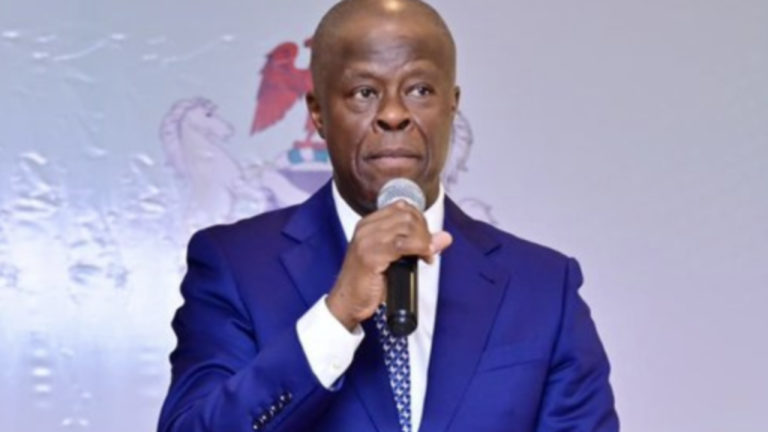
The concerns align with recent comments by the Minister of Finance and Coordinating Minister of the Economy, Wale Edun, who disclosed last week that the Federal Government recorded a major revenue shortfall in 2025.
Speaking before the House of Representatives Committees on Finance and National Planning, Edun said while the government projected ₦40.8 trillion in revenue to fund the ₦54.9 trillion 2025 “budget of restoration”, actual revenue is now expected to close the year at about ₦10.7 trillion.
About the Author