Shettima says initiative prioritising women and youth will drive inclusion, skills development, and wealth creation in Nigeria’s digital economy
The Federal Government has launched a free nationwide training programme designed to equip 10 million Nigerians with financial literacy, inclusion, and digital skills.
The initiative was announced in a statement issued by Stanley Nkwocha, Senior Special Assistant to the President on Media and Communications.
According to the statement, the programme places strong emphasis on women and young people, focusing on core financial management skills, digital competencies, and investment knowledge needed to support sustainable wealth creation in Nigeria’s fast-growing digital economy.
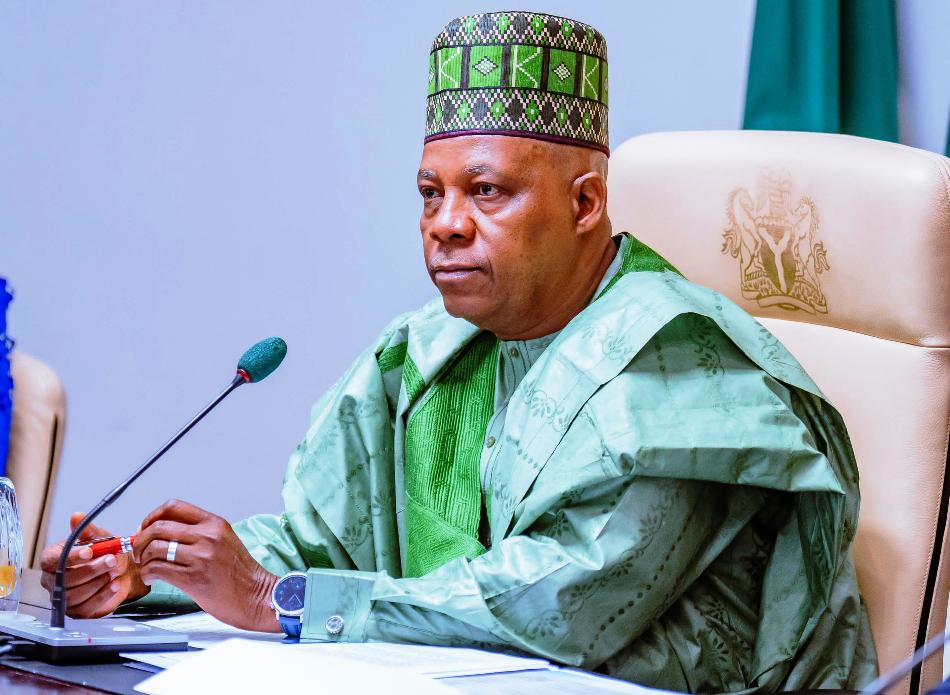
The training is being implemented by the Office of the Vice President through the Presidential Committee on Economic and Financial Inclusion (PreCEFI), which is chaired by Vice President Kashim Shettima.
Six professional bodies are partnering with the Federal Government on the initiative. They include the Institute of Chartered Accountants of Nigeria (ICAN), Chartered Institute of Bankers of Nigeria (CIBN), Chartered Institute of Stockbrokers (CIS), National Institute of Credit Administration (NICA), Chartered Risk Management Institute (CRMI), and the Nigeria Institute of Innovation and Entrepreneurship (NIIE).
Speaking at the signing of a Memorandum of Understanding (MoU) between the government and the professional bodies, Vice President Shettima described the programme as a long-term national investment in human capacity.
He said the initiative focuses on building the human, institutional, and ethical foundations required for inclusive economic growth.
“Financial inclusion is not achieved by access alone, but by competence, trust, and capability,” Shettima said. “This MoU establishes a working framework to harness the collective expertise of ICAN, CIBN, CIS, CRMI, NICA, and NIIE to advance inclusion through capacity building, advocacy, digital transformation, youth empowerment, and support for small and medium practitioners.”
The Vice President stressed that women and youth remain at the centre of the programme, noting that Nigeria’s demographic advantage can only be realised if young people are equipped with relevant skills and strong ethical grounding to thrive in an increasingly digital economy.
Providing further details, the President of ICAN, Mallam Haruna Nma Yahaya, commended the Federal Government’s ongoing economic reforms and pledged the institute’s full professional support for the training programme.
Also speaking, Chief Executive Officer of WAWU Africa, the programme’s technical partner, Emmanuel Lennox, assured participants of the organisation’s readiness to deliver the digital platform and enabling environment required for the nationwide rollout.
Dr Nurudeen Abubakar Zauro, Technical Adviser to the President on Economic and Financial Inclusion, said the initiative was informed by the need to move beyond access to financial services and focus on building the skills required to use financial infrastructure responsibly and sustainably.
The signing of the MoU between the Federal Government and the six professional bodies marked the official commencement of the nationwide training programme.
Nigeria continues to grapple with major challenges in youth education and skills development, leaving many young people outside formal employment and training systems.
Labour force data shows that in the first quarter of 2024, about 14.4 percent of Nigerians aged 15 to 24 were not in school, employment, or any form of training, highlighting a large population of disengaged youths.
Educational attainment across the workforce also remains low, with approximately 86 percent of Nigerians in the labour force lacking post-secondary education, underscoring gaps in advanced learning and specialised skills needed in today’s job market.
According to Nairametrics, more than 100 million young Nigerians do not possess basic digital skills, limiting their participation in the expanding digital economy.
In response, the Federal Government has rolled out several interventions aimed at improving skills and literacy nationwide. Recently, Nigeria entered into a landmark partnership with the United Arab Emirates to equip seven million young Nigerians with advanced digital skills, entrepreneurial training, and international exposure.
About the Author