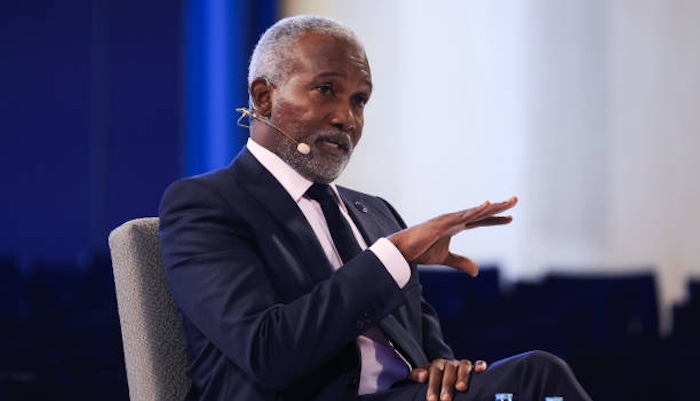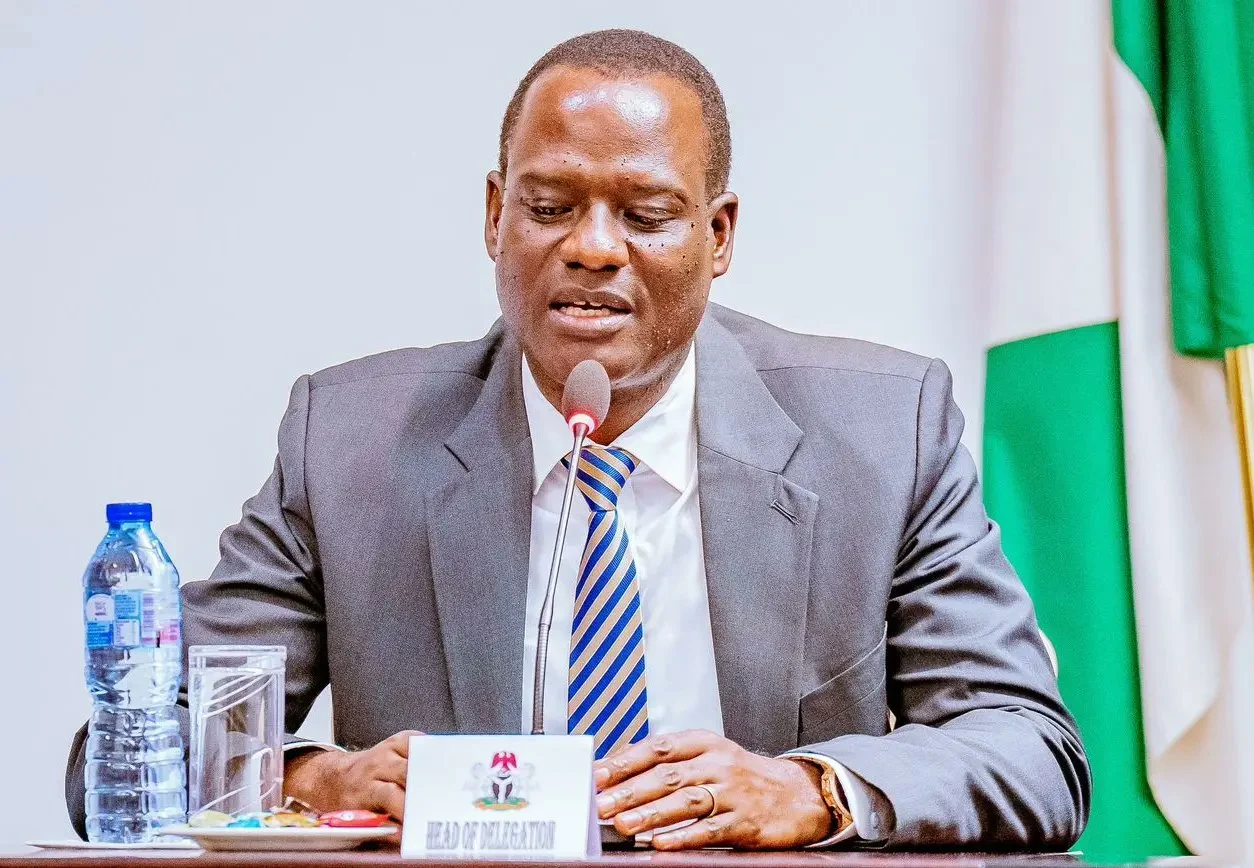
The Federal Government has accused some individuals of spreading misinformation in an attempt to undermine ongoing tax reforms, insisting that the policies are pro-poor and aimed at recalibrating national revenue generation.
The allegation was made on Thursday by Tope Fasua, Special Adviser to the President on Economic Affairs, during the inauguration of a Joint Committee of the National Orientation Agency (NOA) and the Presidential Committee on Fiscal Policy and Tax Reforms in Abuja.
Fasua said the committee’s mandate is to counter false narratives surrounding the reforms, which he claimed were being propagated by saboteurs seeking to derail the policy’s success.
“People are trying to ensure that, if they can manage it, these reforms do not succeed. However, despite this resistance, we must emphasise that this is a pro-poor policy—designed to recalibrate the nation’s revenue system in a way that benefits the poorest Nigerians rather than harming them,” Fasua stated.
He stressed that the reforms are not intended to increase the tax burden on citizens or small businesses. Citing the partial opening of the Brass–Nembe Road as an example, Fasua highlighted how enhanced tax revenue can fund critical infrastructure.
“Recently, the Brass–Nembe Road was partially opened. That’s the kind of development that becomes possible when we generate better revenue and taxes. We will also learn from the experiences of other countries to implement these reforms effectively,” he added.
Earlier, the Chairman of the Presidential Committee on Fiscal Policy and Tax Reforms, Taiwo Oyedele, reiterated that the reforms are meant to ease, not worsen, the financial burden on Nigerians. He lamented that misinformation continues to fuel unnecessary fear and anger over the policies.
Implementation of the reforms is scheduled to begin on January 1, 2026. Key provisions include exemptions for small businesses, reduced tax burdens for workers and the middle class, lower corporate tax rates, harmonisation of multiple taxes across federal, state, and local governments, streamlined compliance procedures, and the elimination of nuisance taxes to encourage investment.
Lanre Issa-Onilu, Director-General of NOA, represented by the agency’s Director of Planning, Research and Statistics, Nura Kobi, said NOA would deploy its 16 communication platforms across all 774 local government areas to address public misconceptions about the new tax laws.
Issa-Onilu emphasised the importance of clear communication, noting, “Across the world, public policies rarely fail because they are poorly designed; they fail because they are poorly communicated. When the message is not understood, the messenger must return.”
He urged Nigerians to understand what the reforms mean for them, why they are necessary, and how they will be implemented to ensure a smooth transition into the new tax regime.
About the Author