Regulations aim to modernise tax administration, exempt small businesses, and enforce digital compliance…..
The Federal Government has officially prohibited the collection of taxes in cash and barred revenue agencies from setting up roadblocks for enforcement, introducing measures to standardise tax administration nationwide.
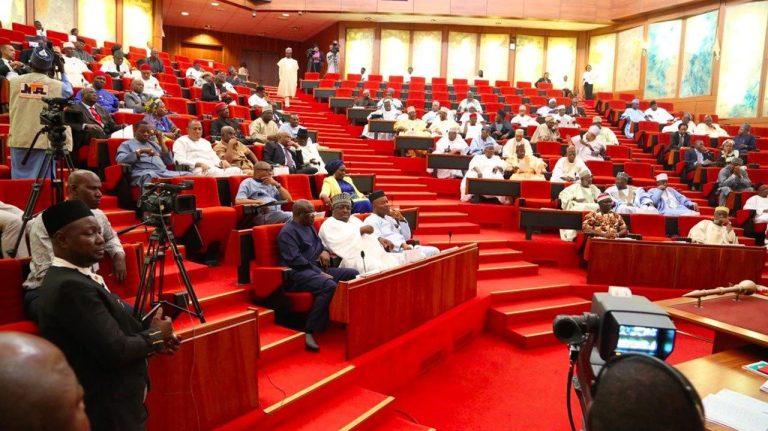
The announcement was made Tuesday in Abuja by the Executive Secretary of the Joint Revenue Board, Olusegun Adesokan, during the formal signing of the Presumptive Tax Regulations and Guidelines for the Implementation of the Tax Laws. The framework is part of broader tax reforms being rolled out across the country.
Adesokan explained that the regulations are designed to eliminate informal collection practices and arbitrary enforcement tactics previously observed in some jurisdictions.
“It bans all forms of cash collection by tax authorities. It also bans the mounting of roadblocks for the collection of taxes,” he said, noting that the measures aim to promote transparency and fairness, particularly in the commerce and informal sectors.
He also clarified that small businesses within a defined turnover threshold would be exempt from tax.
“Our nano and small businesses with an annual turnover of N12 million and below are exempted from tax,” Adesokan said.
The Wale Edun, Minister of Finance and Coordinating Minister of the Economy, described the signing as the start of the practical implementation of the tax reforms following legislative approval.
“With the signing of these regulations, we are transitioning from regulation to structured implementation of the tax reforms,” Edun said.
Chairman of the National Tax Policy Implementation Committee, Joseph Tegbe, added that the move represents a shift from policy planning to execution.
“It is not about imposing new volumes but restoring order where there has been fragmentation and replacing arbitrariness with transparency,” he said.
The regulations follow the signing into law in June 2025 by President Bola Tinubu of four landmark tax reform bills: the Nigeria Tax Bill, the Nigeria Tax Administration Bill, the Nigeria Revenue Service (Establishment) Bill, and the Joint Revenue Board (Establishment) Bill. The reforms aim to overhaul revenue administration and improve coordination across federal, state, and local governments, with implementation beginning on January 1, 2026.
The informal sector, which accounts for over 80 per cent of employment in Nigeria, has historically contributed minimally to structured tax revenue due to inefficiencies and compliance gaps. The new regulations are intended to replace discretionary enforcement with a uniform national framework emphasising transparency, digital compliance, and broader inclusion in the tax net.
Key provisions of the regulations include:
- Prohibition of cash tax collection by authorities.
- Ban on roadblocks for tax enforcement.
- Exemption for businesses with annual turnover of N12 million and below.
- A one per cent turnover tax for other informal businesses.
Officials said the framework encourages the use of technology-driven payment systems and aligns tax administration across all levels of government. An ombudsman mechanism has also been introduced to monitor implementation and address complaints from taxpayers.
About the Author