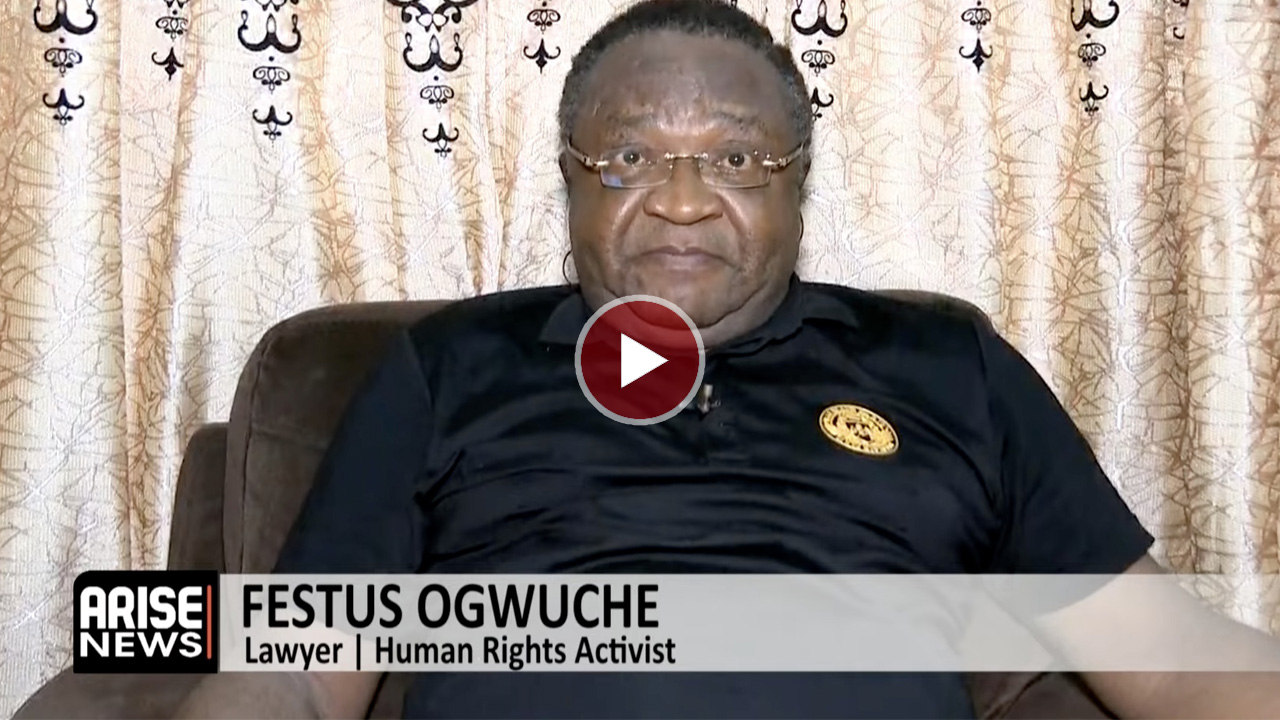

lawyer and human rights activist, Festus Ogwuche, has raised serious concerns over what he describes as a dangerous precedent in Rivers State politics, following President Tinubu’s intervention in the ongoing crisis there.
In an interview with Arise News on Tuesday, Ogwuche analysed the settlement brokered by the presidency, which reportedly halted impeachment proceedings against Governor Sim Fubara and required the governor to formally recognise Minister Nyesom Wike as his political leader, while taking any discussion of a second term off the table. “To me, it’s incredible that a sitting governor is being asked to publicly recognise a political godfather as a condition for peace,” he said.
He described Rivers State as a political theatre where “anything can go,” noting that Fubara “miscalculated his steps and fell into this quagmire” and is now facing a cul-de-sac with little reprieve. “It is very, definitely very, very showing that they seriously want to put him where they think he belongs,” Ogwuche said.
The activist warned that the settlement undermines constitutional authority and federalism. “We now have a situation where state governance is subordinated to federal arrangements, creating a unitary system in practice.
“The presidency can determine who gets what, and who becomes the undisputed leader of a state. Political power now revolves not just around governors, but godfathers, particularly the presidency. This sets a very dangerous pattern for democracy,” he said.
Ogwuche argued that presidential interference in state politics has been normalised. “It has become the norm that the president can intervene in state affairs, appoint political leaders, and even commandeer state assemblies. Governors are forced to seek protection from party elites rather than from the electorate. Anything can happen to anybody, anywhere, anytime,” he said.
He also rejected the claim that the settlement ensures stability. “It does not lower political tension. At best, it silences dissent. Fubara is caught between the House of Assembly, Wike, the presidency, and the people. Maintaining balance among these citadels of power is extremely difficult. Governance has become transactional, not constitutional,” he said.
On constitutional and electoral concerns, Ogwuche said: “Halting impeachment through political instruction rather than due legislative process corrodes the separation of powers and raises both constitutional and electoral red flags.
“The future choice of voters is being preempted. The electoral process and credibility stand challenged whenever political elites override democratic norms.”
He criticised what he sees as a shift from legal constitutionalism to political constitutionalism. “We are drifting from a legal, law-based constitutionalism to one justified by power and influence.
“The power belongs to those who can bend institutions to their will, not necessarily to those holding office. It creates a system engineered by policy paralysis, brute loyalty, and conflicting directives,” Ogwuche said.
The lawyer also warned that the intervention has long-term implications for democracy and governance. “It engenders governance that cannot be defined as democratic, encourages managed politics where loyalty matters more than elections, and tends toward one-party rule, totalitarianism, and the subjugation of the people. It also corrodes federalism, marginalises voters, and encourages political elites to behave as godfathers rather than public servants,” he said.
He concluded that the River State settlement could influence Nigeria’s political system well beyond the current administration. “People are only interested in positioning for 2027. This precedent will have far-reaching effects unless something is done seriously to ensure constitutional principles, democratic traditions, and the rule of law are upheld,” Ogwuche said.
Boluwatife Enome
About the Author