Improved audits, digital tracking and tax harmonisation drive revenue growth ahead of Nigeria Tax Act implementation
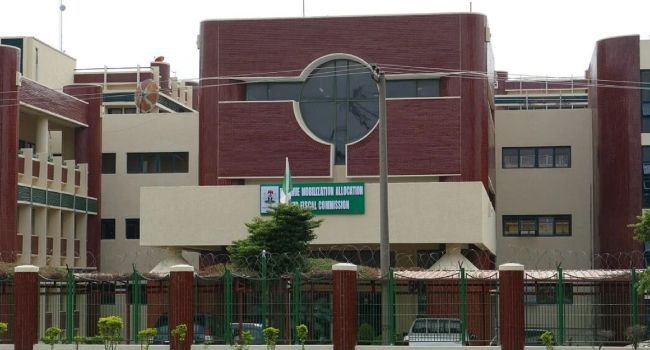
Inflows into the Federation Account rose to N23.06 trillion in the first 10 months of 2025, the Revenue Mobilisation Allocation and Fiscal Commission (RMAFC) has said, attributing the increase to fiscal reforms, stronger audits, and improved coordination among revenue-generating agencies.
The Chairman of the commission, Mohammed Shehu, disclosed this on Monday in Abuja while delivering a keynote address at a two-day National Stakeholders’ Discourse on Enhancing Fiscal Efficiency and Revenue Growth under the Nigeria Tax Act, 2025.
According to Shehu, total accruals into the Federation Account between January and October 2025 stood at N23,058,248,707,725.50, describing the figure as evidence of improved fiscal discipline and more effective revenue mobilisation.
He said the inflows reflected a steady upward trend over recent years, noting that gross accruals stood at N11.93 trillion in 2023 and rose to N21.43 trillion in 2024.
Shehu explained that the growth was driven by fiscal reforms, enhanced tracking and coordination among revenue agencies, stronger audits, and the deployment of digital monitoring systems, all of which have expanded the revenue pool available for distribution to the Federal, State, and Local Governments.
He added that the trend signals progress towards a more resilient and sustainable public finance system, with reduced reliance on oil revenues. According to him, volatile crude oil prices have historically exposed Nigeria to boom-and-bust cycles that undermine fiscal stability and long-term planning.
Shehu said the Nigeria Tax Act, 2025, scheduled to take effect on January 1, 2026, was designed to address longstanding structural weaknesses in the country’s tax framework by harmonising previously fragmented tax laws into a single statute.
He explained that the Act would eliminate duplication and obsolete provisions, reduce compliance burdens for taxpayers, and improve the ease of doing business nationwide, while also eliminating regional inconsistencies in tax administration.
Linking the improved revenue performance to broader macroeconomic developments, Shehu said inflation had declined for four consecutive months, falling from 21.88 per cent in July to 16.05 per cent in October. He also noted relative stability in the foreign exchange market, with the naira strengthening from N1,534 to the dollar in July to N1,428 in October.
Despite these gains, he observed that oil still accounts for over 90 per cent of Nigeria’s export earnings while contributing less than 10 per cent to gross domestic product, underscoring the need to deepen non-oil revenue sources.
On the role of the commission, Shehu said RMAFC would intensify oversight of revenue collections and disbursements through enhanced monitoring, forensic audits, and closer collaboration with subnational governments to strengthen non-oil revenue mobilisation.
Also speaking at the event, the Chairman of the Presidential Fiscal Policy and Tax Reforms Committee, Taiwo Oyedele, said the Nigeria Tax Act, 2025, was designed to correct decades of structural weaknesses in Nigeria’s tax system and promote fairness, efficiency, and economic growth.
Oyedele described the existing tax framework as overly complex and punitive, stressing that incremental reforms were no longer sufficient. He said the new laws repealed several outdated statutes and replaced them with a modern framework aimed at ending what he described as the taxation of poverty, capital, and investments under colonial-era laws.
According to him, the reforms prioritise fairness, harmonisation, ease of doing business, transparency in the use of tax revenues, and overall economic development, while deliberately avoiding the introduction of new taxes.
He disclosed that from January 2026, low-income earners, including workers on the national minimum wage, would be exempted from personal income tax, while middle-income earners would benefit from reduced PAYE obligations.
Oyedele also said essential consumptions such as food, transport, health, education, and rent would be zero-rated for value-added tax, with businesses refunded VAT incurred during production to prevent hidden taxes being passed on to consumers.
He added that the reforms were structured to raise government revenue by closing tax gaps, removing wasteful incentives, and improving compliance, rather than increasing tax rates.
On capital markets, Oyedele said most investors would be exempted from capital gains tax under the new laws, a move aimed at deepening the market and supporting long-term economic growth. He cautioned against misinformation, noting that false narratives had previously triggered market panic and eroded public trust.
In a goodwill message, the National President of the Nigerian Association of Chambers of Commerce, Industry, Mines and Agriculture, Jani Ibrahim, described the Nigeria Tax Act, 2025, as a major step towards strengthening revenue mobilisation, improving tax administration, and promoting fiscal sustainability.
He said clear and predictable tax policies would enable businesses to invest, expand, and create jobs, while boosting national revenue and strengthening trust between government and the private sector.
In his welcome address, a Federal Commissioner at RMAFC and Chairman of the Fiscal Efficiency and Budget Committee, Desmond Akawor, described the discourse as a defining moment in Nigeria’s fiscal journey, noting that the decisions taken would have long-term implications for public finance stability and resilience.
Goodwill messages at the opening ceremony reflected broad stakeholder support for the reforms. The Governor of the Central Bank of Nigeria, Olayemi Cardoso, represented by the Deputy Governor for Financial System Stability, Philip Ikeazor, said the reforms would broaden the tax base, improve compliance, reduce dependence on oil revenues, and enhance transparency through digitalised tax administration.
The surge in Federation Account inflows comes amid concerns over inflationary pressures linked to rising liquidity. In July 2025, Cardoso warned that increasing statutory revenue disbursements through the Federation Account Allocation Committee could undermine disinflation efforts if not matched by tight monetary conditions.
In a statement released after the 300th meeting of the Monetary Policy Committee in May 2025, the CBN governor noted that while inflation had begun to moderate, growing liquidity injections posed emerging risks that would require sustained monetary vigilance.
About the Author