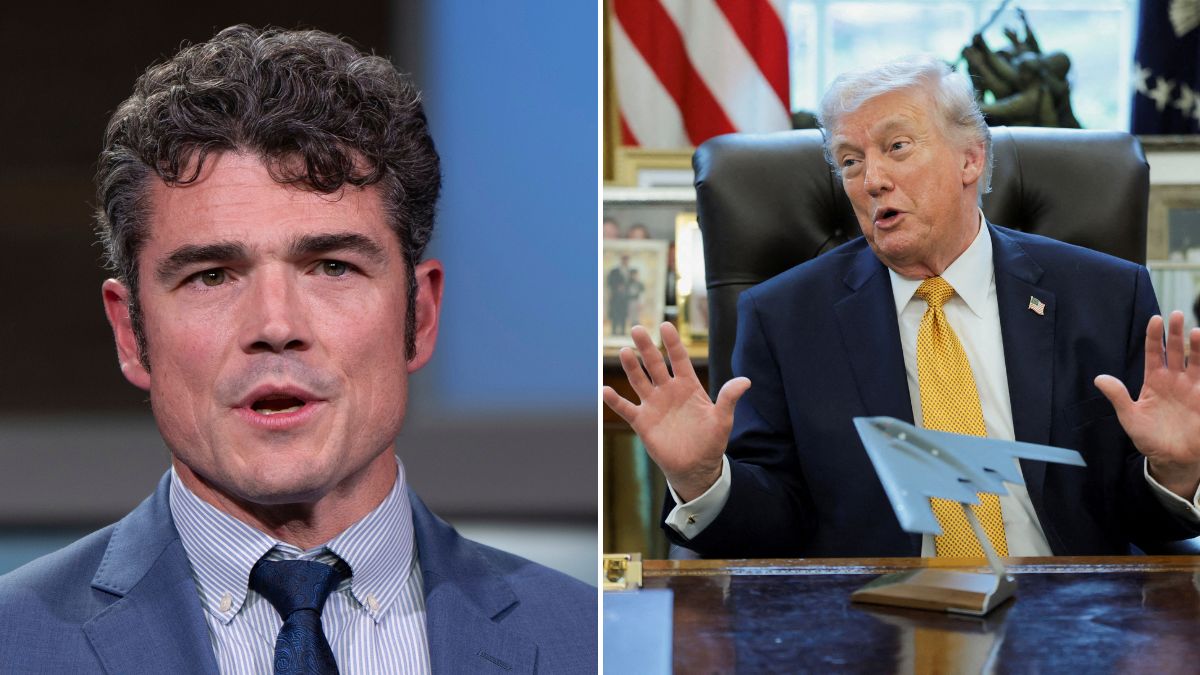
Joe Kent and Donald Trump | AP, Reuters
The Federal Bureau of Investigation has reportedly opened an investigation into former senior US counterterrorism official Joseph Kent following his resignation over the United States’ military confrontation with Iran, amid allegations that he leaked classified information.
Kent, who served as director of the National Counterterrorism Center, stepped down on Tuesday after submitting a resignation letter to Donald Trump in which he said he could no longer support the ongoing conflict.
In his letter, Kent argued that Iran did not pose an immediate threat to the United States and claimed the war had been driven by pressure from Israel and pro-Israel political influence in Washington — remarks that quickly triggered political backlash.
According to reports by The New York Times and CBS, both citing sources familiar with the matter, the FBI inquiry began before Kent’s resignation and focuses on allegations involving unauthorized disclosure of classified material. A source quoted by Semafor said the investigation has been underway for several months.
The FBI has not issued an official public statement on the case.
Kent, a former special operations officer and longtime Trump ally, was appointed to lead the National Counterterrorism Center, where he worked closely with Tulsi Gabbard in coordinating intelligence assessments and advising the White House on terrorism-related threats.
Reacting to the resignation, President Donald Trump described Kent as “very weak on security,” adding that his departure was ultimately beneficial.
Meanwhile, Karoline Leavitt rejected the claims made in Kent’s resignation letter, calling them false and dismissing suggestions that outside influence shaped the administration’s military decisions.
She insisted that President Trump acted on what she described as compelling intelligence indicating that Iran was preparing a potential attack against the United States.
The developments add a new layer of political tension to Washington’s handling of the Iran conflict, as scrutiny intensifies over both internal dissent and national security leaks
About the Author