Screenshot

For many years, Uganda’s political story has been framed as a choice between stability, order and turmoil.
From the turbulent eras of Milton Obote and Idi Amin to four decades under President Yoweri Museveni, the citizens have often been portrayed as favouring peace over conflict.
However, this portrayal requires a more in-depth analysis. In many instances, it could be fear, rather than genuine preference, that shapes the public’s sentiments. During the regimes of Obote and Amin, Uganda endured political violence, economic collapse and widespread human rights abuses.
Citizens who dared to challenge authority risked arrest, disappearance or death. The climate of fear was pervasive. Families whispered about politics behind closed doors, if at all. Many avoided public criticisms altogether.
History shows that silence did not equal consent. Ugandans were exhausted by repression and misrule. The absence of open mass resistance was less about satisfaction and more about survival.
It was exiled Ugandans many based in Tanzania who eventually mobilised to challenge the Amin regime. With the support of Tanzanian forces under Julius Nyerere, armed struggle culminated in the fall of Amin’s government in 1979.
The pattern repeated itself in the aftermath of the contested 1980 elections. Citing widespread malpractice, Yoweri Museveni launched a guerrilla war against Obote’s second administration.
Once again, large segments of the population had appeared subdued. But beneath that surface was frustration, fatigue and a sense of political suffocation. The lesson from those eras is simple: quiet streets do not necessarily signal contented citizens. Often, they reflect a population calculating the risks of dissent.
Under Amin, many believed that agents of the notorious State Research Bureau were planted everywhere, in neighbourhoods, workplaces and even households. Whether exaggerated or not, the perception was powerful. Suspicion flourished.
Open political discussion became dangerous. Fear created isolation, and isolation weakened collective action. Today, while Uganda’s political climate is far removed from the mass killings of the 1970s, the psychology of caution lingers.
Surveillance concerns, heavy security presence during election periods, and arrests of outspoken activists foster a similar, if more subtle, restraint. Conversations with ordinary Ugandans often reveal a quiet weariness.
Taxi drivers, university graduates, market vendors and civil servants frequently express frustration over economic hardship, corruption and limited political turnover. These sentiments are often voiced privately rather than in organised, public defiance.
This duality-private dissatisfaction and public calm-feeds the perception that citizens prefer stability over change. But preference and pragmatism are not the same thing. Nearly 40 years under one leader inevitably raises questions about political renewal.
Political theory suggests that no regime enjoys ever-increasing support over time. Popularity curves rarely climb indefinitely; they plateau and eventually slope downward as fatigue sets in.
Uganda’s current stability is frequently cited as a defining achievement of the post-1986 era. However, stability can also become a rhetorical shield. When political competition is framed as a threat to order, calls for reform are easily dismissed as reckless.
Citizens are left weighing the risks of change against the familiarity of the status quo. In this context, it is necessary to examine whether continuity reflects genuine public endorsement or whether many Ugandans are navigating a political environment in which the cost of open mobilisation feels too high.
It is tempting to interpret the absence of mass uprising as endorsement but Uganda’s own history cautions against that conclusion. Before 1979 and before 1986, the streets were not constantly filled with demonstrators.
Change came when political actors often operating from exile or underground shifted the balance. Today, the dynamics are different. Uganda has elections, while opposition parties and constitutional structures did not exist under Amin.
But political longevity carries its own tensions. A generation has grown up knowing only one head of state. Young voters, born long after the bush war, measure governance not against the chaos of the 1970s but against contemporary aspirations, jobs, accountability and political inclusion.
If you speak candidly with many Ugandans, you encounter less a deep ideological commitment to permanence than a cautious realism. People are tired, yes tired of economic strain, tired of political stalemate but also wary of instability.
The trauma of past upheavals remains part of the national memory. Framing Uganda’s political moment as a simple choice between order and change oversimplifies a complex reality.
Citizens may value peace and predictability, however, this does not imply indifference to reform or genuine satisfaction. History shows that suppressed frustration accumulates over time, with outcomes shaped by how political space evolves.
The evidence suggests a nuanced picture of a population balancing hope with caution and memory with aspiration, where stability is valued but should not be mistaken for unconditional consent.
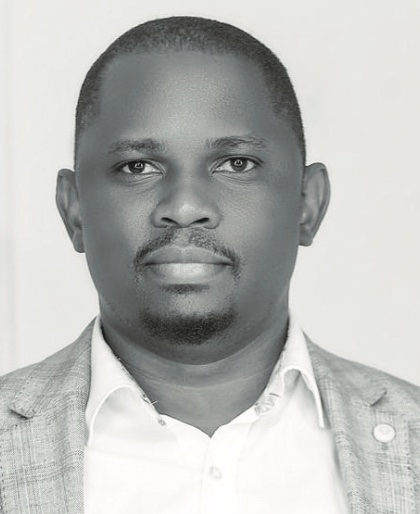
The writer is a member of People’s Reform Uganda